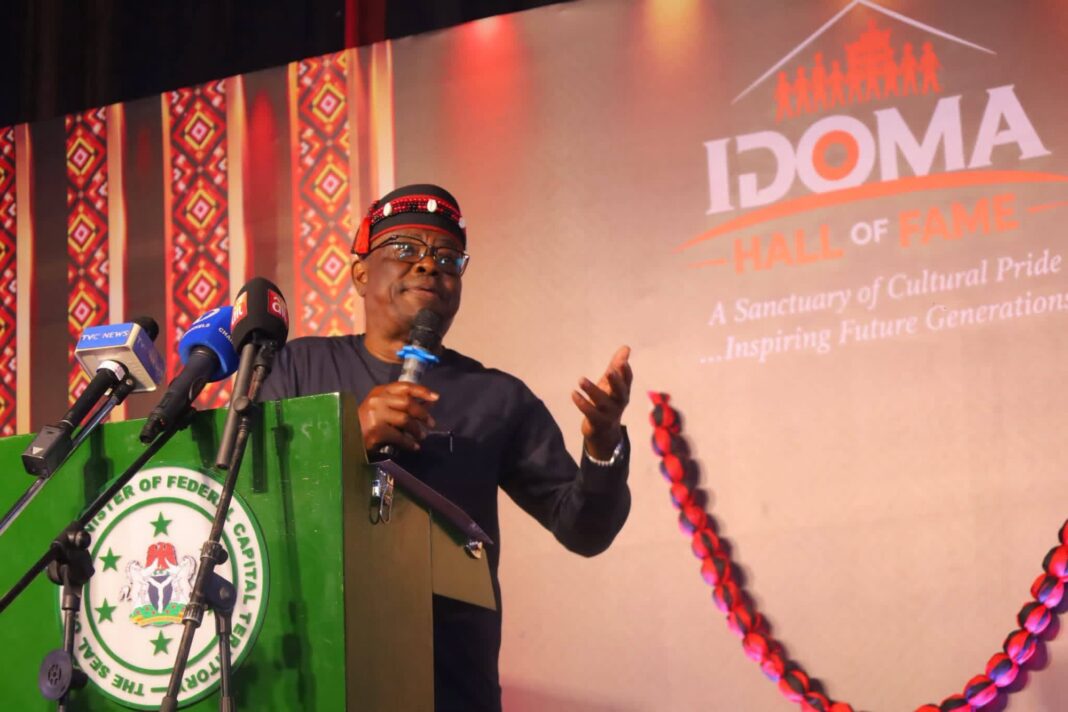

OTUKPO, BENUE STATE — Minister of the Federal Capital Territory (FCT), Nyesom Wike, has urged Nigerians to reject politicians he described as “political gamblers,” accusing some aspirants of using deceit and calculated public appearances to gain support ahead of the 2027 general elections.
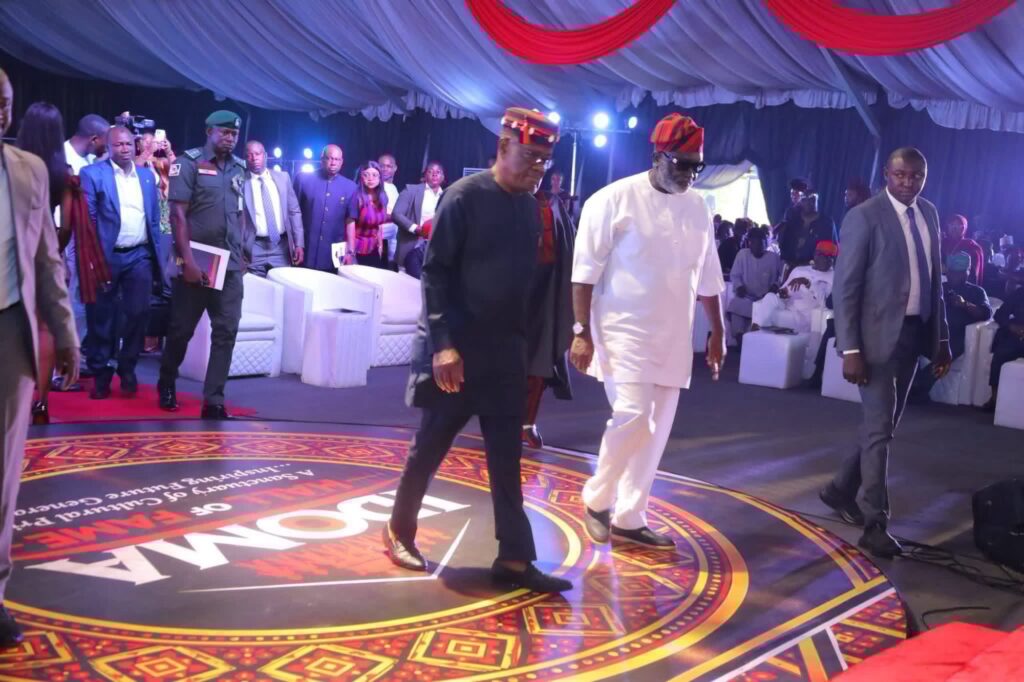
Wike made the remarks on Thursday, October 15, 2026, while delivering a keynote address at the inaugural Idoma Hall of Fame induction ceremony, organised as part of the Idoma Centenary Plus celebration.
Speaking on the theme, “People, Politics and Power Play in Nigeria: The Agitation for Equity and Fairness,” the minister questioned the sincerity of politicians who, according to him, begin identifying with vulnerable communities only when seeking higher political office.
He challenged Nigerians to scrutinise the records and intentions of political leaders rather than allow ethnic sentiments, political calculations or the struggle for power to determine their choices.
Wike specifically criticised what he portrayed as politically motivated visits to internally displaced persons (IDP) camps, suggesting that some politicians who did not celebrate their birthdays with disadvantaged Nigerians while in office now do so because they aspire to become president.
He warned that grievances over marginalisation should not become tools for political opportunism or attempts to redistribute privileges among competing groups.
“One of the enduring difficulties of our political life is the tendency to convert public power into private possession,” Wike said.
He argued that when public office becomes a means of personal accumulation, public resources risk being diverted towards private enrichment, while communities that feel excluded become increasingly alienated from governance.
The minister maintained that Nigeria’s quest for equity would remain unresolved if political actors focused solely on which ethnic group or region controlled power without addressing how that power was exercised.
“If one group replaces another at the table while the benefits remain fundamentally exclusionary, the occupants have changed, but the injustice has not,” he said.
Wike also challenged Nigerians to apply the same standards of fairness to their own communities and political allies as they demand from others.
“If we complain about marginalisation only when our own people are excluded, but become silent when others are marginalised after our people gain power, we are not opposing injustice; we are seeking access to its privileges,” he stated.
The FCT minister further argued that Nigeria needed a political culture in which public office was treated as a responsibility entrusted to leaders rather than an entitlement.
He noted that the federal character principle enshrined in the 1999 Constitution, as amended, was intended to promote national unity and prevent the domination of public institutions by a few states or sectional interests.
However, he cautioned that equitable representation should not undermine competence, insisting that public appointments and leadership positions must reflect both inclusion and the ability to deliver results.
“A Nigerian should not be excluded from public office because of where he or she comes from; neither should competence become irrelevant once a candidate’s identity satisfies a representational expectation,” he said.
Wike also maintained that political inclusion should be measured by the tangible benefits citizens receive from governance, including employment, quality education, healthcare, infrastructure, electricity, security and economic opportunities.
According to him, appointing a prominent individual from a particular community to public office means little if ordinary residents continue to experience unemployment, inadequate public services and economic hardship.
“The real measure of political inclusion is therefore not simply who occupies office, but what the exercise of that office produces for the people,” he said.
The minister acknowledged that Nigeria had adopted several mechanisms to accommodate its diversity, including federalism, state creation, revenue allocation, zoning and rotational presidency. However, he stressed that these arrangements alone could not guarantee fairness without accountable leadership and institutions that serve the public interest.
He urged political leaders to abandon zero-sum politics, in which the advancement of one community is treated as a defeat for another, and instead work towards a system that offers every Nigerian a fair opportunity to participate in national life.
The Idoma Hall of Fame induction ceremony was organised in collaboration with Och’Idoma as part of the Idoma Centenary Plus celebration.
Wike commended the organisers for establishing the Hall of Fame to recognise distinguished sons and daughters of the Idoma community, preserve its history and inspire future generations.
His remarks come as political discussions and positioning intensify ahead of the 2027 general elections, with questions of national unity, equitable representation, leadership accountability and public service expected to remain prominent in the political debate.