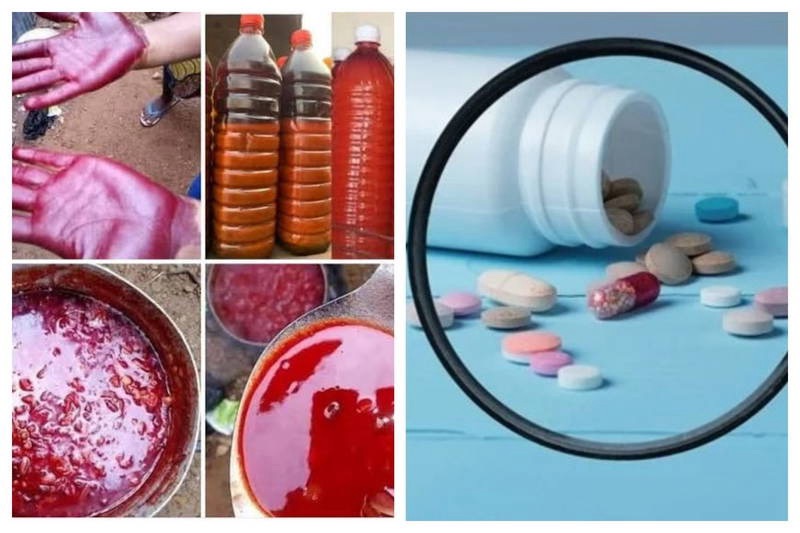

LAGOS, NIGERIA — The circulation of suspected counterfeit alcoholic beverages, falsified medicines and potentially unsafe food products has renewed concerns about consumer safety in Nigeria, following recent enforcement operations by the National Agency for Food and Drug Administration and Control (NAFDAC) in Lagos and Aba.
The operations uncovered a suspected counterfeit alcoholic beverage operation at the BBA Trade Fair Complex in Ojo, Lagos State, and led to the seizure of packaging materials valued at more than ₦200 million from five shops at Old Court Road Market in Aba, Abia State.
The discoveries have drawn attention to the methods allegedly used to make unauthorised products resemble established brands, raising concerns about the risks facing consumers who depend on familiar packaging and brand names when purchasing everyday products.
The threat extends beyond the financial losses suffered by consumers. Substandard or falsified medicines may fail to deliver the intended treatment, while adulterated food and unsafe beverages can expose people to harmful substances. Depending on the product and the extent of contamination, the consequences may include serious illness and, in severe cases, death.
NAFDAC uncovers suspected counterfeit drinks operation in Lagos
NAFDAC operatives uncovered the suspected operation at Zamfara Plaza, within the BBA Trade Fair Complex along the Badagry Expressway in Ojo, Lagos State, following intelligence gathering and surveillance.
According to reports of the operation, the agency discovered more than 20 makeshift stores allegedly being used for illicit activities involving alcoholic beverages and other products.
The agency said its operatives encountered individuals allegedly engaged in blending and counterfeiting popular alcoholic beverage brands, revalidating expired or unsafe drinks for resale, and stockpiling prohibited imported products.
Two suspects, identified as Chibuzor Okafor and William John, were arrested during the operation. Equipment and materials reportedly recovered included drums, filters, packaging materials, a heating device and other items suspected of being used in the activities.
The value of the products seized and evacuated from the premises was estimated at more than ₦2 billion.
Speaking during the operation, Kunle Ojo, an assistant director in NAFDAC’s Investigation and Enforcement Directorate, expressed concern over the discovery and said the agency’s actions were aimed at protecting public health.
One of the arrested suspects, Okafor, who identified himself as a drinks dealer, reportedly told journalists that he transferred drinks from one bottle to another, explaining that the original bottles were damaged.
His explanation has raised questions about the handling and authenticity of the products involved, particularly whether consumers could establish the contents’ origin, composition and safety.
NAFDAC’s investigation is significant because a beverage may retain the appearance of a recognised brand even when its contents have been transferred, altered or handled outside authorised production and quality-control systems.
However, the precise composition of individual recovered products and the health risks they posed would need to be established through appropriate testing. The discovery of suspected counterfeiting does not, by itself, establish that every recovered beverage contained a particular toxic substance.
Aba raid uncovers more than ₦200 million in suspected counterfeit packaging
In a separate operation, NAFDAC officials raided five shops at Old Court Road Market in Aba, Abia State, following intelligence about the alleged production and supply of counterfeit packaging materials.
The agency said it recovered labels, corks, packs and outer packaging bearing the names of several established consumer brands. The materials were estimated to be worth more than ₦200 million.
The brands identified in reports of the operation included Jameson, Glenfiddich, Four Cousins, Lord’s Dry Gin and Imperial Blue. Other recovered packaging reportedly bore the names of Chelsea, Squadron and Seaman’s Aromatic Schnapps, as well as Goya oil.
The concern is that packaging bearing the names of recognised products can potentially be used to disguise unauthorised or adulterated goods as genuine merchandise.
NAFDAC also reported encountering resistance and threats from some traders during the operation, which complicated the evacuation of the recovered materials.
The owners of the five shops were reportedly absent when the raid was conducted. The agency said the premises were placed on hold, while the market union chairman pledged to assist with securing them and identifying the shop owners.
The Lagos and Aba operations exposed different aspects of the suspected counterfeit trade: alleged activities involving beverage contents in Lagos and the supply of packaging materials capable of imitating established brands in Aba.
Both cases underline the importance of investigating not only finished products but also the facilities, equipment, packaging materials and distribution networks that may enable counterfeit goods to reach consumers.
Why fake and substandard medicines are a public health concern
While the recent operations focused substantially on beverages and packaging, the wider problem of counterfeit and substandard products also affects medicines and other healthcare products.
For patients, the consequences can be especially serious because treatment depends on receiving medicines that contain the correct ingredients, in the appropriate strength and quality.
A patient receiving treatment for malaria, for example, may continue experiencing symptoms if the diagnosis is incorrect, the prescribed medicine is unsuitable, the dosage is inadequate or the patient has not completed the treatment as directed. Drug resistance and complications of the disease may also contribute to treatment failure.
However, if a medicine is falsified or substandard, it may contain too little of the required active ingredient, the wrong substance or harmful contaminants. In such circumstances, a patient may fail to receive the expected therapeutic benefit despite taking the medicine.
Similar concerns apply to people managing hypertension and diabetes, whose conditions often require consistent monitoring and effective long-term medication. Ineffective treatment may leave them vulnerable to complications, although poor disease control can have several causes and should not automatically be attributed to counterfeit medicines.
The consequences can extend to household finances, as patients may incur additional costs for consultations, laboratory tests, new prescriptions and hospital visits while trying to determine why their conditions are not improving.
The circulation of falsified medicines can also undermine public confidence in healthcare professionals and legitimate pharmaceutical products.
Health professionals call for stronger action
The President of the Health Care Providers Association of Nigeria, Dr Austin Aipoh, described substandard and falsified medicines as a significant concern for the country’s healthcare system.
Speaking to Saturday Vanguard, Aipoh identified treatment failure as one of the immediate consequences of poor-quality medicines, noting that patients may lose confidence in their doctors and healthcare facilities when treatment does not produce the expected results.
He also highlighted the financial burden on patients and families who may have to pay repeatedly for medical consultations and treatment.
Aipoh called for stronger regulatory oversight, more effective reporting of suspected substandard medicines and improved coordination between healthcare professionals and regulatory authorities.
He further advocated stronger local pharmaceutical manufacturing and better control of medicine distribution. However, domestic production alone would not eliminate counterfeiting; manufacturers, importers, distributors, wholesalers and retailers must all comply with applicable quality and safety requirements.
He also proposed establishing a specialised court to handle cases involving counterfeit medicines and other dangerous products.
Dr Casmier Ifeanyi, a public health expert and National President of the Association of Medical Laboratory Scientists of Nigeria, also warned about the consequences of consuming falsified medicines, food products and beverages.
Ifeanyi questioned the effectiveness of market surveillance and post-registration monitoring, arguing that regulatory oversight should continue after products have been approved and introduced into the market.
He maintained that the quality and integrity of regulated products must be monitored to identify suspected counterfeits and unsafe goods before they cause harm.
His concerns highlight the importance of combining enforcement operations with routine inspections, product testing, intelligence gathering and effective action against those responsible for illegal production and distribution.
NAFDAC’s enforcement record
Figures from NAFDAC’s Directorate of Investigation and Enforcement show the scale of the regulatory challenge.
Between January and August 2026, the agency reported 5,542 enforcement activities, 213 raids, 821 product seizure entries and the closure or sealing of 179 premises.
The directorate also recorded 52 arrests, 474 newly reported cases, 295 concluded cases and 22 product destruction exercises during the eight-month period.
The agency reported destroying unsafe, falsified and non-compliant regulated products valued at approximately ₦22.73 billion.
The enforcement activities covered a wide range of regulated goods, including medicines, cosmetics, food, beverages, chemicals, packaged water and medical devices.
The figures indicate substantial enforcement activity, but they do not independently establish the overall prevalence of counterfeit products in Nigeria or demonstrate whether the problem is increasing or declining. Those assessments require comparable data over time, reliable market surveillance and evidence of the impact of enforcement measures.
Seizures and destruction exercises are important because they can remove potentially dangerous products from circulation. Their long-term effectiveness, however, also depends on identifying the people behind the operations, disrupting supply networks and securing successful legal outcomes where offences are established.
Online sales create additional challenges
The sale of medicines, cosmetics and other regulated products through social media and online marketplaces presents another challenge for regulators and consumers.
Digital platforms provide convenient access to goods, but buyers may find it difficult to verify the identity of a seller, the origin of a product or whether the item delivered matches the one advertised.
NAFDAC Director-General, Professor Mojisola Adeyeye, has previously discussed the agency’s efforts to monitor online sales and identify unregistered or suspected counterfeit products.
The agency has reported using information gathered from digital platforms to support investigations and enforcement actions. It has also promoted product-verification tools, including its Green Book, to help consumers check registered products.
Nevertheless, online monitoring can be complicated by sellers who operate through multiple accounts, change their identities or move between platforms.
Consumers should therefore avoid treating an attractive advertisement, familiar packaging or a seller’s assurance as conclusive proof that a product is genuine. Registration details should be checked through official channels where possible, while medicines should be obtained through licensed, reputable pharmacies and other authorised sources.
The danger of unverified remedies
Concerns about unsafe products also extend to remedies promoted through advertisements and informal sales channels.
People experiencing serious or distressing health conditions may be vulnerable to claims promising quick or miraculous cures, particularly when access to medical care is expensive or specialist services are difficult to obtain.
Products whose ingredients, registration status and safety have not been established may expose consumers to additional harm.
The reported case of a woman who allegedly purchased a purported herbal remedy advertised on radio in Abeokuta, Ogun State, and was subsequently found to have been exposed to caustic soda illustrates the potential danger of unverified health products. The specific circumstances of that case require appropriate verification, but caustic soda is a corrosive substance that can cause severe chemical injuries.
Consumers should seek qualified medical advice for suspected illnesses and avoid inserting, ingesting or applying unknown substances based on unverified claims.
What consumers should do
Public health experts and regulators have repeatedly emphasised the importance of vigilance when purchasing medicines, beverages, food and other regulated products.
Consumers should purchase medicines from licensed and reputable pharmacies, check product details and registration information through official channels, and be cautious about products with suspicious packaging, missing information or unusually implausible health claims.
A copied registration number or familiar label is not, by itself, proof of authenticity. Where a product appears altered or suspicious, consumers should avoid using it and seek guidance from the appropriate regulatory authority or healthcare professional.
Anyone who suspects a medicine is ineffective, contaminated or associated with an unexpected reaction should seek medical advice and report the concern through the appropriate channels. People taking prescribed medicines, particularly for chronic conditions, should not stop or change their treatment without professional guidance.
Persistent symptoms require proper assessment because treatment failure can result from several causes, including the underlying illness, an incorrect diagnosis, dosing problems, resistance or medicine quality.
Enforcement must go beyond raids
The recent operations in Lagos and Aba demonstrate the need for sustained action against suspected counterfeiting and the illegal supply of packaging materials.
For NAFDAC, the challenge is to combine raids, seizures and prosecutions with effective product testing, post-market surveillance and measures that prevent unsafe goods from reaching shops, pharmacies and online customers.
Manufacturers and distributors must maintain product integrity throughout production and distribution. Retailers must obtain goods through legitimate supply channels, while online marketplaces should take reasonable steps to address the sale of prohibited or unsafe products.
Healthcare professionals also have a role in identifying and reporting suspected medicine-quality problems, particularly where evidence raises concerns about particular products or batches.
Ultimately, the effectiveness of the campaign against counterfeit products cannot be measured only by the number of premises raided or the value of goods destroyed. It must also be assessed by whether illegal supply networks are disrupted, offenders are held accountable where wrongdoing is proved and consumers face a lower risk of purchasing unsafe products.
The discoveries in Lagos and Aba have renewed attention on a public health problem that can affect families in their homes, patients in hospitals and consumers in markets across the country.
Protecting Nigerians requires continued enforcement, credible investigations, public education and a reliable system through which consumers and healthcare professionals can report suspected unsafe products before more people are exposed to preventable harm.
IBN News