
PRESIDENT WARNS BIGGER BANK BALANCE SHEETS MEAN LITTLE IF MSMEs, MANUFACTURERS AND JOB CREATORS REMAIN STARVED OF AFFORDABLE CREDIT
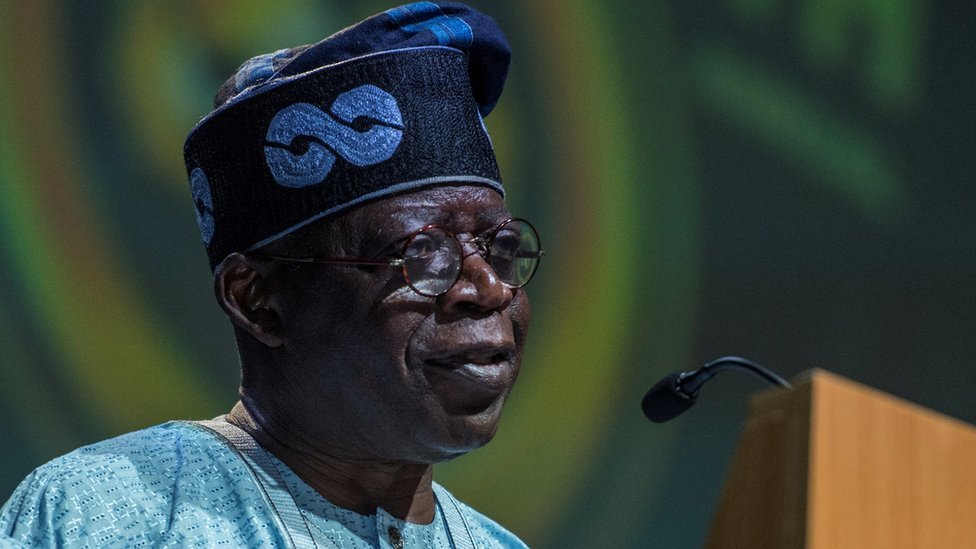
ABUJA — President Bola Ahmed Tinubu has challenged Nigerian banks to fundamentally change their lending priorities, warning that the banking sector cannot continue to rely heavily on government securities while businesses, manufacturers and millions of small enterprises struggle to obtain affordable credit.
The President said Nigeria’s recently recapitalised banks must now put their stronger balance sheets to work by financing productive economic activity, expanding businesses, supporting investment and creating jobs rather than concentrating disproportionately on relatively attractive government-backed investments.
Tinubu delivered the message on Tuesday at the 19th Annual Banking and Finance Conference of the Chartered Institute of Bankers of Nigeria (CIBN) in Abuja, where policymakers, regulators, bankers and private-sector stakeholders gathered to examine the future of Nigeria’s financial system. The two-day conference is themed “Building a Resilient Economy in an Era of Disruptions: Strategic Imperatives for the Banking and Financial Services Industry.”
Represented by the Minister of Finance and Coordinating Minister of the Economy, Taiwo Oyedele, Tinubu argued that Nigeria’s financial system must move beyond financing government and increasingly finance economic growth.
The President said attractive returns on government securities had historically made lending to businesses less attractive for banks, but argued that improving fiscal conditions should create greater room for private-sector credit.
“From financing government, we need to move to financing growth,” Tinubu said.
His message represents one of the clearest challenges yet to Nigeria’s banking industry to demonstrate that the enormous capital mobilised through the recent recapitalisation exercise can translate into tangible economic activity outside the financial sector.
Tinubu said the objective of bank recapitalisation should not end with stronger balance sheets, higher capital adequacy or improved financial resilience.
Instead, he said the additional capital should flow into Nigerian businesses, manufacturing, infrastructure, agriculture, housing, energy and other productive sectors capable of generating employment and expanding national output.
“A bigger bank that does not finance a more productive economy is a sub-optimal outcome,” the President said.
The warning comes at a critical moment for Nigeria’s financial sector, following the substantial capital raised by banks under the recapitalisation programme.
CIBN President and Chairman of Council, Dr Dele Alabi, said approximately N4.6 trillion in fresh capital had been raised by banks, with a significant portion coming from domestic investors. He described the stronger capital base as an opportunity to improve the financial system’s capacity to withstand shocks and finance economic development.
But the central question confronting the industry is whether that stronger capital base will actually reach businesses and households.
Tinubu said the answer must be yes.
The President argued that Nigeria’s next phase of economic development requires a deliberate transition from macroeconomic stabilisation to investment, production, job creation and improved living standards.
He said stronger fiscal discipline should reduce pressure on government borrowing, while lower inflation should eventually support lower interest rates and make capital more affordable for businesses.
That, he said, should encourage investment, increase production, create jobs and raise incomes.
But the President’s demand comes against the reality that many Nigerian businesses continue to face high operating costs, inadequate infrastructure, weak purchasing power, expensive credit and difficulties accessing finance.
CIBN President Alabi acknowledged the gap between macroeconomic indicators and the daily experiences of Nigerians.
He warned that economic stability could not be treated as the final destination.
According to him, the real test of the government’s economic reforms would be whether they eventually produce lower living costs, more jobs, higher real incomes, affordable credit, reliable public services and reduced poverty.
“Macroeconomic progress must, therefore, be felt at the micro level—in households, small businesses and the daily lives of ordinary Nigerians,” Alabi said.
The CIBN president also identified high operating costs, poor infrastructure, limited market access, low productivity, skills shortages and inadequate digital adoption as major obstacles confronting micro, small and medium-sized enterprises.
He proposed scalable SME hubs across Nigeria to connect smaller businesses with infrastructure, skills, technology, markets and financing.
The proposed hubs, according to Alabi, could lower operating costs, improve the bankability of businesses and create a stronger connection between recapitalised banks and the real economy.
The World Bank has similarly raised concerns over inadequate private-sector credit.
At the conference, the World Bank’s Lead Private Sector Development Specialist in Nigeria, Bertine Kamphuis, represented by the bank’s Division Director for Nigeria, Mathew Verghis, called on banks to increase financing to sectors with strong job-creation potential, particularly agriculture, manufacturing and MSMEs.
Kamphuis noted that between three and four million young Nigerians enter the labour market annually, making productive credit critical to job creation and economic expansion.
The implication is stark: if banks continue to favour relatively safer and more immediately attractive financial instruments while productive businesses remain unable to access affordable loans, Nigeria could struggle to convert economic stabilisation into broad-based prosperity.
Tinubu therefore said government was working to reduce the risks associated with productive-sector lending.
He identified guarantees, risk-sharing arrangements, blended finance and credit enhancements as tools being expanded to encourage banks to lend to sectors that may otherwise be considered too risky.
The National Credit Guarantee Company is expected to play a central role in that strategy by helping reduce lending risks and attracting multiples of private capital into productive investments.
The President also called for a major increase in long-term capital for infrastructure, industry, housing and energy.
He argued that Nigeria cannot sustainably finance long-term development primarily through short-term funds.
For that reason, he urged deeper capital markets and stronger pension, insurance and asset-management sectors capable of mobilising domestic savings and foreign capital for long-term investment.
Tinubu also warned that Nigeria must compete aggressively for international capital.
According to the President, investors are driven by risk-adjusted returns rather than sentiment.
“Capital is highly mobile. It is neither emotional nor patriotic; it goes where risk-adjusted returns are attractive and competitive,” he said.
The President said Nigeria was expected to return to the JPMorgan Bond Index and pointed to strong performance in the domestic capital market as evidence of improving investor confidence.
He argued that such developments could provide Nigeria with an opportunity to attract more capital for productive investment.
But attracting capital is only one side of the equation.
The more politically sensitive challenge is ensuring that the benefits of increased capital actually reach businesses and households.
Tinubu identified five priorities for a resilient financial system: growth facilitation, financial inclusion, technology, long-term capital and trust.
On financial inclusion, the President said merely having a bank account should no longer be considered sufficient.
He argued that genuine inclusion requires market women, young entrepreneurs and small businesses to have access to affordable working capital based on viable cash flows rather than collateral they cannot provide.
That position directly addresses one of the longstanding barriers confronting small Nigerian businesses.
Many micro and small enterprises operate outside traditional lending structures because they lack the conventional collateral required by banks, despite having functioning businesses and established cash flows.
The President said the financial system must therefore find more sophisticated ways of assessing risk and financing productive potential.
Technology was another major area highlighted at the conference.
Tinubu said artificial intelligence, open banking, digital identity systems and instant payments were transforming financial services.
But he warned that the same digital transformation was creating new vulnerabilities.
“Cybersecurity is now financial stability infrastructure,” the President said, calling for stronger data protection and fraud prevention.
The warning comes as Nigeria’s financial system becomes increasingly dependent on digital platforms, mobile transactions, fintech services and interconnected payment infrastructure.
A major cyberattack, widespread fraud or serious disruption of digital financial systems could therefore have consequences far beyond individual banks.
Tinubu also challenged Nigerian banks to look beyond the domestic market and help Nigerian businesses become African regional champions.
He urged financial institutions to finance exports and business expansion under the African Continental Free Trade Area, which provides access to a continental market of more than 1.4 billion people.
The President said banks should help transform today’s micro-enterprises into tomorrow’s large companies and redirect capital from speculation towards production.
Central Bank of Nigeria Governor Olayemi Cardoso, represented at the conference by Deputy Governor Philip Ikeazor, reinforced the call for stronger lending to the real sector.
Cardoso said the substantial capital raised during the banking recapitalisation exercise demonstrated the depth of capital available within Nigeria.
He challenged banks to deploy the additional capital towards productive sectors of the economy.
The CBN governor also acknowledged the question many Nigerians are asking: when will improving macroeconomic indicators translate into tangible improvements in their lives?
“That is on its way,” Cardoso said, attributing the expected improvement to closer coordination between monetary and fiscal authorities.
Cardoso said the authorities were working towards bringing inflation permanently into single digits and were engaging state governments because subnational governments also play a role in inflationary pressures.
He also credited banks for absorbing the consequences of tighter monetary conditions and the cash reserve requirements used by the Central Bank as part of its effort to restore macroeconomic stability.
According to him, Nigeria’s economic buffers had been tested by external shocks but remained sufficiently resilient to withstand disruption.
The CBN’s message was nevertheless accompanied by an acknowledgement that stabilisation alone does not guarantee prosperity.
The challenge now is transmission.
For millions of Nigerians, the most important measure of economic reform is not the strength of a bank’s balance sheet, the performance of financial markets or improvements in macroeconomic statistics.
It is whether businesses can obtain affordable loans, whether factories can expand, whether farmers can finance production, whether young entrepreneurs can secure working capital and whether new businesses can employ more Nigerians.
That is precisely the pressure now being placed on the banking industry by the Federal Government, the CBN, CIBN and development partners.
The banks have already raised capital.
The government now wants to see where that capital goes.
The message from Abuja is therefore increasingly difficult to misinterpret: Nigeria’s banking industry is being asked to take greater risks in financing the productive economy, while government and regulators attempt to provide mechanisms to reduce those risks.
The success or failure of that strategy could determine whether Nigeria’s current period of macroeconomic stabilisation becomes genuine economic expansion or remains largely an improvement visible on financial and government balance sheets.
For ordinary Nigerians, the ultimate test will be brutally simple.
If recapitalised banks become more willing to lend to productive businesses at sustainable rates, companies expand, jobs are created and investment increases, the reform agenda will have begun reaching the real economy.
If banks become bigger and stronger while viable businesses remain starved of affordable credit, the fundamental question raised by Tinubu at the CIBN conference will remain unanswered.
What, ultimately, is the financial system doing for the real economy?
That question now sits squarely before Nigeria’s banking industry.