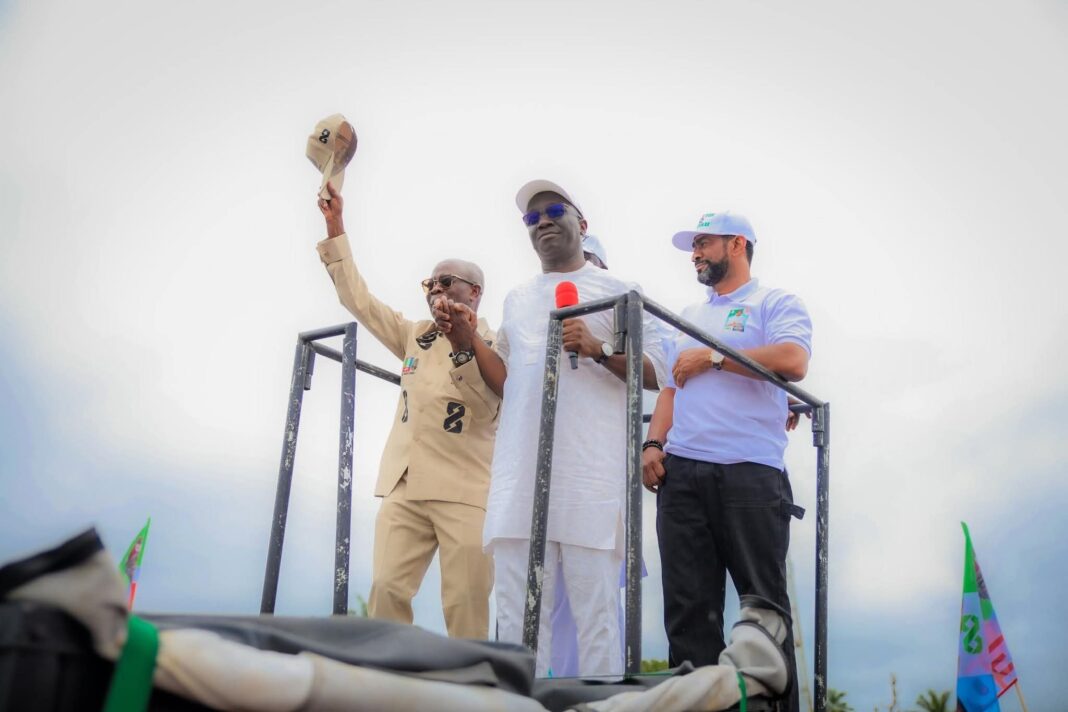

As Governor Monday Okpebholo tours Owan West and Owan East on an APC mobilisation exercise, residents point to damaged roads and struggling public facilities — raising questions about whether political promises are keeping pace with conditions on the ground.
The road into parts of Owan West tells a story that political speeches alone cannot settle.
During an IBN News field assessment of communities including Iruekpen, Eme-Ora and Sabongida-Ora, the condition of roads and public healthcare infrastructure raised concerns among residents who say some of their most basic needs remain unresolved.
The timing is significant.
On October 5, 2026, Governor Monday Okpebholo travelled through parts of Owan West and Owan East with leaders and supporters of the All Progressives Congress as part of a political sensitisation tour ahead of the 2027 general elections. The tour included visits to communities and facilities in the two local government areas. According to the Nigerian Observer, the governor said the exercise was also intended to enable him to see firsthand the challenges confronting residents.
That distinction matters.
The visit was political in purpose, but the infrastructure questions raised by residents are not political questions alone. They concern roads, healthcare, electricity and public services that affect people regardless of party affiliation.
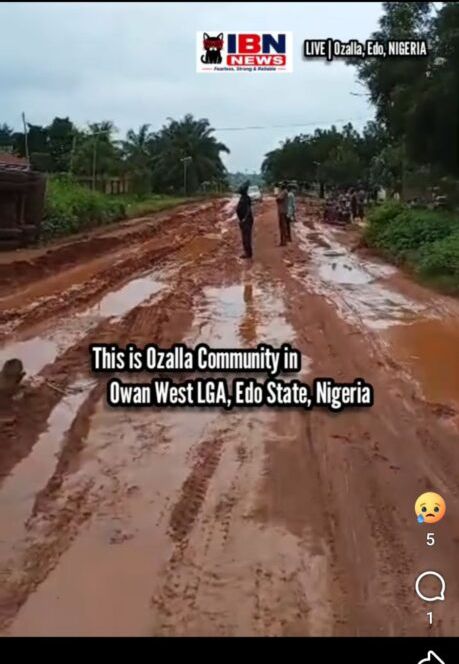
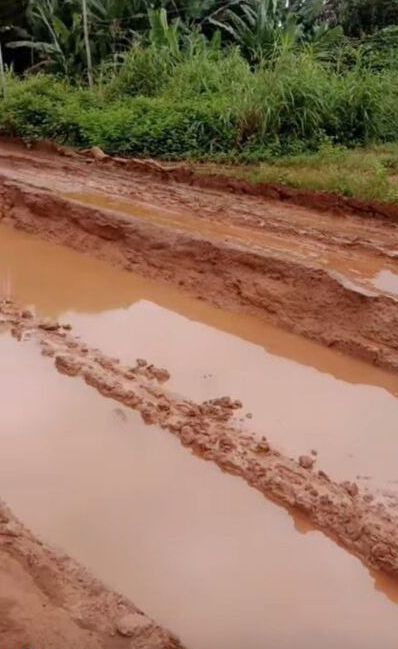
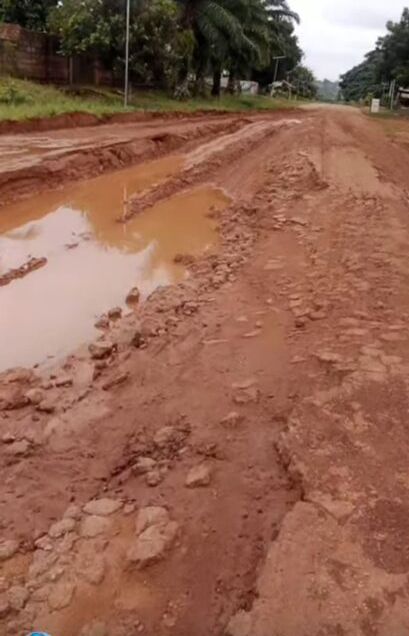
The IBN News team visited the area and observed severely deteriorated sections of the road leading towards Iruekpen. Some portions were described by residents as effectively impassable, particularly during difficult weather conditions.
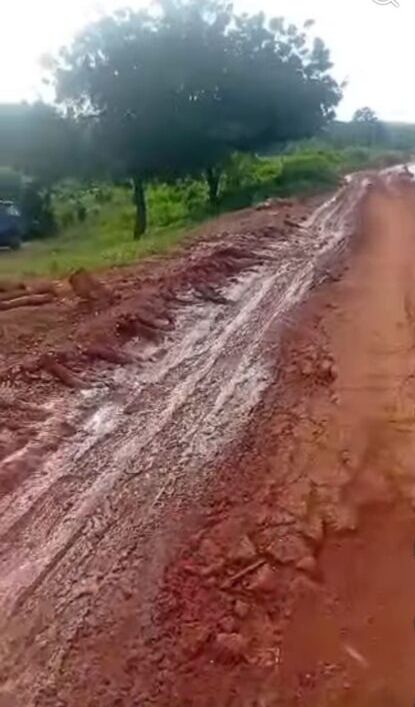
The condition of the route is significant because the road connects communities and provides access to farms, markets, schools and healthcare facilities.
Residents are not confronting the problem for the first time.
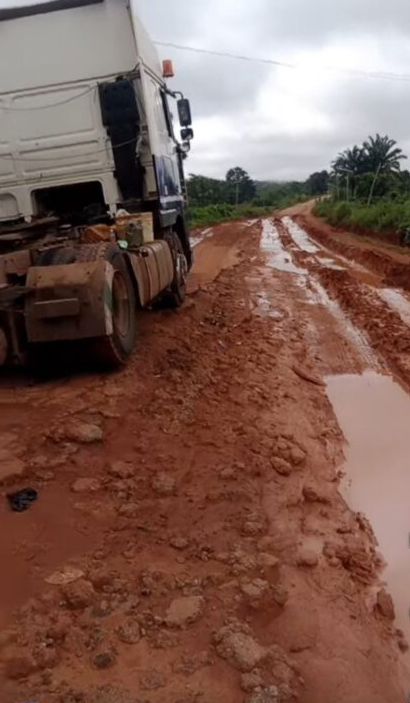
Recent reports have documented severe deterioration along the Iruekpen–Ozalla–Sabongida-Ora axis, including reports of heavy-duty vehicles becoming stuck in mud and motorists experiencing serious difficulties navigating the route.
The issue is particularly notable because the Ujemen–Iruekpen–Ozalla–Sabongida-Ora–Afuze corridor appears in Edo State’s 2026 Citizens Budget as a road reconstruction project covering parts of Owan West and Owan East.
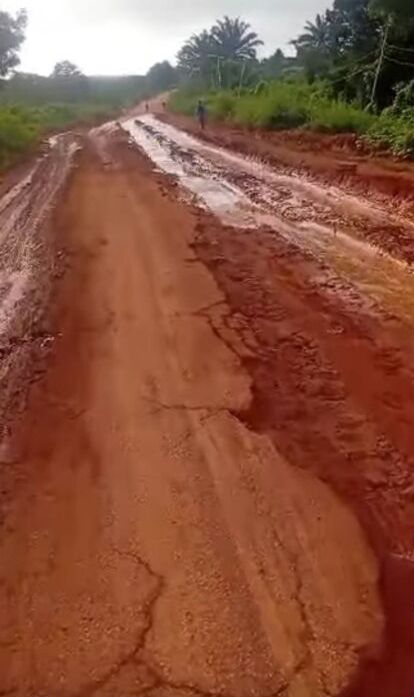
That creates an important accountability question: when does a project move from an appropriation on paper to measurable work on the ground?
For residents, the answer cannot simply be another announcement.
A road budgeted for reconstruction must eventually become a road that can be travelled safely.
The same concern extends to Eme-Ora.
The IBN News team visited the Eme-Ora Primary Health Centre, where the condition of the facility was observed to be seriously concerning. Infrastructure appeared to require substantial attention, reinforcing residents’ concerns about the state of healthcare services in the community.
The condition of a rural health centre has consequences beyond the appearance of the building.
For residents who live far from larger hospitals, a functioning primary healthcare facility can provide first-line treatment, maternal care, childhood healthcare and emergency assistance without requiring a long and potentially difficult journey.
When roads are poor and healthcare infrastructure is weak at the same time, the problems compound one another.
A patient who needs urgent treatment may face both a deteriorated health facility and a difficult journey to another centre.
At Sabongida-Ora, the concerns are even more visible.
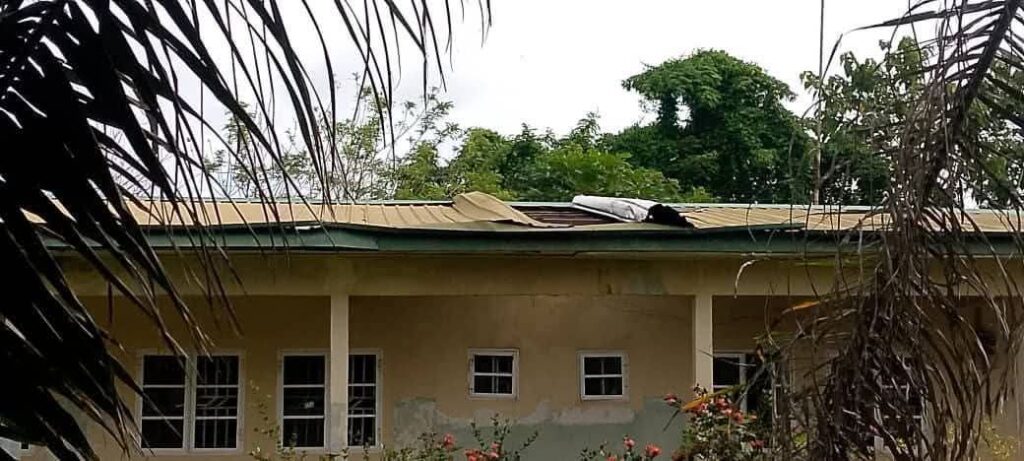
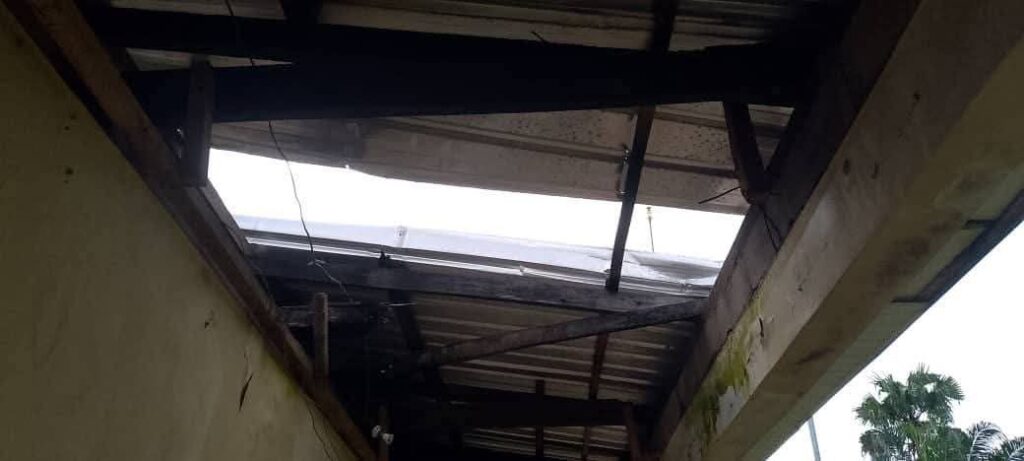
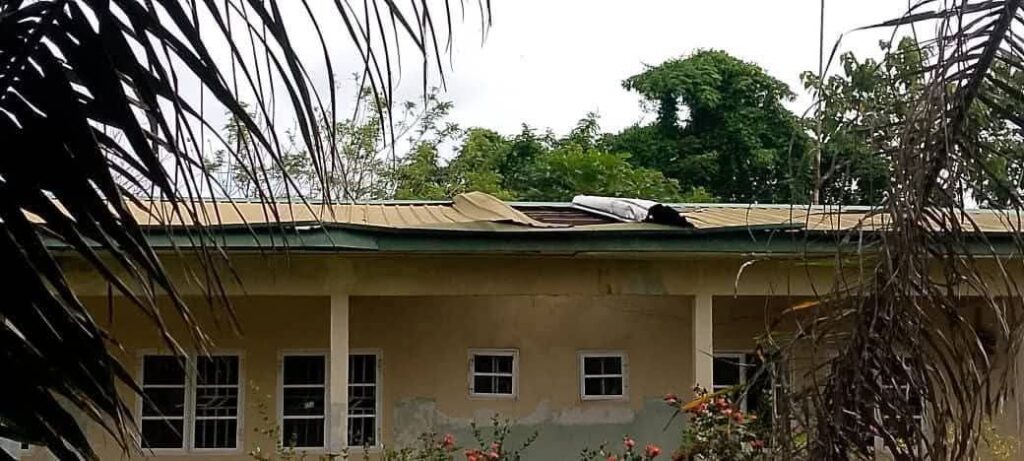
The IBN News team inspected General Hospital, Sabongida-Ora, where sections of the roofing and wider infrastructure were observed to be in poor condition.
The concerns surrounding the hospital are not new.
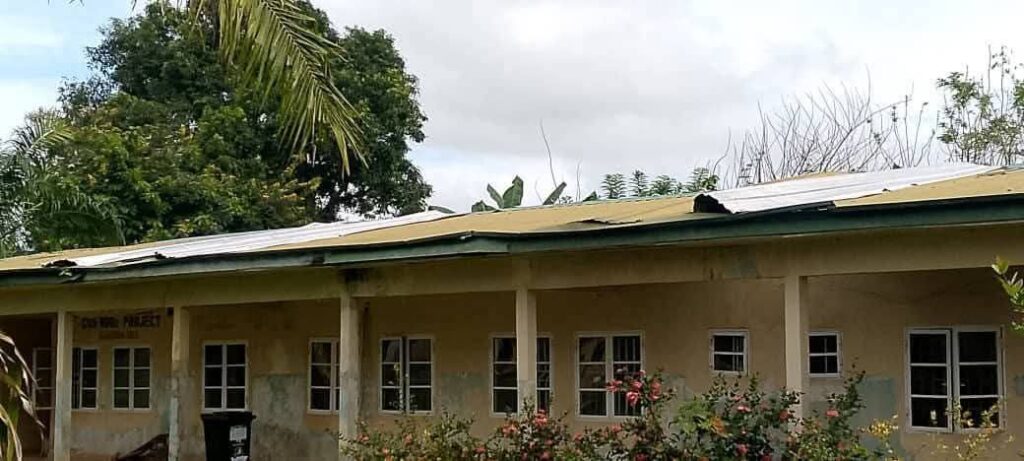
In February 2026, the Ora-Ekpen Association announced an initial ₦10 million intervention aimed at rehabilitating, restoring and modernising the hospital. The association cited concerns including deteriorating buildings, inadequate or obsolete equipment, unstable electricity and water supply, poor sanitation and shortages of medicines and diagnostic facilities.
The association also commended Edo State House of Assembly Speaker Blessing Agbebaku for donating a 30KVA generator.
The intervention illustrates the role that community organisations and private citizens continue to play in supporting public infrastructure.
But it also raises a larger policy question.
How should government and community interventions work together without community donations becoming a substitute for sustained public funding and maintenance?
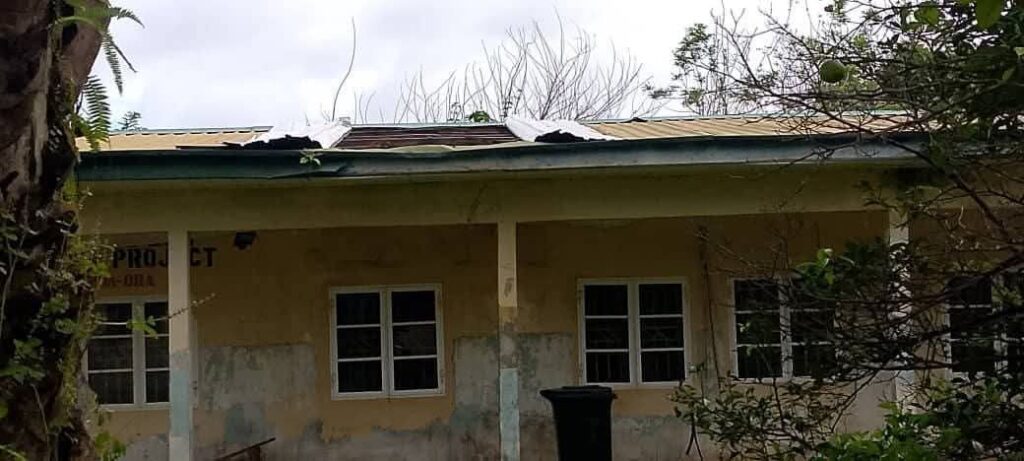
The answer matters because hospitals require more than one-off interventions. Buildings need maintenance. Equipment requires servicing. Electricity and water must be reliable. Medical personnel must be available. Drugs and diagnostic supplies must be replenished.
The road from Eme-Ora towards Uhonmora and Afuze was also identified during the field assessment as being in extremely poor condition, with residents describing sections as effectively unpassable.
Mr Samson Simire, the Eme-Ora Youth Leader, told the IBN News team about community efforts to restore electricity and commended Rt. Hon. Blessing Agbebaku and the Orian family for their interventions.
According to Simire, Agbebaku donated a transformer while the Orian family provided financial assistance and another transformer.
Those interventions deserve to be acknowledged on their own terms.
At the same time, they raise a broader question about infrastructure responsibility. Electricity supply involves regulated utilities and public institutions, and community contributions may help address urgent local needs, but such contributions do not eliminate the need for sustainable electricity planning and maintenance.
Another resident, Mr Friday Arumemehie, expressed concern about the condition of the Sabo, Afuze and Iruekpen axis during an interaction with the IBN News team.
He also questioned why the governor’s October 5 tour did not, in his view, take the route that would have provided a more direct view of some of the worst road conditions.
The Governor’s tour states that the delegation visited Olegauma Primary School, Obe Primary School in Sabongidda-Ora, Afuze Mini Stadium and Abadakhigua Primary School in Otuo. The tour covered Owan West and Owan East.
The same report states that Governor Okpebholo noticed two bad portions of the road while travelling between Owan West and Owan East and directed the Commissioner for Works to mobilise and fix them.
That instruction is now a matter that residents can reasonably monitor.
If work begins, the public can assess the quality and speed of the intervention.
If it does not, residents will have legitimate grounds to ask why.
This is where political campaigning meets governance.
The governor’s October 5 visit was part of an APC exercise aimed at sensitising party members ahead of the 2027 elections. The APC has already begun grassroots mobilisation across Edo State, with Governor Okpebholo chairing the party’s campaign structure for the general elections.
The Nigerian Observer reported that APC leaders accompanying the governor used the Owan tour to mobilise party members, while the governor spoke about his administration’s record and the support of President Bola Tinubu.
That political context should not be concealed.
Nor should it automatically invalidate the government’s infrastructure claims.
A political tour can simultaneously be a political exercise and an opportunity for a public official to observe community conditions. The question for journalism is what happens after the cameras leave and the political speeches end.
That is where measurable evidence becomes important.
Residents can reasonably ask: Was the road inspected? Was a technical assessment conducted? Has a contractor been mobilised? What is the project timeline? What portion of the road is covered by the existing budget? What has been spent? What remains to be done?
The same questions apply to healthcare.
What is the current condition of Eme-Ora Primary Health Centre? What equipment is available? Is electricity reliable? Is water available? How many health workers are assigned there? What rehabilitation is planned?
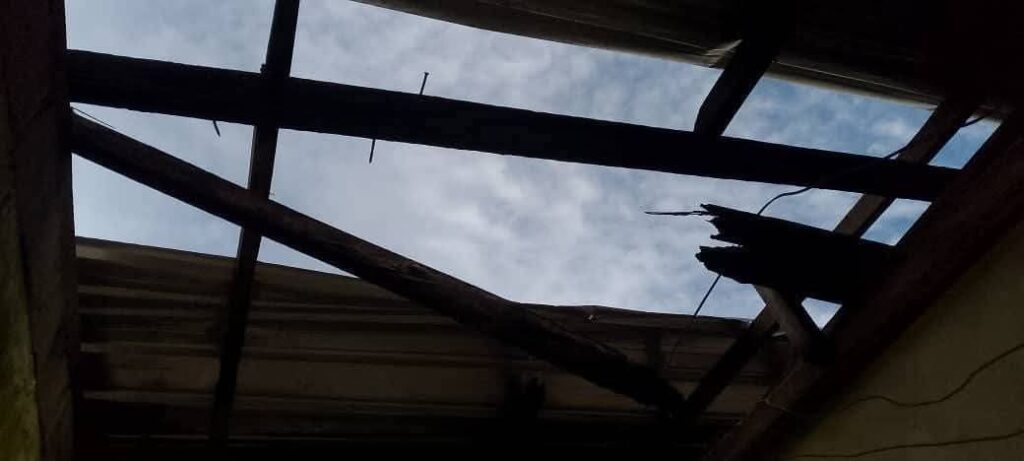
At Sabongida-Ora General Hospital, the questions are equally direct.
What is the government’s current rehabilitation plan? What happened to previous maintenance commitments? How far has the community’s ₦10 million intervention gone? What additional resources does the hospital require? And who is responsible for ensuring that the facility remains functional after rehabilitation?
These are not partisan questions.
They are public-interest questions.
The Edo Government has repeatedly presented infrastructure and security as priorities. Governor Okpebholo has also said his administration is rebuilding roads and upgrading schools and hospitals. His October 5 tour provides an opportunity to compare those commitments with conditions reported by residents and observed by the IBN News team.
The comparison should be based on evidence rather than political allegiance.
Previous administrations cannot be absolved of responsibility for infrastructure inherited by the current government. At the same time, the present administration cannot be held responsible for every historical defect simply because it now controls the state government.
Its responsibility is to address the problems it has inherited, complete projects it has undertaken, explain delays and demonstrate where public funds are being deployed.
That is the standard that should apply to every government.
Owan West therefore does not require political sympathy from either side.
It requires functioning roads.
It requires accessible healthcare.
It requires dependable electricity.
It requires transparent project implementation.
And it requires government officials, regardless of party, to be willing to confront uncomfortable facts about communities they govern.
The October 5 political tour has now ended.
The campaign vehicles will eventually leave.
The speeches will end.
The election will come and go.
But the roads will remain.
The hospital will remain.
The primary health centre will remain.
The people of Owan West will remain.
And it is those physical realities — rather than campaign promises — that will ultimately provide the clearest evidence of whether government intervention has reached the communities.
For IBN News, the question is not whether the government deserves praise or criticism.
The question is simpler:
What has been promised, what has been delivered, what remains unfinished, and when will residents see the difference?
Those are questions that deserve answers — from this administration and from every administration that follows.