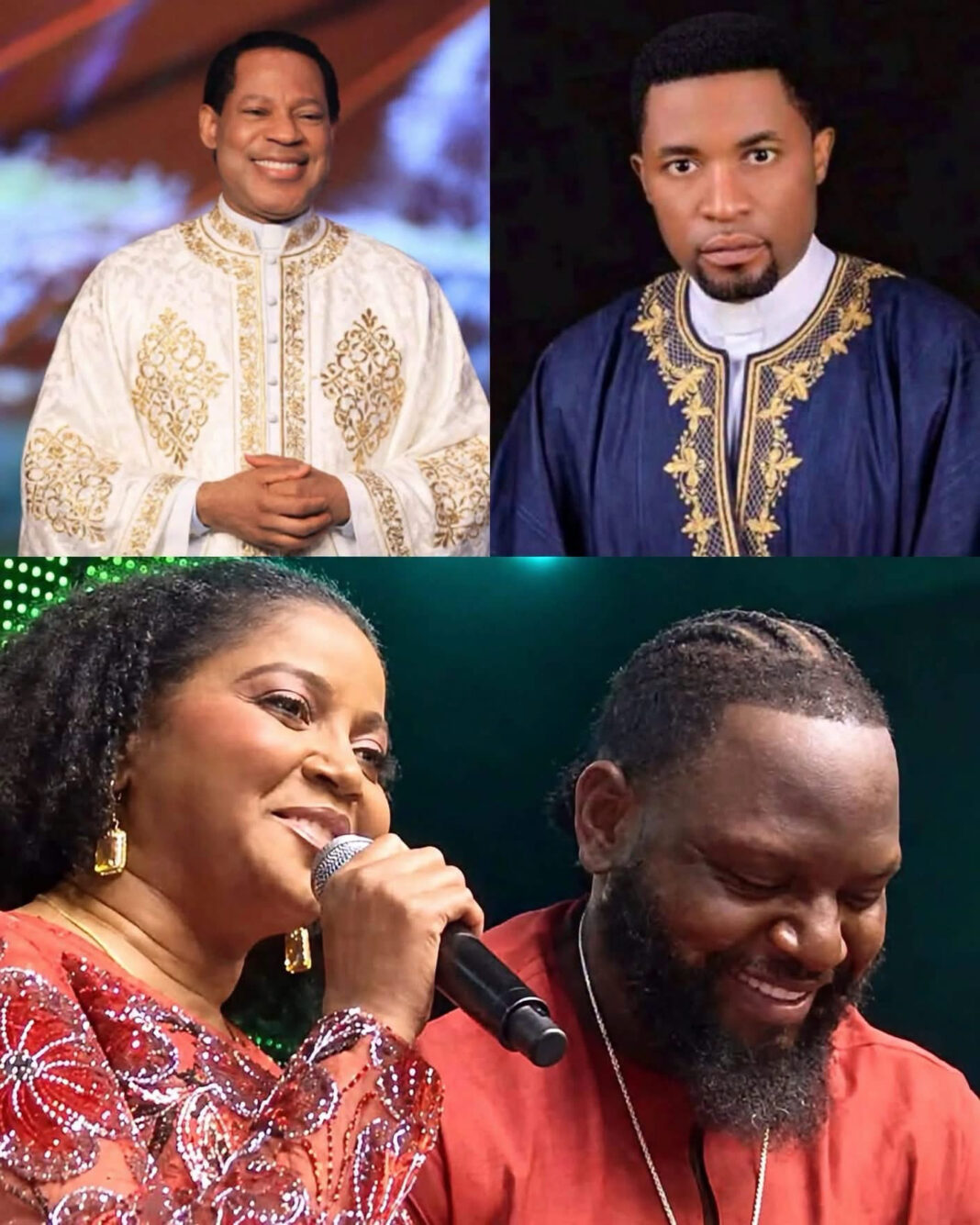

The remarriage of Pastor Jimmy Odukoya has reignited debate among Christians over divorce, remarriage and the standards expected of religious leaders, with teachings associated with Pastor Chris Oyakhilome and Apostle Michael Orokpo attracting renewed attention.
Odukoya, Senior Pastor of The Fountain of Life Church, Lagos, introduced his new wife, Pastor Mo Odukoya, to members of the congregation during the church’s Sunday service on November 1, 2026, at its headquarters in Ilupeju.
The announcement followed a social media post a day earlier in which the cleric shared a photograph of two hands wearing wedding rings, accompanied by the caption, “To New Beginnings.”
Addressing worshippers, Odukoya explained that he had been navigating life and ministry alone since assuming leadership of the church, before introducing his wife and describing her as his partner.
The couple subsequently received prayers and blessings from Pastor Tunde Bakare, General Overseer of The Citadel Global Community Church.
Odukoya married Oluwakemi Banjoko in London in March 2013, and their marriage produced two children. Reports say the relationship later ended in separation. However, the precise legal circumstances and timeline surrounding the dissolution of the previous marriage have not been publicly established in the reports reviewed.
Odukoya became Senior Pastor of The Fountain of Life Church in September 2023 following the death of his father, Pastor Taiwo Odukoya, who died in August of that year.
While many social media users have congratulated the couple, the announcement has also prompted questions about the biblical basis for remarriage after a previous marriage has ended.
Much of the discussion has centred on teachings associated with Oyakhilome, founder of Christ Embassy, and Orokpo, founder of Encounter Jesus Ministry.
Orokpo recently addressed the subject in a video that generated public discussion, cautioning Christians against treating marital difficulties as sufficient grounds for divorce and remarriage.
He urged couples experiencing marital crises to seek spiritual guidance, counselling and intervention from recognised church authorities, arguing that separation does not automatically give either partner the right to remarry.
According to reports of his remarks, Orokpo maintained that where reconciliation becomes impossible, a couple may be advised to separate, but should not assume that such separation grants them freedom to enter another marriage.
He grounded his position in biblical passages concerning the permanence of marriage, particularly the teachings of Jesus in Matthew 19 and Paul’s instructions in 1 Corinthians 7.
Oyakhilome has also addressed questions about divorce and remarriage in teachings to members of his ministry.
In a published response to a question about marrying a divorced person, he referred to Matthew 19 and 1 Corinthians 7:10–15, emphasising the need to understand the biblical context and the possibility of reconciliation.
He explained that Paul’s instruction for separated spouses to remain unmarried or reconcile leaves room for reconciliation, while also discussing the situation in which an unbelieving spouse abandons a marriage.
His interpretation has therefore been presented as a call to take marriage seriously, pursue peace and reconciliation, and consider the circumstances surrounding a broken relationship rather than treating every case as identical.
The debate has also brought renewed attention to Oyakhilome’s own marriage to Anita Ebhodaghe. Their marriage, which lasted more than two decades, was formally dissolved by a London court on February 8, 2016. The former couple have two daughters.
The contrast between the different public experiences and teachings of Christian leaders has led some believers to ask whether the same biblical standards are consistently applied to pastors and other prominent ministers.
At the centre of the discussion are passages such as Matthew 5:32, Matthew 19:3–9, Luke 16:18 and 1 Corinthians 7:10–15 and 39. Christians and theologians interpret some of these passages differently, particularly regarding sexual immorality, abandonment, separation and the circumstances in which remarriage may be permitted.
The issue of domestic abuse also requires careful consideration. Protecting someone from violence or immediate danger must not be confused with forcing that person to remain in an unsafe home in the name of reconciliation. Personal safety and appropriate professional support remain essential.
Beyond the reactions to Odukoya’s remarriage, the development has opened a broader conversation about accountability, pastoral conduct and consistency in religious leadership.
If marriage is taught as a lifelong covenant, believers are entitled to ask how that teaching is applied when marriages involving prominent ministers break down, what role repentance and reconciliation should play, and how churches address situations in which reconciliation is no longer possible.
The question now being raised by many is whether ministers and ordinary members are held to the same standards when it comes to divorce and remarriage.
IBN News — Fearless, Strong & Reliable