
President Bola Ahmed Tinubu’s two-day political and project tour of Akwa Ibom and Rivers States has intensified political activity across the South-South, bringing together major political figures, renewed campaign promises, a public display of reconciliation between Rivers State Governor Siminalayi Fubara and the Minister of the Federal Capital Territory, Nyesom Wike, and fresh controversy over the proposed Ibom Deep-Sea Port.
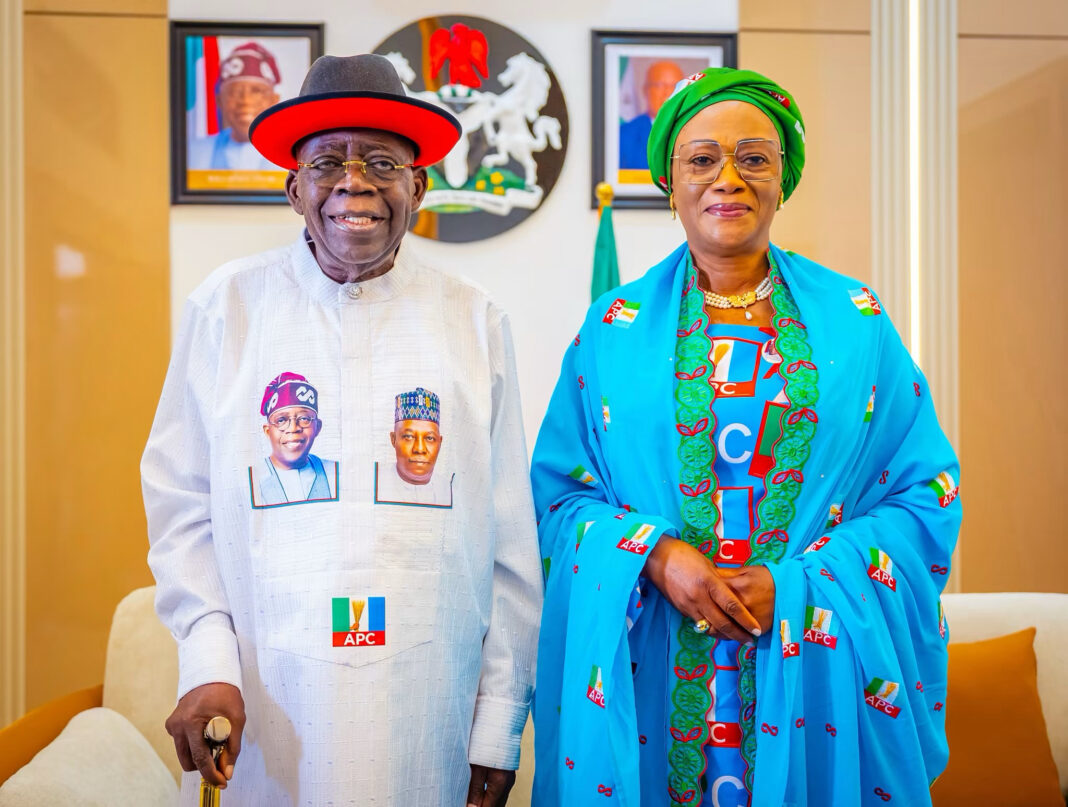
The President, who visited the two states on November 6 and 7, was accompanied by Vice-President Kashim Shettima and First Lady Oluremi Tinubu. The engagements combined the commissioning of projects in Akwa Ibom with political rallies and consultations ahead of the 2027 general elections.
Following the visit, Tinubu took to his social media platforms to express appreciation to the people of both states, describing the reception as a demonstration of support for his administration and political agenda.
“South-South no dey carry last,” the President declared, adding that the Ibom Deep-Sea Port had enormous potential to generate trade, attract investment and create employment opportunities across the region.
He also maintained that the 2027 election would determine the future of young Nigerians and the country they would inherit, insisting that the progress recorded by his administration had “no reverse gear.”
However, beyond the celebratory messages from the Presidency and APC supporters, the visit has generated wider political debate over the actual delivery of infrastructure, the economic impact of government policies, the future of the South-South and the political calculations shaping the next presidential election.
In Akwa Ibom, Tinubu commissioned several projects executed by Governor Umo Eno’s administration, including the new International Terminal Building, International Airport Hospital and Ibom Aviation Village at Victor Attah International Airport.
Other projects included the Airport-Okopedi Road, connecting communities in Nsit Atai and Okobo Local Government Areas, Ring Road 3, the AKWA-GIS Office Complex, the Command and Control Centre and the ARISE Palm Resort.
The President’s visit was particularly significant because of the growing political relationship between Tinubu and Governor Eno, who moved from the Peoples Democratic Party to the All Progressives Congress in June 2025.
Eno has openly aligned his administration with the Federal Government and declared support for Tinubu’s re-election ambition. During the Uyo political engagement, the governor reportedly pledged two million votes for the President in 2027, linking the proposed deep-sea port to the economic future of the state.
The most politically consequential announcement in Akwa Ibom was Tinubu’s approval of the proposed Ibom Deep-Sea Port, a long-standing infrastructure ambition that successive administrations in the state have presented as a potential economic game-changer.
The project is expected to strengthen maritime trade, improve access to international markets, attract industrial investment and create employment opportunities if successfully developed.
Tinubu said the proposed port could unlock economic opportunities beyond Akwa Ibom, benefiting the wider South-South and Nigerian economy.
But the announcement immediately attracted criticism from lawyer and public commentator Inibehe Effiong, who questioned the repeated political promises surrounding the project.
Effiong argued that successive administrations had made similar announcements without delivering the port, recalling previous claims of federal approval during the administrations of former governors Godswill Akpabio and Udom Emmanuel.
He described the latest announcement as another political promise and challenged the state and federal governments to demonstrate that the project would move beyond repeated approvals and become a functioning maritime facility.
His criticism has brought renewed attention to a central question surrounding the project: whether the latest approval represents a concrete step towards construction or another announcement that will remain unrealised.
The debate is particularly important because major infrastructure projects require more than political declarations. Funding arrangements, technical feasibility, environmental approvals, land acquisition, construction timelines and transparent implementation will determine whether the proposed port can deliver the economic benefits being promised.
Effiong also criticised the declaration of a work-free day by the Akwa Ibom State Government to facilitate the President’s reception, questioning the use of public administrative arrangements around a visit that included an APC political rally.
The controversy surrounding the Uyo visit was further complicated by reports of a fatal road accident involving a bus conveying APC women supporters to the event. PRNigeria’s political monitoring report said the incident reportedly resulted in one death, casting a shadow over the rally and generating public discussion about the safety of political mobilisation.
In Rivers State, the President’s visit on Saturday produced one of the most significant political spectacles of the tour, with the Adokiye Amiesimaka Stadium in Port Harcourt hosting an APC campaign rally attended by political leaders and supporters from across the state and beyond.
The rally, organised under the Rainbow Coalition led by Wike, was used to showcase the political reconciliation between Fubara and his predecessor, whose prolonged disagreement had destabilised Rivers State and generated national political tension.
Tinubu publicly commended Fubara for accepting the intervention of political elders and maintaining the peace arrangement with Wike.
The President described the governor’s decision as an act of maturity and understanding, assuring him that he would not regret embracing the reconciliation.
“During the political crisis caused by a misunderstanding in the family, I intervened on your behalf. I thank Governor Fubara, in particular, for his maturity, understanding, and respect for the wisdom of elders when we intervened,” Tinubu said.
The statement was a significant political endorsement of the arrangement that has brought the two Rivers leaders back into the same political camp after years of hostility.
The Rivers crisis had previously escalated into a major constitutional and political confrontation, resulting in impeachment moves against Fubara, the intervention of the Federal Government and the declaration of a state of emergency in March 2025. The emergency rule ended in September 2025, but tensions over political control and the relationship between the governor and his predecessor continued.
Tinubu’s latest intervention and the public appearance of both leaders at the Port Harcourt rally suggest that the political settlement has become a central component of the APC’s mobilisation strategy in Rivers State.
Fubara, in his remarks, openly acknowledged Wike’s leadership of the political arrangement and pledged to mobilise three million votes for Tinubu in the 2027 presidential election.
“Under the guidance and leadership of FCT Minister Nyesom Wike, we will deliver not less than three million votes for you,” the governor declared.
He also thanked Tinubu for intervening during the political crisis, promising that Rivers State would reciprocate the President’s support.
The governor said political supporters from both the APC and PDP were now working together under the Rainbow Coalition, presenting the arrangement as a new phase of cooperation in the state.
Wike, who has remained one of the most influential political figures in Rivers State, described the large turnout at the rally as evidence of local support for Tinubu’s re-election.
He insisted that the mobilisation was driven by Rivers residents and declared that the state had already made its political decision ahead of the next presidential election.
The FCT Minister also used the rally to defend his relationship with the President, citing federal appointments given to Rivers indigenes and infrastructure projects in the state.
Wike claimed that Rivers State had received no fewer than 47 political appointments under Tinubu’s administration, arguing that the President had demonstrated commitment to the state.
He specifically mentioned the Bonny-Bodo Road and the Federal University of Environment in Ogoniland as examples of federal projects and opportunities benefiting Rivers State.
However, Wike also launched political attacks against former Rivers governor Rotimi Amaechi, who is now associated with the opposition African Democratic Congress and its political activities ahead of 2027.
Wike questioned Amaechi’s record in office and accused him of failing to account for $39 million reportedly designated for the Karibi Whyte Specialist Hospital project, as well as funds allocated for fumigation in the state.
The allegations add another dimension to the emerging political battle in Rivers, where the contest is no longer simply about the relationship between Wike and Fubara but also about the influence of former political leaders, party structures and the alignment of political forces ahead of the next election.
The allegations against Amaechi remain claims made by Wike and should be subjected to documentary evidence and any response from the former governor.
Tinubu also used the Port Harcourt rally to defend his administration’s economic reforms, arguing that the government was addressing inherited financial liabilities and working towards a more prosperous economy.
He said the Federal Government was clearing outstanding pension and gratuity obligations and claimed that salary and pension liabilities in 27 of the 36 states had been cleared.
The President also challenged former Vice-President Atiku Abubakar over his record in public office, questioning his moral standing to seek another opportunity to govern Nigeria.
Tinubu accused previous administrations of leaving significant financial problems for the current government, arguing that his administration was working to resolve those challenges.
His remarks reflected the increasingly confrontational tone of the emerging 2027 campaign, with the President using the rally not only to seek support but also to challenge the credibility of opposition figures.
Vice-President Shettima also called on political leaders and supporters across the South-South to support Tinubu’s re-election, pointing to what he described as improving economic indicators.
Shettima claimed that Nigeria’s foreign reserves had increased from approximately $3.9 billion to $60 billion in about three years.
He also criticised opposition figures, including Atiku Abubakar and Peter Obi, in remarks that further intensified the political exchanges at the rally.
Tinubu additionally urged Nigerians who had not collected their Permanent Voter Cards to do so, describing the PVC as the instrument citizens could use to influence the country’s economic direction through the ballot.
He told young Nigerians that the 2027 election was about their future, urging them to take the political process seriously.
The rally attracted several prominent political figures, including Senate President Godswill Akpabio, Speaker of the House of Representatives Tajudeen Abbas, APC National Chairman Nentawe Yilwatda, former Delta State Governor Ifeanyi Okowa, Senator Adams Oshiomhole and other serving governors and political leaders.
The scale of the gathering and the public participation of Wike and Fubara provided the APC with an opportunity to project political unity in Rivers State after a prolonged period of instability.
Nevertheless, the political significance of the rally should not be confused with an electoral outcome. Campaign promises, crowd size and endorsements do not automatically translate into votes, and the actual strength of the party will be tested when Nigerians eventually cast their ballots.
The visit also attracted attention beyond the two states. A political sentiment report published by PRNigeria, based on its PRrev media-monitoring platform, said the Uyo rally dominated political conversation on November 6, with the APC accounting for 38.5 per cent of monitored political-party coverage.
The report analysed 3,744 items across X, Facebook and mainstream media. It also recorded the National Democratic Congress as having the highest positive sentiment rating among the parties monitored, at 70.8 per cent, while the APC recorded 52.9 per cent positive sentiment.
The report identified the fatal accident involving APC supporters as one of the developments that shaped public discussion around the Uyo event. Its figures reflect monitored media and social-media conversations, not a scientific survey of voting intentions or nationwide public opinion.
The November 7 monitoring report subsequently recorded another major increase in political conversation, with 7,714 items analysed. It placed the APC first in visibility at 38.7 per cent and reported that the party also recorded the highest overall positive sentiment at 51.4 per cent. The NDC ranked second in visibility, while the ADC and PDP followed.
The same report identified the reported violence surrounding the NDC’s One Million Man March in Asaba, Delta State, as another major driver of political debate in the South-South. The reported incident, which involved attacks and damaged vehicles, raised fresh concerns about political tolerance and the safety of campaign activities.
The developments underline how the South-South is becoming an increasingly important theatre of political activity as parties position themselves for 2027.
Tinubu’s visit has therefore produced several competing political narratives: the Presidency is presenting infrastructure commissioning and the proposed Ibom Deep-Sea Port as evidence of development and federal commitment; the APC is highlighting the political alignment of influential South-South leaders; Wike and Fubara are projecting reconciliation and cooperation; while critics are demanding proof that major promises will translate into completed projects and measurable improvements in the lives of residents.
For Akwa Ibom, the central test will be whether the proposed deep-sea port progresses from political approval to a clearly funded and implemented project capable of transforming the state’s economy. The airport infrastructure and road projects will equally be judged by their operational performance, accessibility and long-term economic benefits.
For Rivers State, the reconciliation between Wike and Fubara may reduce political tension, but the durability of the arrangement will depend on whether both leaders can sustain cooperation beyond campaign appearances and political endorsements.
For the Federal Government, the challenge is broader. Nigerians will judge the administration not only by the number of rallies it holds or the endorsements it secures, but by the impact of its economic policies on food prices, purchasing power, employment, security, electricity and living standards.
Tinubu’s declaration that the South-South will not be left behind is a powerful political message. But the region’s expectations extend beyond slogans. Its people want functioning infrastructure, employment opportunities, industrial development, environmental protection and a stronger share of the economic benefits generated from their resources.
As the 2027 election approaches, the President’s two-state visit has demonstrated the importance of the South-South to the political calculations of the ruling party. Whether the renewed alliances, project announcements and campaign promises will translate into lasting public confidence remains a question that only sustained delivery and the verdict of voters can answer.