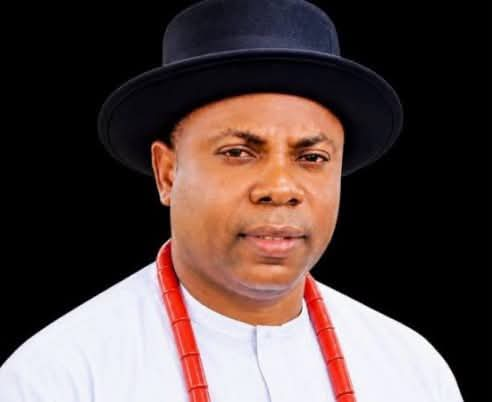

Dr. Austin Avuigwerie Orette, a Nigerian-American physician, political reform advocate and African Democratic Congress (ADC) senatorial candidate for Delta South, has died in Houston, Texas, United States, ahead of the 2027 general elections.
Orette’s death was announced on Saturday, October 24, 2026, by his media strategist, Henry Ovie Ebireri, who expressed shock and grief over the loss.
“I’m devastated. Austin Orette’s death leaves me cold,” Ebireri said in a statement.
Although his death was confirmed by his media strategist, no details were disclosed regarding the circumstances surrounding his passing.
Born in Owhelogbo, Isoko North Local Government Area of Delta State, Orette built a career spanning medicine, public advocacy and politics. He spent several decades practising medicine in Nigeria and the United States before pursuing an active role in Nigeria’s political development.
He obtained his medical degree from the University of Nigeria College of Medicine, Enugu, in 1985 before relocating to the United States, where he completed his Family Medicine Residency at the Memorial Hermann Health System in Houston, Texas, between 1992 and 1995.
His medical career in the United States included work in family medicine, emergency medicine and chronic disease management. He maintained professional ties to healthcare institutions in Texas while remaining engaged with issues affecting Nigeria.
Beyond medicine, Orette became known for his opinion articles and commentary on national security, governance, constitutional reform and economic development. His political advocacy focused on institutional accountability, decentralisation and the need to create opportunities for communities and young people.
Orette initially became involved in party politics as a founding member of the All Progressives Congress in Delta State. He later moved to the Nigeria Democratic Congress in early 2026, reportedly citing concerns about internal democratic practices. Following disagreements over party primaries, he subsequently left the NDC and joined the African Democratic Congress, under whose platform he pursued the Delta South senatorial seat.
His political ambition was built around what he described as an ideas-driven campaign, seeking to prioritise development policies and public accountability over political patronage.
However, his candidacy became embroiled in a dispute with the Independent National Electoral Commission after his name was reportedly omitted from the commission’s final list of candidates for the January 16, 2027, senatorial election.
Orette challenged the omission at the Federal High Court in Abuja, seeking an order compelling INEC to recognise him as the ADC candidate for Delta South. He also sought ₦1 billion in punitive damages over the alleged exclusion.
He maintained that he had won the ADC’s direct primary election with 10,950 votes and that the party had submitted his name to INEC. The legal action sought to establish his entitlement to contest the election under the party’s platform.
The dispute had placed his campaign under considerable pressure, raising questions about his participation in the forthcoming election and the recognition of the party’s nomination.
Before his death, Orette had outlined an ambitious legislative agenda focused on constitutional reform, healthcare transformation, education, digital access, economic empowerment, agriculture and food security.
On constitutional reform, he advocated fiscal restructuring and the decentralisation of powers away from the Federal Government in Abuja, arguing that Niger Delta communities should have greater control over their resources and a stronger role in determining their development priorities.
In healthcare, he proposed the establishment of rural healthcare networks, the expansion of community health worker programmes and improvements to local medical facilities. He also criticised the recurring practice of public officials travelling abroad for medical treatment, arguing that Nigeria needed a stronger healthcare system capable of meeting the needs of its citizens at home.
His education proposals included establishing digital libraries in local communities, creating modernisation funds for public schools and developing vocational training centres to equip young people with practical skills.
Orette also promised to promote economic opportunities through low-interest loan arrangements and regional enterprise zones intended to help young entrepreneurs establish and grow businesses.
In agriculture, his agenda included investment in mechanised farming equipment, improved food storage infrastructure and flood-control measures to protect farmland and increase agricultural productivity across Delta South.
His campaign presented these proposals as part of a broader effort to move political representation away from patronage and towards measurable development outcomes.
Orette’s death has brought an abrupt end to his bid for a seat in the Nigerian Senate and leaves unresolved questions surrounding the electoral dispute he initiated over his party’s nomination.
His passing is also a loss to the Owhelogbo community and the wider Isoko community in Delta State, where he maintained ties despite spending much of his professional life in the United States.
As tributes emerge, his career stands out for the combination of medical service, public commentary and an attempt to translate his ideas on governance and development into a legislative programme.
Further details about funeral arrangements and the circumstances of his death had not been made public in the announcement reviewed.