


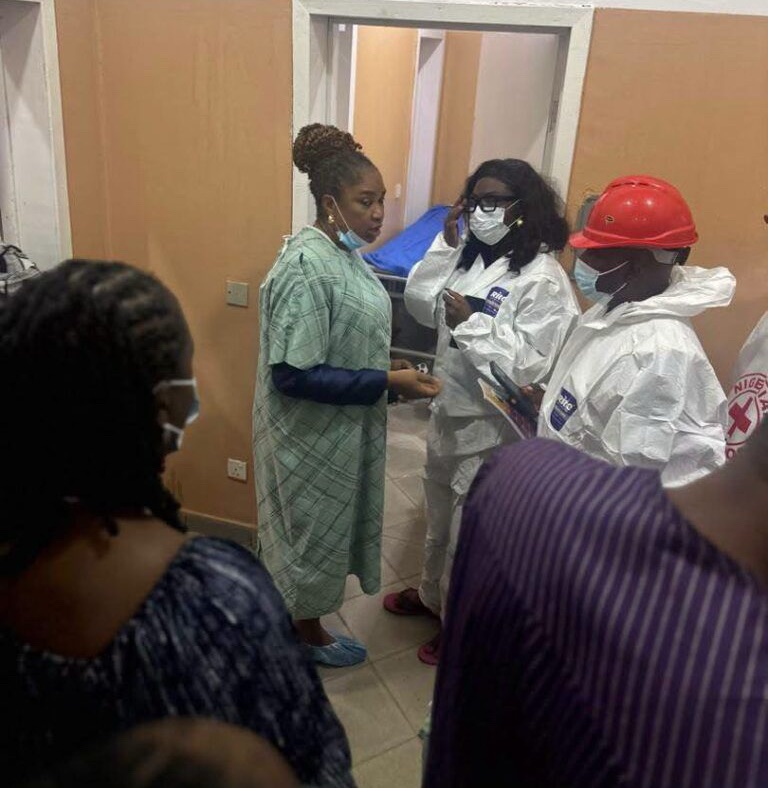
BENIN CITY, Edo State — The Chief Executive Officer of the Edo State Healthcare Regulation and Monitoring Agency (EDOHERMA), Dr. Adesuwa Urhoghide-Edigin, has visited victims of the recent Oluku fire incident receiving treatment at the University of Benin Teaching Hospital (UBTH), reaffirming the agency’s commitment to infection prevention, patient safety and emergency preparedness.
The visit was aimed at assessing the condition of the casualties and ensuring adherence to established Infection Prevention and Control (IPC) protocols in their treatment and management.
Dr. Urhoghide-Edigin said emergencies place considerable pressure on healthcare facilities, making effective triage, safe patient handling, strict infection prevention measures and coordinated emergency response essential to protecting patients and healthcare workers.
She commended UBTH’s Chief Medical Director, Professor Idia Nibokun Ize-Iyamu, and the hospital’s Accident and Emergency team for their efforts in managing the victims in line with established clinical protocols.
The EDOHERMA chief executive also acknowledged the National Emergency Management Agency (NEMA), Edo State Emergency Management Agency (EDOSEMA) and the Nigerian Red Cross Society for observing appropriate hospital protocols during their visits to the affected patients.
She stressed that visits by emergency responders, government officials and humanitarian organisations must not disrupt clinical care or compromise infection prevention measures, patient privacy and the safety of healthcare personnel.
Reflecting on the lessons from the Oluku fire incident, Dr. Urhoghide-Edigin called for Emergency Preparedness Certification to become a core component of healthcare regulation and quality assurance across Edo State.
She disclosed that EDOHERMA had developed a Disaster Preparedness and Emergency Response Manual for healthcare facilities in the state. The document is expected to be shared with relevant stakeholders for input as part of efforts to strengthen emergency planning and response systems.
According to her, the agency will continue to prioritise emergency preparedness certification, Infection Prevention and Control Certification, periodic emergency drills, staff training, incident command systems and effective referral arrangements across healthcare facilities.
“Emergency preparedness must not be something we remember only when disaster strikes. It must become part of the everyday culture of every healthcare facility and every state. A facility that is not prepared for emergencies cannot be considered fully compliant with healthcare safety standards,” she said.
Dr. Urhoghide-Edigin further emphasised that healthcare regulation must be preventive, proactive and collaborative, supported by sustained partnerships among hospitals, emergency medical services, disaster management agencies and other relevant stakeholders.
She reaffirmed EDOHERMA’s commitment to ensuring that healthcare standards are not merely documented but effectively implemented, monitored and sustained in facilities across Edo State.
The agency’s chief executive extended her sympathy to those affected by the Oluku fire incident and wished the victims receiving treatment a speedy and complete recovery.
Responding, Professor Ize-Iyamu reaffirmed UBTH’s commitment to strict compliance with clinical standards, infection prevention measures and patient safety protocols. She also assured the EDOHERMA delegation of the hospital’s willingness to collaborate with the agency to strengthen healthcare standards and emergency preparedness across Edo State.
IBN News — Fearless, Strong & Reliable