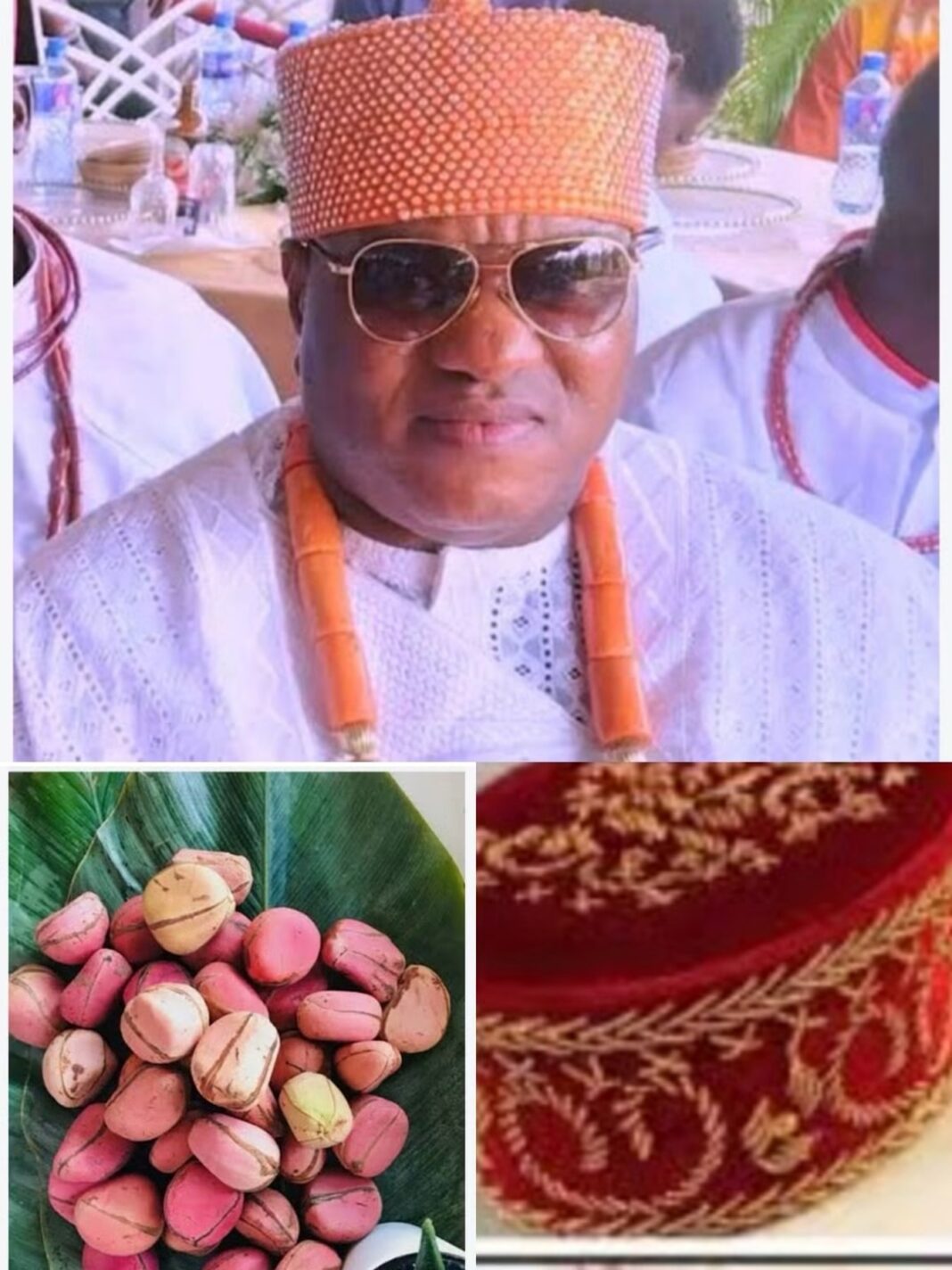


Benin City, Edo State — Fredrick Idehenre, Akoamhen of Ohordua Kingdom, has called for restraint and urgent intervention by the Council of Enijie following the controversy surrounding Chief Abudu Ugbesia’s conduct at the palace of the Ojuromi of Uromi, Zaiki Anselm Edenojie II.
In a statement titled “The Kola, the Cap and the Evolving Esan Custom,” Idehenre argued that the dispute had generated unnecessary tension and urged stakeholders to examine the incident within the broader context of Esan traditional practices, protocol and the evolving relationship among the kingdoms.
He maintained that Esan customs have undergone changes over time, using the kola-nut ceremony as an example. According to him, traditional practices concerning the type of kola used for prayers have evolved, demonstrating that cultural institutions can adapt while preserving their essential values.
Idehenre also addressed the question of seniority among the Enijie, arguing that recent modifications to the understanding of the principle of “first among equals” should not be interpreted as an attempt to diminish the traditional position of the Ojirrua of Irrua.
He explained that, in his understanding of Esan protocol, seniority outside Esanland is determined by which monarch first ascended the throne among those present. Within Esanland, however, he argued that the host Onojie traditionally presides over the kola-nut ceremony and may invite a senior monarch to perform the ritual.
Turning to the Uromi incident, Idehenre stressed that Chief Ugbesia was reportedly present as chairman of the Edo State Traditional Medicine Practitioners, acting as an arbitrator rather than representing the Ojirrua of Irrua.
He argued that the distinction was important because Ugbesia’s conduct should not automatically be interpreted as an affront to the Ojirrua or as a direct confrontation between the traditional institutions of Irrua and Uromi.
Idehenre further questioned the use of the title of regent in relation to Irrua, noting that the kingdom has a reigning monarch. He described the matter as a separate internal issue within Irrua and said it was not the focus of his intervention.
On the central question of the cap, Idehenre maintained that the presence of an Onojie and a chief at the gathering required a clear understanding of traditional protocol and the respective status of the individuals involved.
He argued that the expectation to remove one’s cap during prayers and the breaking of kola-nut should be understood within the hierarchy of traditional authority. He also criticised what he described as an attitude among some traditional medicine practitioners who use the title of Ojie-Obo, or head of native doctors, while allegedly refusing to observe customary deference before traditional rulers.
According to Idehenre, Chief Ugbesia’s cap should be understood in the context of his chieftaincy status rather than interpreted as the royal cap of the Ojirrua, who remained in Irrua during the incident.
He nevertheless acknowledged that the Ojuromi might have committed procedural errors during the encounter, while maintaining that the monarch remained the host traditional ruler and therefore occupied the higher position in the palace setting. He urged Ugbesia to review his conduct and consider whether mistakes had been made.
The controversy emerged after reports circulated that Ugbesia had refused to remove his cap during prayers and the kola-nut ceremony at the Ojuromi’s palace, despite being reminded of the protocol by a palace chief. Uromi community representatives subsequently condemned the reported conduct as disrespectful to the monarch and called for an apology.
Idehenre’s intervention offers a different emphasis, urging stakeholders to separate the conduct of an individual chief from the traditional standing of the kingdom he comes from. His position is that the incident should not be allowed to worsen relations between Uromi and Irrua or undermine the wider unity of Esanland.
He called on the Council of Enijie to intervene promptly, examine the competing interpretations of custom and help resolve the dispute through dialogue. He also questioned whether the matter required the intervention of the Edo State Governor, suggesting that the traditional rulers themselves should take the lead in resolving the disagreement.
Idehenre concluded by warning against allowing the controversy to escalate beyond its present scope, stressing the need to preserve mutual respect, traditional dignity and peaceful relations among Esan kingdoms.
The debate has highlighted broader questions about customary authority, the interpretation of traditional protocol and the responsibilities of chiefs and monarchs when representing their respective institutions. While the parties may differ over the incident, a resolution through dialogue and the Council of Enijie could help prevent a disagreement over ceremonial conduct from developing into a wider traditional dispute.