
“OBI, GO BACK”: POLITICAL TENSION EXPLODES OVER ATTEMPT TO VISIT YELWATA MASSACRE VICTIMS
By: Ohimai Esezobor
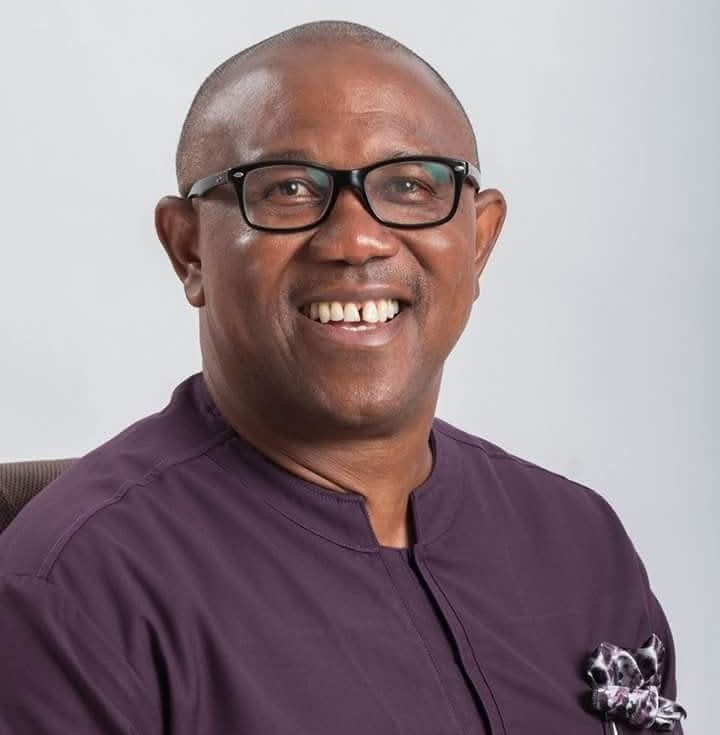
MAKURDI — Nigeria’s 2027 presidential race took a dramatic and troubling turn on Tuesday after the convoy of the Nigeria Democratic Congress (NDC) presidential candidate, Peter Obi, was blocked by youths in Makurdi, Benue State, as he attempted to travel to Yelwata to commiserate with families affected by the deadly 2025 massacre.
Obi, who arrived in Benue at about 9 a.m., said he was on a humanitarian mission to visit victims and families affected by the killings in Yelwata, where more than 270 people were reportedly killed in June 2025.
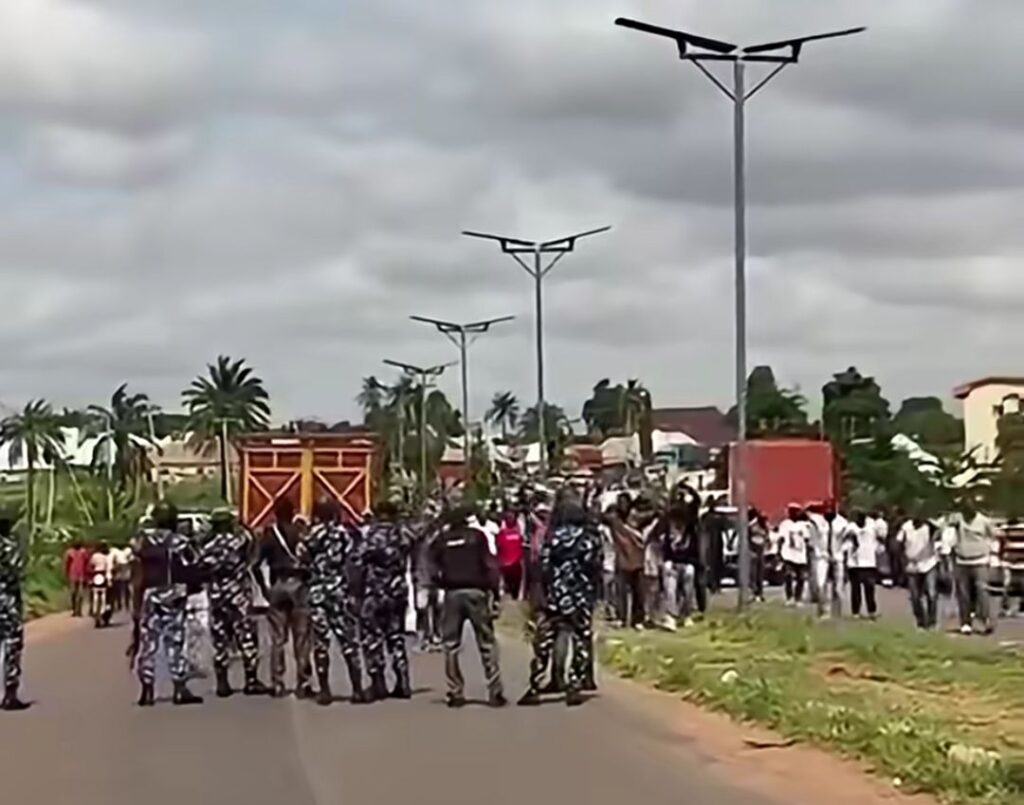
His planned visit, however, was abruptly cut short after youths barricaded the Makurdi-Gboko Road near the Nigerian Air Force Base and Makurdi Airport area.
Witness accounts and videos circulated from the scene showed groups of youths blocking the road and chanting against Obi’s presence, including the words, “Obi, go back.” Some reports said sticks were carried and stones were thrown during the confrontation.
Obi subsequently abandoned the journey rather than force his way through the crowd, returning to the airport before leaving the state.
The incident has immediately triggered a political confrontation over who organised the blockade, whether the state authorities knew about Obi’s visit and whether the former Anambra governor was deliberately prevented from reaching a community devastated by one of Benue’s deadliest attacks.
Obi himself accused suspected political thugs of obstructing his movement and alleged that youths had been mobilised to prevent him from reaching Yelwata.
Speaking to journalists after the incident, Obi described the development as “ridiculous” and “very, very worrisome”.
He said he had travelled to Benue specifically to condole with families affected by the Yelwata killings, show solidarity with the victims and discuss ways of preventing similar tragedies.
According to Obi, his visit was not intended as a campaign rally.
He questioned why a presidential candidate should be prevented from travelling within Nigeria, particularly when he was attempting to visit victims of violence.
Obi said he decided not to confront the protesters because doing so could have created a larger confrontation and potentially endangered innocent people.
The former governor said he preferred to remain civil rather than allow the situation to escalate.
He subsequently appealed to the Inspector-General of Police and other security agencies to intervene and prevent what he described as unacceptable political behaviour.
The NDC has also condemned the incident and demanded an investigation by the Benue State Government and security agencies.
The party said the obstruction was particularly disturbing because Obi’s stated purpose was to mourn with families who had lost loved ones.
The party called for those responsible to be identified and brought to justice, while demanding guarantees for the safety of political actors and citizens travelling within the state.
But the most explosive aspect of the controversy is the conflicting account surrounding the alleged involvement of the Benue State Government.
Obi and his political camp alleged that the youths were linked to an aide of Governor Hyacinth Alia.
Some reports quoted Obi and members of his team as saying they had been informed that a Special Assistant to the state government was leading or mobilising the youths blocking the road.
The NDC subsequently alleged that an aide to Governor Alia led the group and that some of those involved were armed with dangerous weapons. Those allegations have not been independently established.
The Benue State Government, however, has rejected any suggestion that it organised or sponsored the blockade.
Governor Alia’s Chief Press Secretary, Kula Tersoo, said the state government was not aware that Obi was coming to Benue.
He reportedly said the government did not patronise thugs and insisted that Obi, as a former governor and presidential candidate, was under federal protection.
The government therefore denied responsibility for the youths who blocked the road.
That denial has created a major unanswered question: if the state government did not organise the protesters, who did?
The question is now central to the controversy.
The Benue State Police Command has confirmed that Obi’s movement was known to the police and that security personnel were deployed to protect him.
Benue State Commissioner of Police, Cletus Nwadiogbu, said the command was informed about Obi’s planned visit on Monday night.
According to the police commissioner, security personnel were deployed for the journey, with the Assistant Commissioner of Police in charge of Operations instructed to personally lead the security team.
But when Obi’s convoy arrived, youths reportedly blocked the road and declared that they did not want him to proceed.
Nwadiogbu said the police tactically managed the situation and were investigating why the youths took the decision to block the presidential candidate’s movement.
The police position is significant because it appears to contradict the suggestion that the authorities were completely unaware of Obi’s visit.
While the Benue State Government has said it was not informed, the police command says it knew about the planned journey and deployed personnel.
The dispute therefore extends beyond the identity of the protesters to a broader question of coordination between the political authorities and security agencies during the emerging 2027 election season.
The incident also has a political history.
It was not the first time Obi’s movement in Benue has generated controversy.
According to reports, the former Anambra governor faced another dispute over a proposed visit to internally displaced persons in the state in 2025, when the Benue State Government reportedly cited security and protocol concerns.
The latest confrontation therefore risks reinforcing accusations from Obi’s political camp that the former governor is being deliberately restricted in Benue.
The government, on the other hand, has rejected such suggestions and maintained that it had no role in Tuesday’s blockade.
The political temperature surrounding the incident is particularly significant because the 2027 presidential campaign is already beginning to take shape.
Obi’s NDC is positioning itself as a major opposition force, while the former governor has repeatedly presented himself as an advocate of issue-based politics and a departure from Nigeria’s traditional political culture.
His visit to Benue was therefore politically sensitive even though he described it as humanitarian.
Yelwata remains a deeply emotional location in Nigeria’s security debate.
The community in Guma Local Government Area was devastated by the June 2025 attack in which hundreds of residents were reportedly killed.
The killings generated nationwide outrage and renewed concerns about the protection of rural communities in Benue and other parts of Nigeria’s Middle Belt.
For Obi to attempt to visit families affected by that tragedy during the early phase of the 2027 political season inevitably carries both humanitarian and political significance.
But the fact that his convoy was stopped before reaching the community has now transformed what was intended as a condolence visit into another national political controversy.
Obi has argued that Nigerians should be free to travel across the country without political intimidation.
He said Benue residents deserve the right to sleep without fear, travel without fear and cultivate their farms without fear.
He also warned against using young Nigerians as instruments of political confrontation.
According to him, many of the youths who are being mobilised for political activities are themselves victims of poverty, insecurity and unemployment.
He argued that political leaders should be providing opportunities for young Nigerians rather than allegedly deploying them to obstruct political opponents.
The former governor also appealed to security agencies to protect political actors and maintain order as the country approaches the 2027 elections.
The confrontation has drawn reactions from opposition politicians and civil society figures.
The NDC has demanded an immediate investigation, while other opposition figures and activists have condemned the blockade and called for greater protection for political candidates.
The incident has also raised questions about whether political parties and state authorities are adequately preparing for the increasingly competitive 2027 electoral environment.
The police have said they are investigating the circumstances surrounding the blockade.
That investigation will be crucial.
It must establish who mobilised the youths, what motivated the protest, whether weapons were involved, whether anyone assaulted or threatened Obi’s convoy, and whether any government official or political actor had a role in organising the blockade.
It must also determine whether the protesters were acting independently or as part of a coordinated political operation.
At the same time, allegations against the Benue State Government or any of its officials require evidence before responsibility can be conclusively assigned.
For now, what is established is that Obi’s convoy was blocked, the police were present, the planned visit to Yelwata did not take place, and competing accounts have emerged over who was responsible and whether the state government knew about the trip.
The controversy has therefore moved beyond a single road blockade.
It has become a test of political tolerance, security preparedness and the ability of Nigerian institutions to guarantee freedom of movement during an increasingly heated electoral cycle.
For a country still battling deadly communal violence, the optics are particularly damaging.
A presidential candidate attempting to visit families who lost loved ones in a massacre should not become the centre of another confrontation involving political supporters and road blockades.
Whatever political differences exist between Obi, Governor Alia, the NDC and other political interests, the protection of human life and the freedom of lawful movement should remain above partisan calculations.
The Benue Government’s denial of involvement and the police confirmation that they were aware of Obi’s visit now make an impartial investigation even more important.
The authorities must establish the facts, identify those responsible and ensure that political differences do not descend into violence.
Obi ultimately left Benue without reaching Yelwata.
But the political fallout from the incident is unlikely to disappear with his departure.
Instead, the confrontation has placed a harsh spotlight on Benue as Nigeria moves towards another fiercely contested presidential election.
The question now is not simply why Peter Obi was stopped.
It is who stopped him, who authorised the blockade, whether anyone in authority knew about it, and why a presidential candidate travelling to mourn victims of a massacre could be prevented from reaching them.
Until those questions are answered, the Benue blockade will remain an unsettling symbol of the political tensions already gathering ahead of 2027.
IBN News will continue to follow the police investigation and responses from Peter Obi, the NDC, the Benue State Government and other relevant authorities.