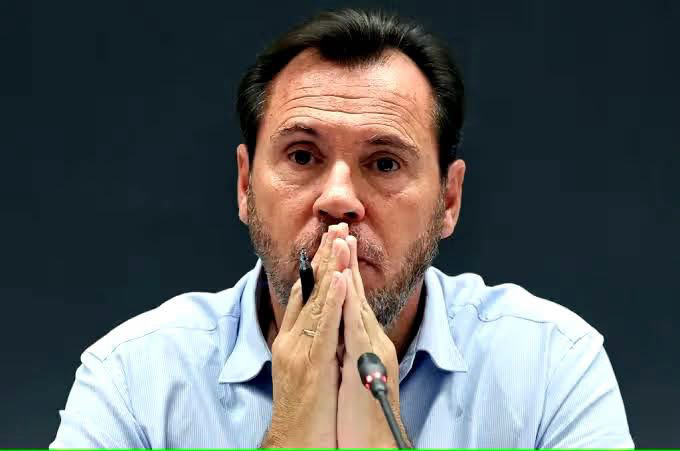

Mobolaji Sanusi has challenged African political leaders and public office holders to embrace voluntary resignation as a demonstration of political responsibility, using the decision of Spain’s former Transport Minister, Óscar Puente, to highlight what he describes as a troubling culture of clinging to power across the continent.
In a viewpoint article titled “Spain’s Puente and Africa’s Elusive Political Dignity,” published on November 6, Sanusi argued that public office should be treated as a position of trust rather than a personal reward, insisting that political leaders must be prepared to accept responsibility when serious failures occur under their supervision.
Puente announced his resignation following two major railway disasters in Spain within the same year. The latest collision occurred near Adamuz, in southern Spain, killing at least 45 people, while an earlier crash on the same line had also raised serious concerns about railway safety.
The minister made the announcement during an appearance before Spain’s Congress, saying that a transport minister in a country like Spain could not remain in office after two accidents of such severity in less than a year. He also withdrew from the Socialist Party’s candidate list for the November 29 elections.
Although investigations into the railway disasters had not established that Puente was personally responsible for the crashes, his decision to step aside was presented as an acceptance of political responsibility. Prime Minister Pedro Sánchez praised the move, saying the minister had faced the situation, provided answers and solutions, and then stepped aside out of respect for the victims.
Sanusi described the decision as an example of political dignity, arguing that African public officials often respond differently when major disasters, institutional failures or administrative controversies occur.
According to him, the usual response in many African countries is to issue condolences, establish investigative committees and allow the officials responsible for the affected institutions to remain in office while investigations proceed.
He argued that such committees frequently fail to produce meaningful accountability, with their reports allegedly receiving little attention and recommendations rarely translating into sanctions or institutional reforms.
Sanusi also referred to the deaths of suspected illegal miners in the custody of the Nigeria Security and Civil Defence Corps in Niger State, questioning the culture of accountability surrounding serious incidents involving public institutions.
The columnist further cited Education Minister Tunji Alausa’s reported disclosure that NECO examination questions had been leaked, arguing that such revelations raised questions about responsibility for weaknesses in the examination system.
Sanusi also referenced the October 2024 cabinet reshuffle under President Bola Tinubu, during which several ministers, including former Education Minister Tahir Mamman, former Women Affairs Minister Uju Kennedy-Ohanenye, former Tourism Minister Lola Ade-John and former Youth Development Minister Jamila Bio Ibrahim, were removed from office.
He mentioned former Humanitarian Affairs Minister Betta Edu, who was suspended in January 2024 following public controversy over a reported ₦585 million payment directed to a private account.
Sanusi argued that these cases illustrate the difference between officials voluntarily accepting responsibility and waiting for the appointing authority to remove them.
He also criticised the broader reluctance of public officials to leave office amid persistent electricity challenges, citing former Power Minister Adebayo Adelabu as an example of an official who faced sustained criticism over the power sector.
The columnist further referenced former Agriculture Minister Sabo Nanono and former Power Minister Saleh Mamman, who were dismissed by former President Muhammadu Buhari in September 2021.
For Sanusi, the central issue is not whether a minister or political appointee is automatically guilty whenever a disaster occurs. Rather, he argued that accepting political responsibility should not be treated as an admission of criminal wrongdoing.
He maintained that the distinction is important because an official may choose to step aside to restore public confidence, demonstrate respect for victims or allow an institution to rebuild trust without necessarily accepting personal criminal liability.
The columnist attributed the reluctance of many African political appointees to resign to political patronage and personal loyalty, arguing that officials often see their appointments as obligations to political benefactors rather than responsibilities owed to citizens.
He further argued that stronger parliamentary oversight, an independent judiciary, credible journalism and institutions capable of enforcing accountability are essential to creating a political environment where resignation is not interpreted as betrayal.
Sanusi concluded that Africa’s challenge is not a lack of capable individuals but the absence, in many cases, of political and institutional conditions that reward integrity and protect those willing to accept responsibility.
He called for a political culture in which loyalty to the public takes precedence over loyalty to the authority that appointed an official, insisting that voluntary resignation should be recognised as a legitimate instrument of public accountability.
About the Author: Mobolaji Sanusi is a former Managing Director/Chief Executive Officer of the Lagos State Signage and Advertisement Agency (LASAA). He is currently the Managing Partner at AMS RELIABLE SOLICITORS.
WhatsApp only: 07011117777
IBN News — Fearless, Strong & Reliable