
FAAN STRIPS 50-YEAR-OLD TERMINAL TO LAGOS INTERNATIONAL AIRPORT TAKES A NEW SHAPE AS MASSIVE MMIA TRANSFORMATION GATHERS PACETS CORE, BUILDS NEW ROADS, SKYBRIDGES AND MODERN SYSTEMS FOR NIGERIA’S GLOBAL GATEWAY
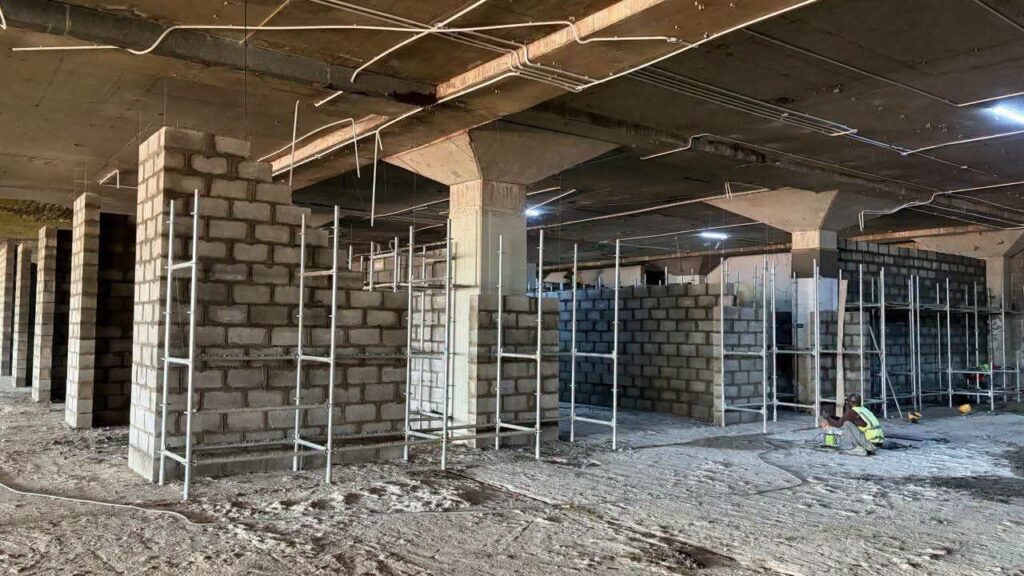
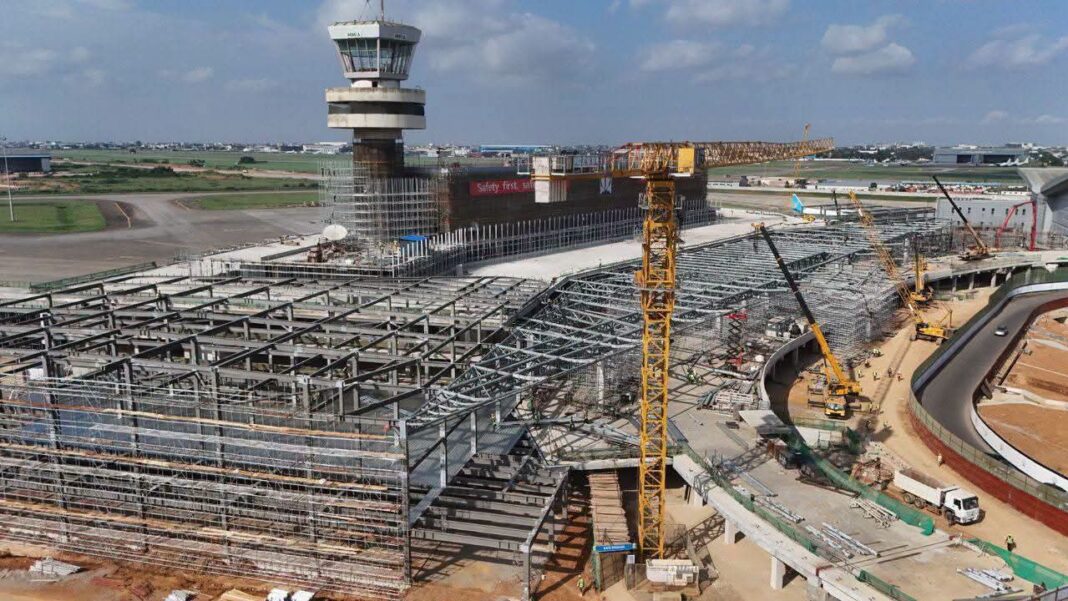
LAGOS — Nigeria’s busiest international aviation gateway is undergoing one of the most dramatic transformations in its history, with major structural works, new access roads, elevated connections and extensive redevelopment activities rapidly changing the physical appearance of the Murtala Muhammed International Airport in Lagos.
What is emerging around the airport complex is far more than a conventional facelift.
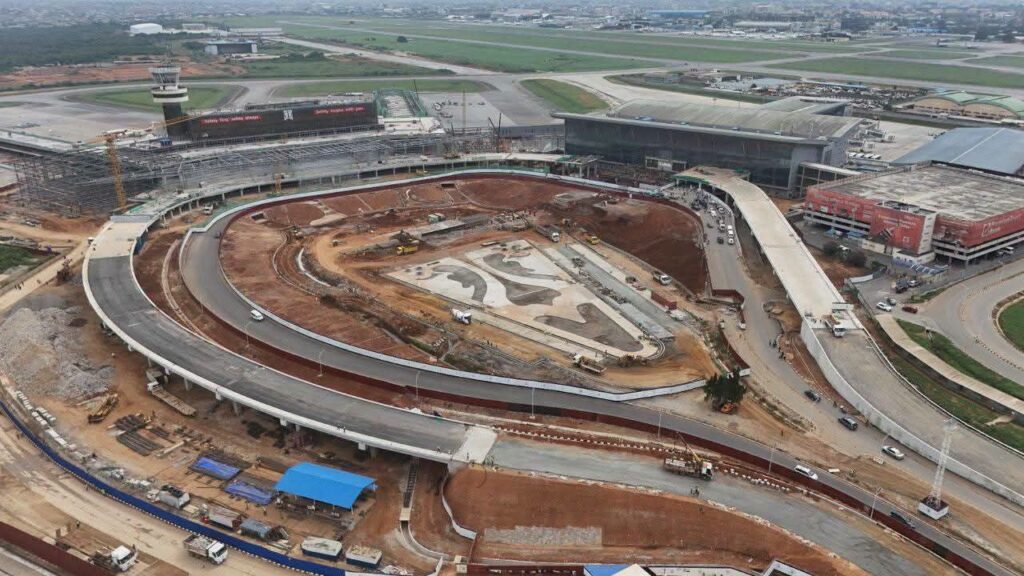
The Federal Airports Authority of Nigeria, FAAN, is carrying out a comprehensive rehabilitation and expansion project designed to transform the ageing international airport into a more modern, efficient and globally competitive aviation hub.
At the centre of the redevelopment is Terminal One, the nearly 50-year-old international terminal that has served as one of Nigeria’s most important gateways to the world for decades.
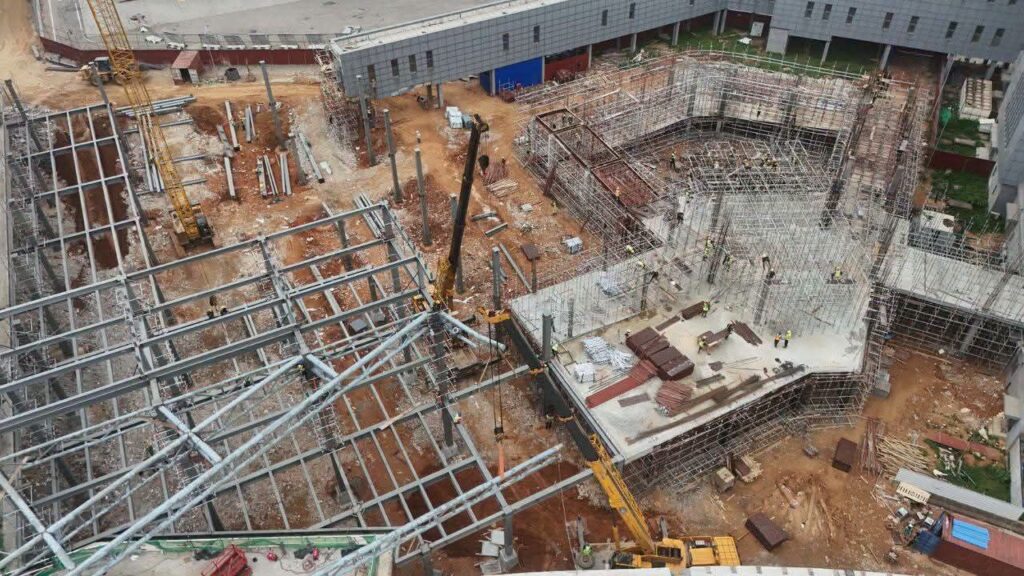
The building is undergoing what FAAN describes as a full-scale modernisation, with the existing terminal being stripped back to its concrete core structure and rebuilt with upgraded mechanical, electrical, plumbing, security and passenger-facing systems.
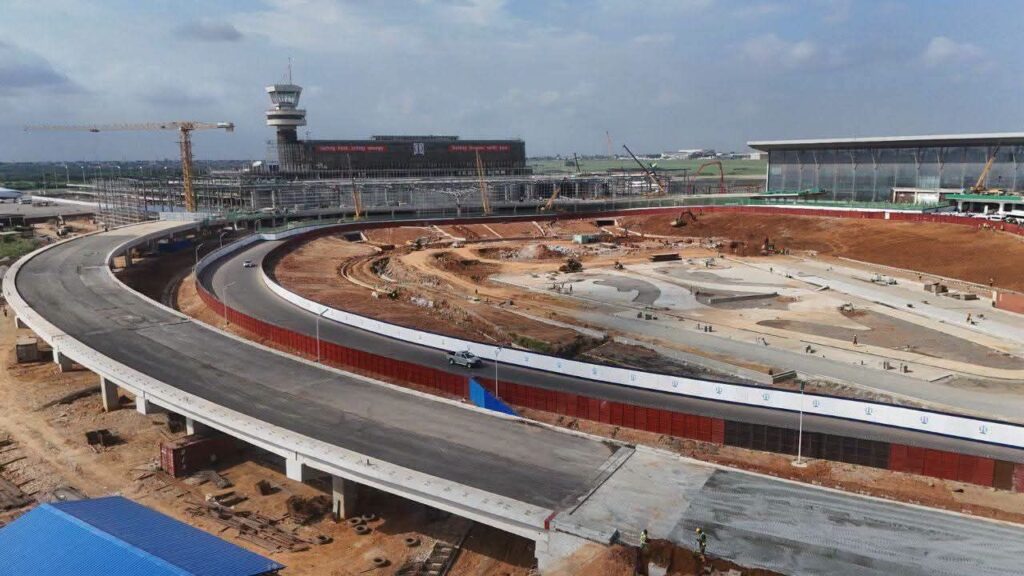
FAAN said the terminal’s structural frame would also be reinforced to extend its lifespan, while a modern glass curtain wall and redesigned façade would give the facility a dramatically different appearance.
The scale of the project has become increasingly visible around the airport, where major construction activities are reshaping roads, access points and the wider terminal environment.
Cranes, heavy equipment and extensive structural works now dominate parts of the MMIA complex as Nigeria attempts to rebuild the physical and operational foundations of its busiest international airport.
The redevelopment is expected to address problems that have accumulated over decades at the airport, including ageing infrastructure, outdated systems, inefficient road access, congestion and difficulties in passenger movement between facilities.
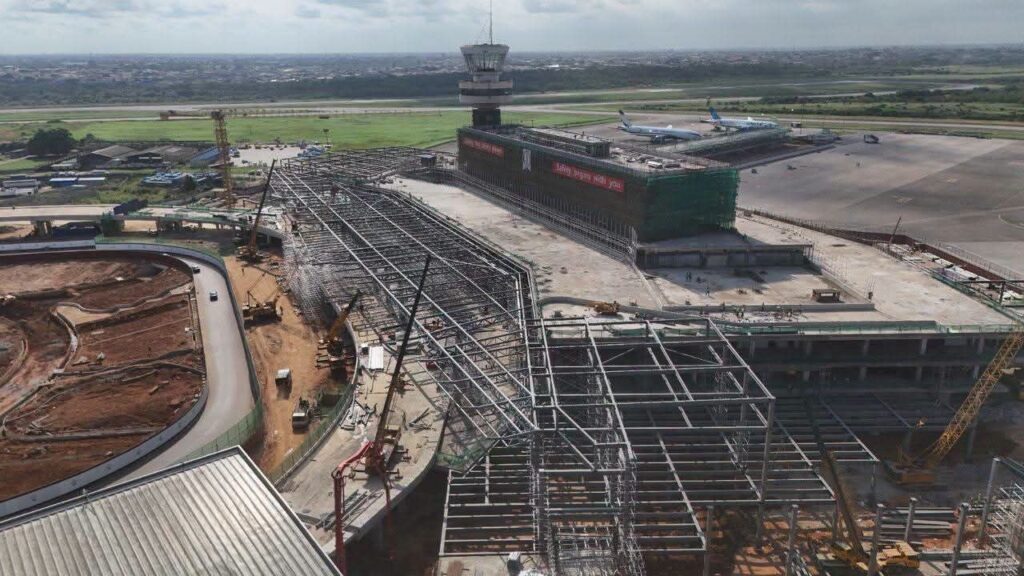
According to FAAN, Terminal One has been in operation for nearly five decades, and its existing infrastructure no longer meets modern aviation safety and service expectations.
The authority has cited structural ageing, corrosion, outdated operational layouts and deteriorating mechanical and electrical systems as some of the major reasons the extensive rehabilitation became necessary.
Rather than attempting to simply repair individual sections of the old terminal, the government and FAAN opted for a much deeper reconstruction of the facility.
FAAN said all major interior systems, including heating, ventilation, air-conditioning, plumbing, electrical and mechanical infrastructure, are being overhauled to meet long-term operational requirements and international aviation standards.
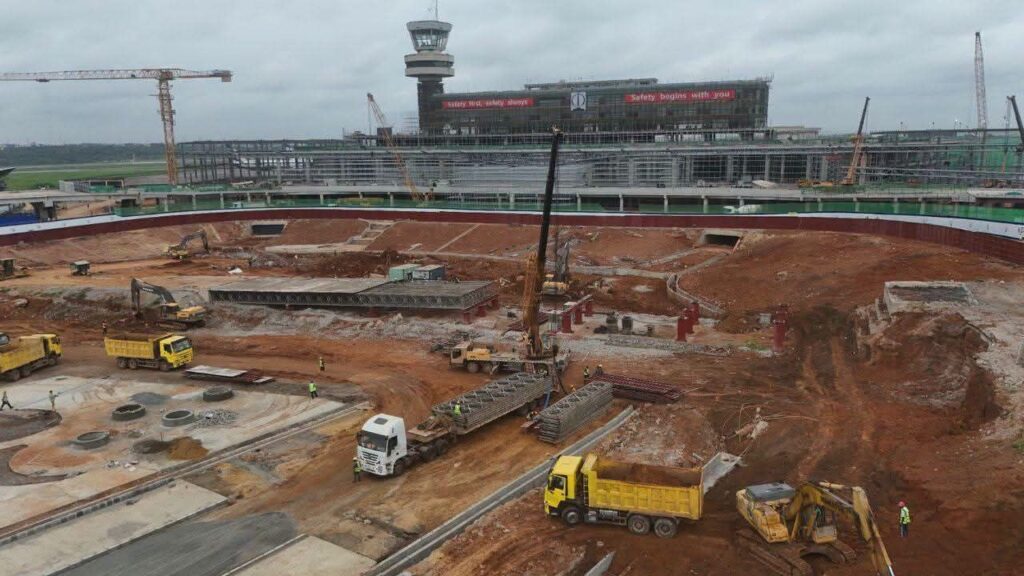
The transformation also extends beyond the terminal building itself.
A major redesign of passenger movement and airport access is underway, with new road systems being developed to improve the movement of vehicles and reduce congestion around the terminal complex.
The project includes separate access arrangements for arriving and departing passengers, as well as improved connections between Terminal One and Terminal Two.
FAAN has also outlined plans for two independent ring roads serving the airport complex, including separate routes for departure and arrival traffic.
A bridge is also planned to provide direct access to the upper level of Terminal Two, while a connection building will link the previously separated terminal facilities.
The redevelopment will also include a skywalk connecting the airport’s car park building to Terminal Two, creating a more integrated airport complex.
For decades, parts of the MMIA terminal infrastructure have operated as relatively separate facilities, creating challenges for passenger movement and airport management.
The new connection systems are designed to change that.
FAAN said the redevelopment would transform the previously isolated terminal buildings into a more unified complex, allowing for smoother movement and improved operational coordination.
Terminal Two is also undergoing expansion as part of the wider project.
The expansion is expected to increase the terminal’s ability to accommodate wide-body aircraft through the extension of the boarding finger and apron.
FAAN said the expansion would increase aircraft handling capacity and provide additional operational space at one of Nigeria’s most strategically important aviation facilities.
The transformation is being carried out while international aviation operations continue through temporary arrangements designed to prevent major disruptions to passengers and airlines.
As Terminal One undergoes its extensive rehabilitation, FAAN has developed an approximately 8,000-square-metre temporary departure facility to handle passenger processing.
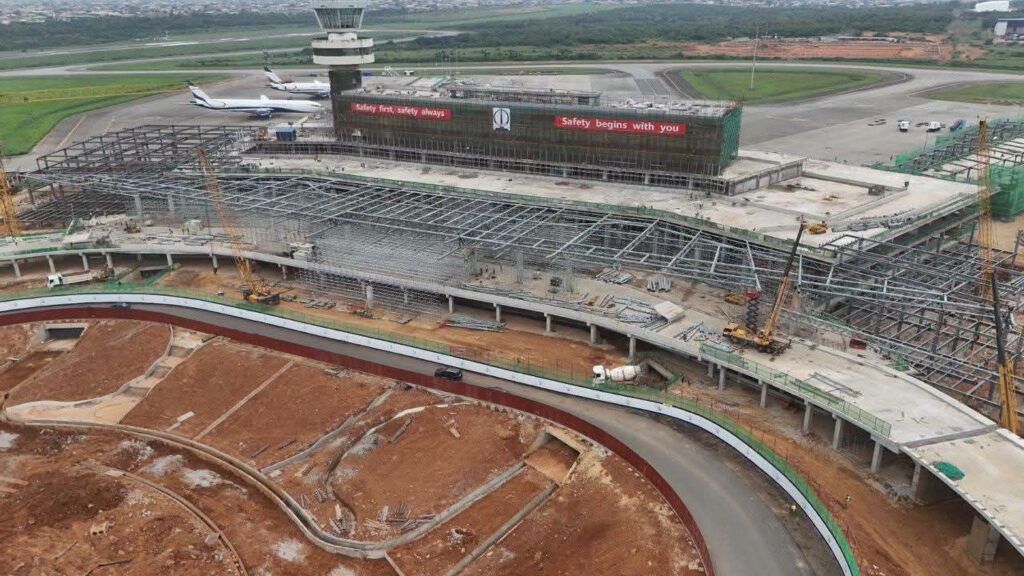
The temporary hall is designed to accommodate up to 1,500 passengers during peak periods and includes check-in counters, security screening facilities and boarding gates.
The arrangement is intended to allow major reconstruction work to continue at Terminal One without shutting down international flight operations at Lagos.
Terminal Two and the temporary facility are expected to play a critical role in maintaining passenger services during the transition period.
FAAN said the rehabilitation is being implemented in phases to reduce disruption and ensure that Nigeria’s main international gateway remains operational throughout the redevelopment.
The scale of the project reflects the strategic importance of Lagos to Nigeria’s aviation industry.
The Murtala Muhammed International Airport is the country’s principal international gateway and serves one of Africa’s largest commercial and population centres.
Millions of passengers travelling into and out of Nigeria pass through Lagos every year, making the quality, capacity and efficiency of the airport important not only to the aviation sector but also to trade, tourism, investment and Nigeria’s international image.
For many international visitors, the airport is their first physical experience of Nigeria.
For that reason, FAAN has increasingly framed the redevelopment as more than an infrastructure project.
The authority says the objective is to create a modern aviation gateway that reflects Nigeria’s economic ambition and improves the country’s competitiveness within Africa and the global aviation industry.
FAAN has described the transformation as a move beyond ordinary renovation towards a comprehensive re-engineering of infrastructure, passenger experience, security systems and airport operations.
The upgraded airport is expected to feature modern security screening and surveillance systems, improved baggage handling, faster passenger-processing arrangements and more efficient movement through the terminal.
FAAN has also outlined plans for automated systems, upgraded lounges, redesigned commercial spaces, improved waiting areas and enhanced facilities for families, elderly passengers and persons with reduced mobility.
The redevelopment is expected to significantly improve the airport’s passenger-handling capacity.
According to FAAN, Terminal One currently handles about 500 passengers during peak periods because of operational and facility limitations.
Following the rehabilitation, the authority projects that the terminal could handle up to 3,840 passengers per hour.
Combined with Terminal Two’s projected peak capacity of 3,200 passengers per hour, FAAN estimates that the two facilities could handle about 7,040 passengers per hour after the redevelopment is completed.
The authority has projected that the combined annual passenger capacity of the terminals could eventually reach approximately 17.6 million passengers.
The project, however, will require patience from passengers and airport users as construction continues.
FAAN has warned that temporary changes to routes, access points, passenger movement and signage are unavoidable during the rehabilitation period.
The authority has advised travellers to follow airport instructions and arrive early for international flights as operations continue through temporary facilities.
But the visible construction activity around the airport already provides a glimpse of the scale of the transformation planned for Lagos.
The old image of an airport struggling under the weight of decades of ageing infrastructure is gradually being replaced by a major construction site preparing for a completely different future.
For Nigeria, the stakes are high.
Airports have become increasingly important as economic infrastructure, serving not only as transport centres but also as gateways for investment, tourism, trade, logistics and international business.
Major cities across Africa are investing heavily in aviation infrastructure as governments compete to attract airlines, passengers, cargo operators and international investment.
Lagos, as Nigeria’s commercial capital and one of Africa’s largest cities, faces increasing pressure to develop airport infrastructure capable of matching its economic importance.
The ongoing MMIA redevelopment is therefore being viewed as a major test of Nigeria’s ability to modernise critical infrastructure.
If successfully completed as planned, the project could significantly improve passenger experience, airport efficiency and Nigeria’s international aviation profile.
FAAN says the objective is to establish the Murtala Muhammed International Airport as a safer, smarter, more efficient and more globally competitive aviation hub.
The authority has also emphasised that the transformation is intended to improve Nigeria’s position as a major aviation centre in West Africa.
The rehabilitation is expected to take approximately 22 months, barring unforeseen delays, according to FAAN’s project timeline.
The work is being executed by China Civil Engineering Construction Corporation, CCECC, under the supervision of the Federal Ministry of Aviation and Aerospace Development and FAAN’s Engineering Services Directorate.
For now, construction continues.
But from the new access roads and structural works to the redevelopment of the terminal complex and expansion of supporting facilities, the physical evidence of change is becoming increasingly difficult to ignore.
Lagos is not simply getting a renovated airport.
Nigeria is attempting to rebuild the experience, infrastructure and image of its most important international aviation gateway.
And as the massive construction project continues to take shape, the question is no longer whether the Murtala Muhammed International Airport will look different.
The real question is whether the final result will deliver the modern, efficient and globally competitive gateway that Africa’s largest economy has long needed.
IBN News will continue to monitor the progress of the MMIA rehabilitation and expansion project.