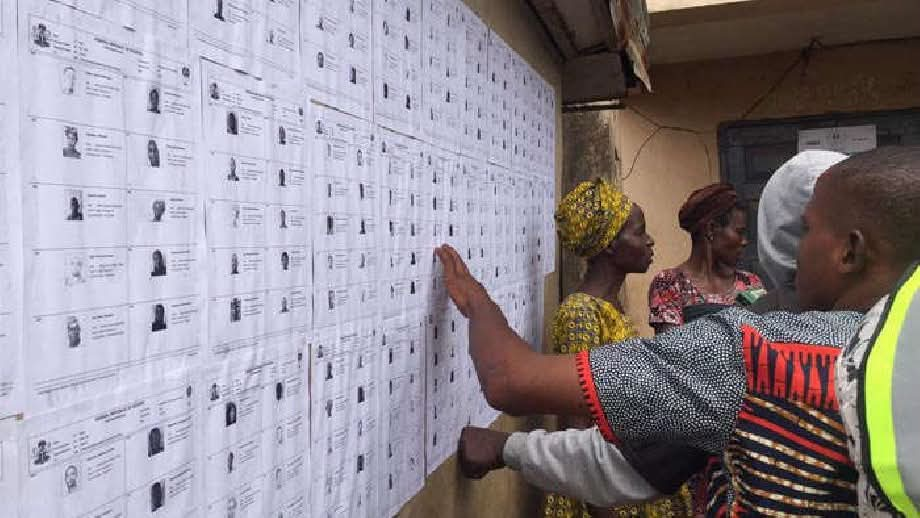

The Independent National Electoral Commission (INEC) has begun reviewing and removing questionable entries from Nigeria’s preliminary voter register after identifying 268 records flagged for suspected artificial intelligence-generated photographs and other irregularities, raising fresh concerns about the integrity of the electoral database ahead of the 2027 general elections.
The development comes amid growing public scrutiny of the voter register following the commission’s online publication of the preliminary list on October 26, 2026. Social media users subsequently raised questions about suspicious photographs, possible duplicate entries and records bearing the names of deceased persons.
INEC’s Director of Information and Communication Technology, Lawrence Bayode, disclosed that the commission’s Automated Biometric Identification System (ABIS) had flagged 268 records for further examination over suspected AI-generated images and other irregularities.
“What we are currently doing now is looking at all these 268 records that ABIS already flagged as AI-generated or even something of irregularities,” Bayode said.
He explained that the commission was investigating how questionable records entered the database, alleging that some registration officers had used their official login credentials to introduce irregular entries into the system.
According to Bayode, some cases also involved the alleged misuse of a special registration option intended to accommodate people with disabilities, including individuals with incomplete or missing fingers.
The revelation raises questions about compliance with registration procedures, the protection of official credentials and the effectiveness of internal controls designed to prevent the introduction of ineligible or improperly documented records into the electoral database.
Bayode said the commission had begun removing questionable entries identified during its review, stressing that the process was ongoing.
However, he clarified that the use of artificial intelligence to enhance a genuine photograph would not automatically disqualify a voter. Photographs belonging to legitimate registrants that had been improved using AI-enabled tools on mobile phones could remain in the register, while entirely AI-generated photographs would be subject to removal.
The distinction is significant because the presence of an AI-enhanced photograph does not, by itself, establish that a voter is fictitious or ineligible. The central question is whether the image and accompanying biometric and personal records correspond to a genuine, eligible registrant.
INEC’s preliminary register is intended to undergo scrutiny and correction before certification. The commission has indicated that verification and cleanup will continue ahead of the December 15, 2026 deadline for certifying the final register, which is expected to be used for the 2027 general elections.
The controversy has intensified pressure on the electoral body to demonstrate that its voter database is accurate, secure and resistant to manipulation. A credible register is fundamental to elections because it determines who is eligible to vote and provides the basis for planning electoral materials and polling arrangements.
The reported involvement of registration officers, if established through a proper investigation, would also raise concerns about institutional accountability. Access credentials should be protected, registration procedures strictly enforced and any deliberate misconduct referred to the appropriate authorities for disciplinary or legal action.
At the same time, the identification of 268 questionable records should not be interpreted as proof that all the flagged entries are fraudulent or that the entire voter register has been compromised. Each record requires verification, and the commission has not established publicly, in the information provided, that every flagged case involves a fictitious voter.
The appearance of names of deceased persons and possible duplicate entries in public scrutiny has added to calls for a transparent review process. INEC will need to distinguish between genuine errors, outdated records, technical anomalies and deliberate attempts to manipulate registration data.
For political parties, election observers and voters, the immediate concern is whether the commission can complete the cleanup before certification and provide credible assurances that the final register accurately reflects eligible voters.
The commission’s handling of the process will be a significant test of public confidence ahead of 2027. A thorough audit, clear explanations of the findings and appropriate action against proven misconduct would help strengthen trust; vague assurances without verifiable results could leave legitimate concerns unresolved.
With the December 15 certification deadline approaching, INEC faces mounting pressure to ensure that the final voter register is accurate, defensible and free from records that cannot withstand proper verification.