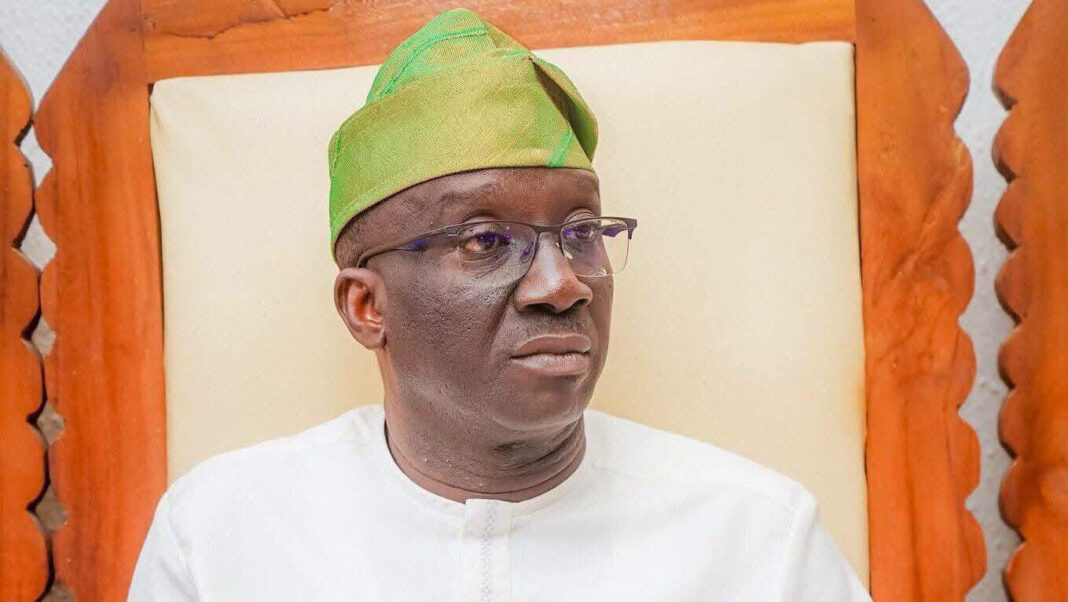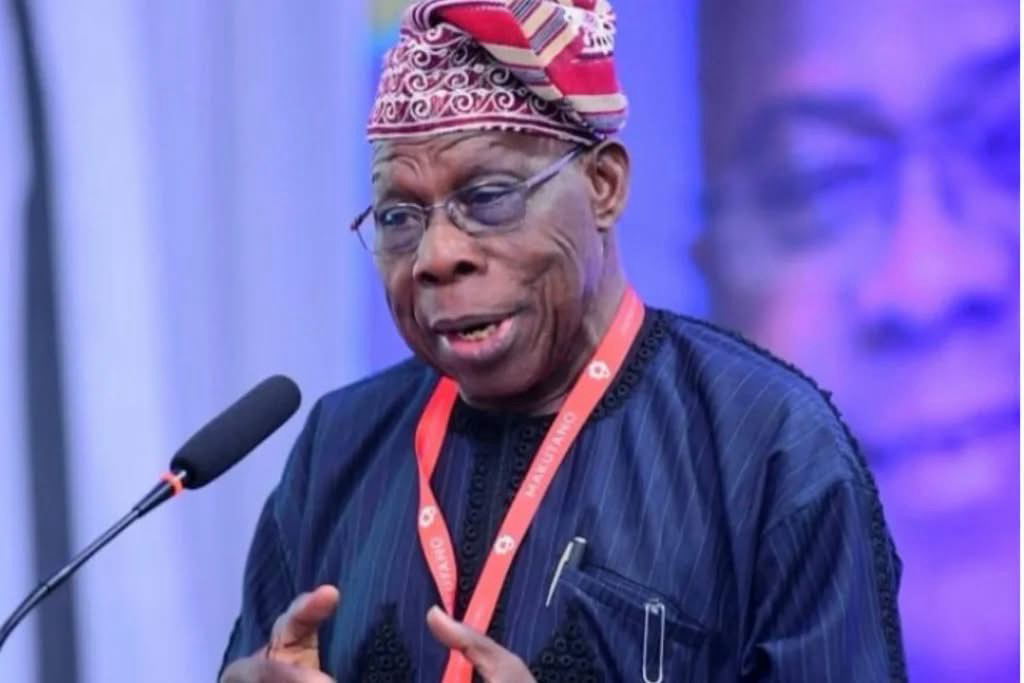

Former President Olusegun Obasanjo has strongly criticised President Bola Tinubu’s defence of government borrowing, declaring that debt is worse than leprosy because its consequences can affect generations yet unborn.
Obasanjo made the remarks on Friday, October 30, 2026, at the Ajibosin Platform, a public forum held in Abeokuta, Ogun State, with the theme, “Leveraging Artificial Intelligence to Solve Grassroots Problems and Accelerate National Development.”
The former President was reacting to Tinubu’s earlier assertion that borrowing should not be regarded as something inherently negative, provided the government works hard and has the capacity to repay its loans.
In April, Tinubu defended his administration’s borrowing policy during a meeting with Plateau State leaders at the Presidential Villa in Abuja.
“If we have to borrow, we borrow. Borrowing is not leprosy, we just have to work hard to be able to pay for it,” the President had said.
However, Obasanjo rejected the comparison, arguing that the effects of public debt extend far beyond the immediate borrower and could place a lasting burden on future generations.
“And for anybody to say debt is no leprosy, is absolute nonsense. Debt is worse than leprosy. Because leprosy destroys only one person. Debt destroys generations,” he said.
His comments come amid renewed public debate over Nigeria’s debt profile following Tinubu’s request for National Assembly approval of additional external loans amounting to $20.52 billion and €1.045 billion under the Federal Government’s 2026–2027 Supplementary External Borrowing Plan.
The request, conveyed in separate communications to the Senate and House of Representatives, was presented during plenary sessions on October 27 and 28.
Tinubu said the proposed facilities would support projects and programmes in infrastructure, agriculture, healthcare, education, water supply, security, employment generation and financial management reforms.
The President argued that the additional financing was necessary to address the country’s infrastructure deficit and bridge funding gaps affecting development projects.
The Senate referred the proposal to its Committee on Local and Foreign Debts for consideration, while the House of Representatives also began legislative consideration of the request.
Nigeria’s public debt has continued to attract attention. Figures reported from the Debt Management Office showed that the country’s total public debt rose from ₦87.38 trillion in June 2023 to ₦166.79 trillion in June 2026. The increase reflects not only additional borrowing but also the impact of exchange-rate movements on foreign-denominated obligations.
Beyond the borrowing debate, Obasanjo questioned Nigeria’s economic performance over several decades, particularly the depreciation of the naira against the United States dollar.
Recalling when he established his farm 47 years ago, the former President said the naira then exchanged at approximately ₦1 to $1.85.
“When I started my farm, 47 years ago, naira to the dollar was one naira to $1.85. Forty-seven years ago. What has Nigeria done in 47 years that we now have 1,500 naira to the dollar? What have we done?” he asked.
Obasanjo also raised concerns about the quality of leadership and the ability of political officeholders to understand and address the country’s development challenges.
“What do our leaders know? And what do they not know? And from what they know, what can they do for us?” he queried.
The former President further criticised Nigeria’s dependence on the World Bank and the International Monetary Fund, arguing that the institutions were established before Nigeria’s independence and that their economic prescriptions might not adequately reflect the country’s circumstances.
“World Bank and IMF were not designed for us. They were not built by us. They were built before we became independent. And that’s the people who would determine what we do,” he said.
He cautioned against adopting external economic policies without sufficiently examining their suitability for Nigeria’s realities, insisting that the country must develop approaches that address its own development priorities.
The exchange between the two leaders has renewed attention on the debate over the purpose, sustainability and long-term implications of government borrowing, particularly as the National Assembly considers the latest external borrowing proposal.
IBN News — Fearless, Strong & Reliable