


The Central Bank of Nigeria (CBN) is strengthening efforts to improve public financial reporting and accountability across government institutions through a digitalisation initiative targeting state and local government fiscal data.
The initiative took centre stage at a one-day fiscal stakeholder engagement organised by the CBN in collaboration with the Edo State Government, through the Ministry of Local Government and Chieftaincy Affairs.
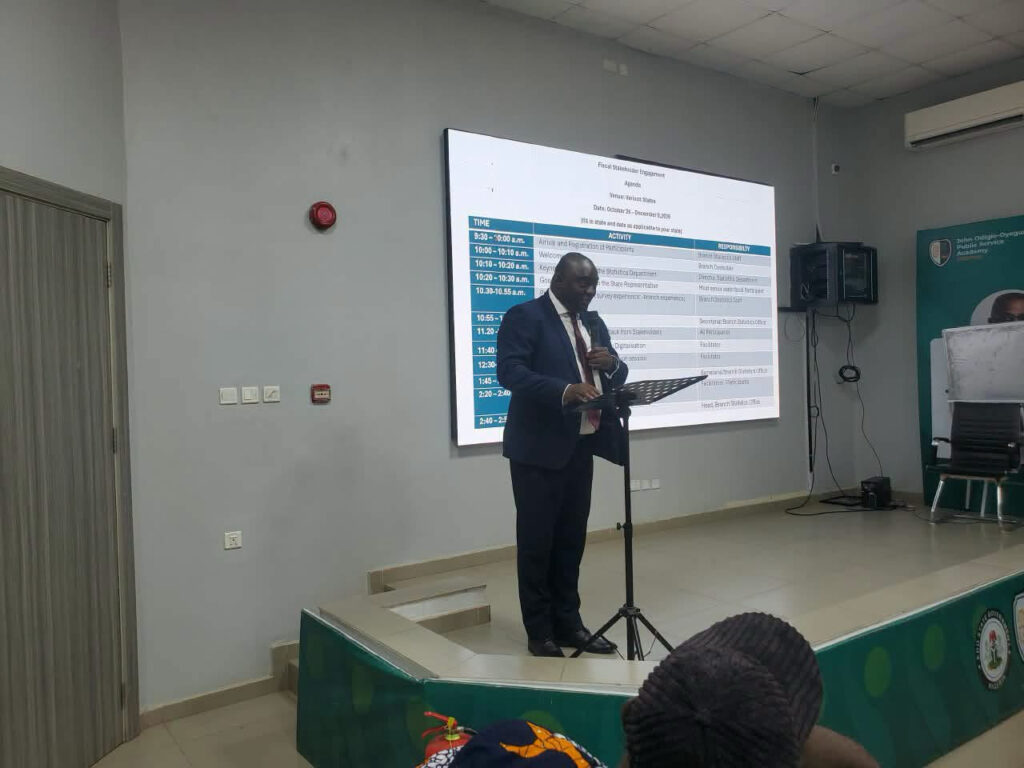
The engagement focused on moving the Sub-National Fiscal Survey from manual data collection and reporting to a digital system designed to improve accuracy, accelerate submissions, strengthen monitoring and provide more reliable fiscal information.
In a goodwill message, the Director of Policy Planning, Research and Statistics in the Ministry of Local Government and Chieftaincy Affairs, Dr Mrs Patience Uyigue, thanked participants for their involvement and highlighted the importance of adopting electronic fiscal reporting.

Uyigue said the transition would improve data accuracy, ensure timely reporting and strengthen governance across public institutions.
Delivering the keynote address on behalf of the Director of the CBN Statistics Department, the Principal Manager of the Survey Studies Office, CBN Abuja, Eze Annette, commended the CBN Benin Branch for hosting the engagement and praised the Edo State Government for its continued partnership.
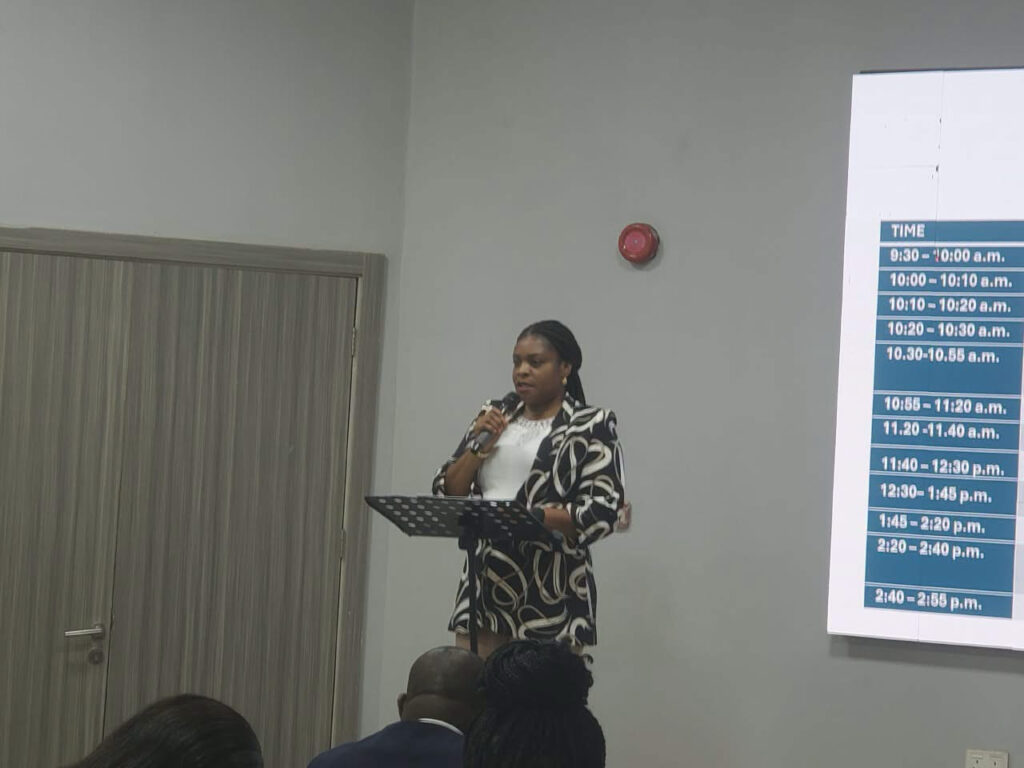
She described the engagement as important to strengthening national statistics and improving access to reliable fiscal information.
Annette explained that digitalisation was not merely about replacing paper-based processes with electronic platforms but also about improving the quality and dissemination of fiscal data through three key principles: timeliness, integrity and continuity.
Earlier, the CBN Benin Branch Controller, Mr Akpanke Utande Kingsley, described Edo State as an important contributor to Nigeria’s fiscal framework.
He said the engagement was intended to strengthen data validation, improve monitoring and ensure timely submission of fiscal reports.
Kingsley reaffirmed the CBN’s commitment to supporting statistics departments across states and local governments, stressing that the initiative represented a continuing strategic partnership rather than a routine training exercise.

The Head of the Statistics Office, CBN Benin Branch, Mr Edwin Murphy Ekuase, who facilitated a session on fiscal survey experiences, challenges and resolution strategies, explained that the survey covers government revenue, expenditure, borrowing, debt and off-budget activities.
He said the information was essential for assessing government financial performance and identifying weaknesses in public finance management.
Ekuase identified inaccurate or incomplete submissions, reporting delays and financial constraints as major challenges associated with manual data collection.
A presentation on fiscal digitalisation was delivered by Mr Michael Onuh of the Government Finance and Statistics Division, CBN Abuja.
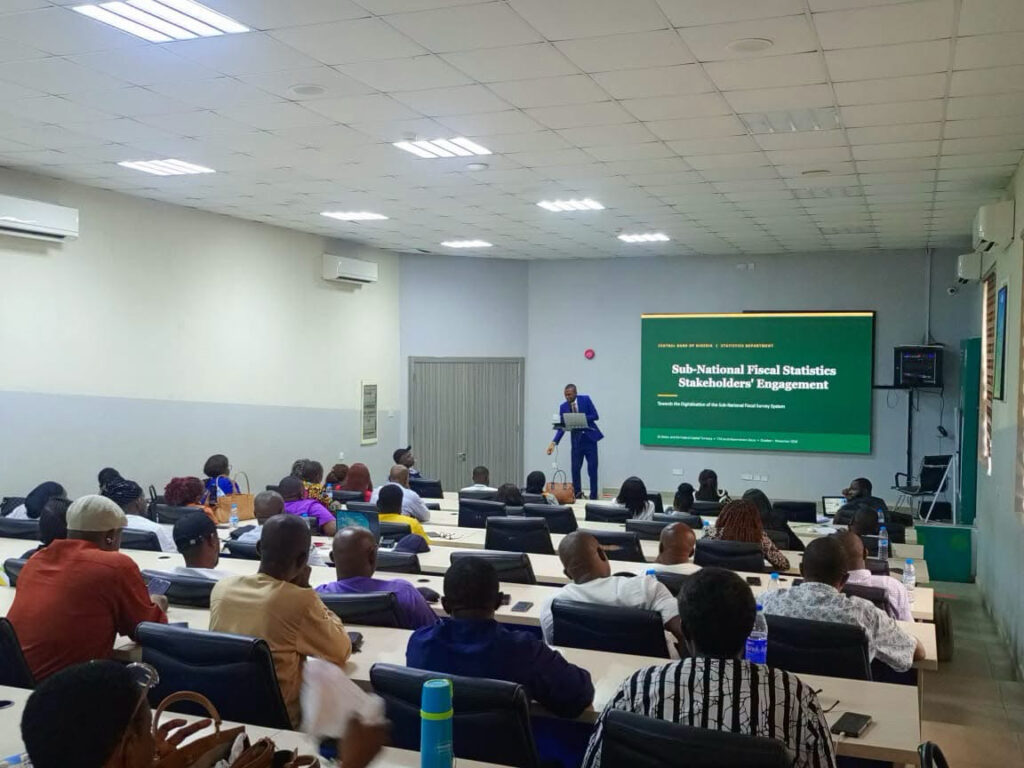
Onuh argued that fiscal data collection must go beyond submitting figures to include proper analysis capable of helping authorities identify and address national fiscal challenges.
He explained that digital systems could provide valuable information on fiscal balances and emerging financial pressures, while supporting budgeting, expenditure planning and public accountability.
He also identified cumbersome procedures, high operational costs, delayed releases and inadequate monitoring as some of the weaknesses of the manual reporting system.
According to him, digitalisation would introduce near real-time data submission, automated validation, reduced operational costs, improved monitoring and more efficient quarterly reporting.

The engagement concluded with a practical demonstration of the digital survey platform, allowing participants to understand how the system operates and how it would be applied in fiscal data collection and reporting.
The transition is expected to improve the quality of fiscal information available to policymakers and strengthen the monitoring of public finances across government institutions.
However, the effectiveness of the initiative will ultimately depend on consistent reporting, accurate data entry, adequate technical capacity and the commitment of participating institutions to maintain transparent financial records.
IBN News — Fearless, Strong & Reliable