
“NA WA OOOH!” — ACTIVIST QUESTIONS NAMING OF MAJOR DELTA ROAD AFTER SERVING GOVERNOR, SAYS IBORI’S LEGACY HAS BEEN PUSHED ASIDE
ASABA, DELTA STATE — Controversy is building in Delta State following criticism by activist and journalist Fejiro Oliver over the renaming of a major road in the state after Governor Sheriff Oborevwori, with Oliver accusing the Uvwie Local Government Chairman, Anthony Onoriode Ofoni, of engaging in what he described as excessive political praise-singing.
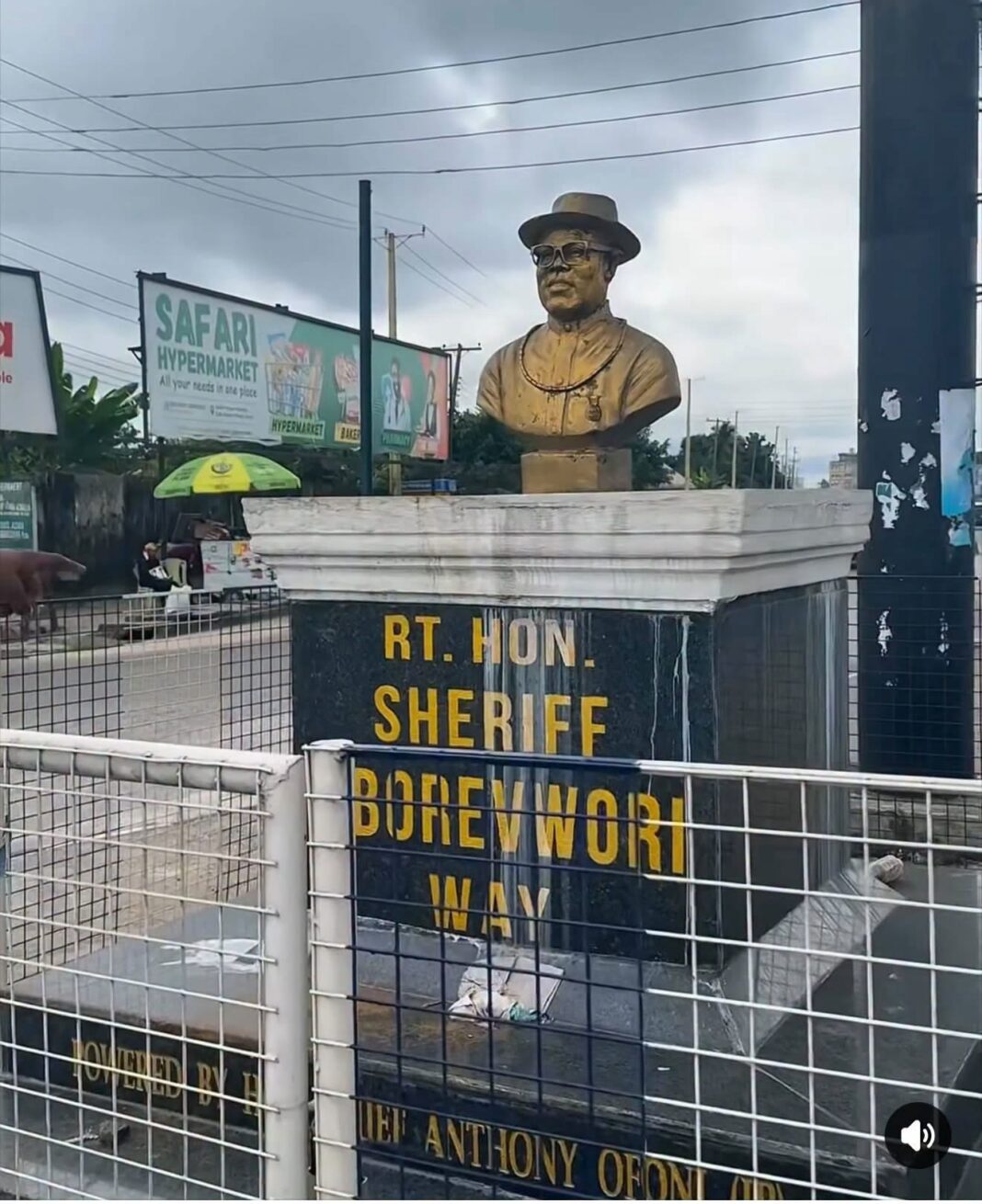
Oliver, in a strongly worded commentary, questioned the decision to rename Airport Road after the serving governor, arguing that the road carries a historical identity and significance among residents of Delta State.
The activist also criticised the placement of a statue associated with the renaming, comparing the development to the controversial practice of erecting statues and monuments to political figures while they are still in office.
Oliver’s criticism centres particularly on the argument that major public infrastructure should retain names connected with historical memory and the contributions of those responsible for their development, rather than being repeatedly renamed after serving political office holders.
He specifically recalled the construction of the Airport Road during the administration of former Delta State Governor James Ibori, arguing that the road became popularly known simply as “Airport Road” and that residents have continued to use the name regardless of subsequent political naming decisions.
According to Oliver, Ibori did not name the road after himself despite being the governor during whose administration it was constructed.
He further contrasted the current situation with the administrations of former governors Emmanuel Uduaghan and Ifeanyi Okowa, arguing that their names were not similarly attached to major public facilities across the state to the extent he believes is now happening.
Oliver’s remarks were particularly directed at the Uvwie council leadership, which he accused of promoting the renaming exercise.
He described the council chairman as “the most useless LG Chairman in Delta State,” a political assessment that reflects Oliver’s personal criticism and should not be treated as an established fact.
The activist also accused the chairman of excessive loyalty to the state government, using the phrase “sycophancy” to describe what he considers an inappropriate approach to political leadership.
He questioned why a serving governor should have major public infrastructure named after him while still occupying office.
Oliver argued that political leaders should be judged by their achievements and legacy after leaving office rather than having public monuments and infrastructure named after them while they remain in power.
The activist went further to reference the statue culture associated with former Imo State Governor Rochas Okorocha, arguing that the practice of naming public assets and erecting statues for serving political figures risks becoming excessive political glorification.
He said the issue should not be viewed simply as a question of naming a road, but as a broader debate about public memory, political culture and how governments preserve the history of infrastructure development.
Oliver’s criticism also touched on what he described as the personality-driven nature of political leadership in Delta State.
He alleged that the renaming exercise reflected what he sees as an attempt to secure political loyalty through public recognition.
However, those assertions remain Oliver’s opinions and have not been independently established as facts.
The controversy raises a wider question for Delta State: Should major public infrastructure retain historically recognised names, or should sitting governments have the authority to rename them in honour of serving political leaders?
Airport Road is one of the major transportation corridors associated with movement between Asaba and surrounding areas, and its popular identity has developed over many years.
For residents who have known the road by its traditional name, any official renaming is therefore likely to generate debate over history, identity and public ownership of collective memory.
Oliver maintained that Deltans have continued to refer to the road as Airport Road despite the new naming arrangement, suggesting that popular usage may ultimately determine whether the new name becomes widely accepted.
He also questioned the reported naming of Odiete Factory Road in Orerokpe after Governor Oborevwori, presenting it as another example of what he considers excessive political recognition.
In his words, if the trend continues, the Governor could eventually have virtually every major public institution named after him.
The activist’s remarks have now added a fresh political dimension to an issue that might otherwise have remained an administrative decision.
At the centre of the controversy is the balance between the right of governments to rename public infrastructure and the importance of preserving historical identity.
Supporters of renaming public assets may argue that governments have the authority to honour individuals considered deserving of recognition for their contributions to development.
Critics, however, may question whether serving political office holders should receive such honours while still in office, particularly where the infrastructure already has an established historical name.
Oliver’s intervention has therefore opened a broader conversation about political culture in Delta State and whether public recognition should be reserved for former office holders after their tenure.
He also criticised what he described as the failure to maintain the naming traditions associated with previous governors, arguing that former leaders such as Ibori, Uduaghan and Okowa did not have their names attached to public infrastructure on the scale he alleges is occurring under the current administration.
The controversy is likely to continue as residents and political stakeholders weigh the arguments for and against the renaming of major roads and public facilities.
For now, the traditional name “Airport Road” remains deeply embedded in popular usage, even as the official naming controversy continues to attract political attention.
Oliver ended his criticism with a sarcastic reference to the Governor, asking why other major institutions should not also be renamed after him if the current trend continues.
His concluding expression — “Na wa oooh!” — captured the frustration behind his criticism.
The Delta State Government and the Uvwie Local Government Chairman have not, in the material available for this report, been quoted responding specifically to Oliver’s allegations.
Any response from the relevant authorities would provide an opportunity for them to explain the rationale behind the naming decisions and address the concerns raised over historical preservation and public recognition.
The debate ultimately goes beyond one road or one politician.
It touches on a fundamental question of governance: whether public infrastructure should serve as a permanent record of a state’s collective history or become a platform for honouring contemporary political leadership.
As the controversy develops, Deltans will have the opportunity to decide whether the new names gain popular acceptance — or whether, as Oliver argues, the old names remain firmly rooted in the memory and everyday language of the people.
IBN NEWS — FEARLESS, STRONG & RELIABLE.