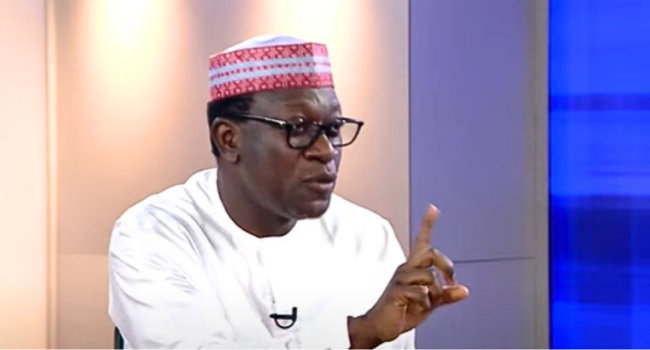

The All Progressives Congress (APC) Presidential Campaign Council has announced that President Bola Tinubu’s proposed Five-Year Strategic Defence Operations Plan is ready, presenting it as a major component of the administration’s efforts to confront terrorism, banditry, kidnapping and other security threats across Nigeria.
However, the announcement comes at a time when insecurity continues to affect communities across the country, with persistent attacks, mass abductions, killings, displacement and growing concerns about the safety of citizens, farmers, travellers, schoolchildren and security personnel.
In a statement issued on Sunday, November 15, 2026, and signed by Dele Alake, spokesperson of the APC Presidential Campaign Council, the ruling party said the proposed plan would strengthen Nigeria’s security architecture through improved military coordination, intelligence gathering, technology, personnel development and strategic defence spending.
The council said President Tinubu was determined to end the 17-year insurgency and other forms of insecurity through a coordinated national security framework capable of responding to both existing and emerging threats.
According to the statement, the five-year plan would align defence priorities, operational requirements, military capability development and expenditure with Nigeria’s security challenges.
The council also claimed that military operations conducted during the administration’s first three years had resulted in the elimination of more than 15,000 Boko Haram terrorists and bandits.
It further announced that more than 130,000 Boko Haram fighters and their dependents had surrendered through Operation Safe Corridor, the Federal Government’s rehabilitation programme for former insurgents.
The APC described these figures as evidence of the administration’s two-pronged strategy of sustained military operations and non-kinetic interventions designed to weaken armed groups and encourage their members to abandon violence.
While the figures represent the administration’s stated security achievements, the continuing scale of violence across different parts of Nigeria raises questions about how quickly military operations and government interventions can translate into lasting safety for ordinary citizens.
Nigeria’s security crisis remains widespread
Nigeria’s security challenges are no longer confined to the North-East, where Boko Haram and the Islamic State West Africa Province (ISWAP) have waged an insurgency for more than a decade.
The North-West continues to experience attacks by armed bandit groups, mass kidnappings, village raids, cattle rustling and attacks on highways. The North-Central region has also witnessed deadly communal and armed violence, while parts of the South-East and South-South continue to face threats from criminal gangs, separatist-related violence, cult groups, oil-related crimes and other security concerns.
In the North-East, Borno, Yobe and Adamawa remain central to the fight against Islamist insurgency. Although military operations have weakened some insurgent formations and forced thousands of people to surrender, Boko Haram and ISWAP continue to demonstrate their capacity to attack military positions, communities and civilian targets.
The insurgency has also created a prolonged humanitarian crisis, with many residents displaced from their ancestral communities, livelihoods disrupted and access to farms, schools and essential services affected.
The North-West presents a different but equally serious challenge. Zamfara, Katsina, Kaduna, Sokoto and parts of Kebbi have experienced repeated attacks by armed groups that raid villages, abduct residents, demand ransom and attack travellers.
In several affected communities, residents have faced the difficult choice of abandoning their homes and farmlands or remaining exposed to possible attacks.
Farmers have also become targets of kidnappers and armed groups, creating fears about agricultural production and food supply. Where communities cannot safely access their farms, the consequences extend beyond individual victims to food prices, household incomes and the wider economy.
In the North-Central region, Plateau, Benue, Niger and parts of Kwara have experienced different forms of violence, including attacks on rural settlements, kidnappings, communal conflicts and armed criminal activity.
The October 2026 attack on Binnari community in Karim Lamido Local Government Area of Taraba State, in which at least 62 people were reportedly killed, further demonstrated the deadly consequences of insecurity outside the traditional North-East insurgency theatre.
The incident, which reportedly involved attacks on a market, a mosque and other locations, raised fresh concerns about the vulnerability of rural communities and the ability of security agencies to prevent coordinated mass-casualty attacks.
October security figures expose the scale of the challenge
A security assessment published by SARI Global and reported by Nairametrics on November 15, 2026, recorded at least 835 security-related deaths across Nigeria in October 2026.
The assessment documented 612 security-related incidents during the month, compared with 535 incidents and 587 fatalities in September.
According to the report, armed conflict accounted for 617 fatalities across 202 incidents, while criminality and law-enforcement-related incidents accounted for 276 incidents and 86 deaths.
The assessment identified Borno as one of the most affected areas in the North-East, recording 180 fatalities across 51 incidents.
The North-West also remained under pressure, with 155 incidents and 224 fatalities recorded across Katsina, Sokoto, Zamfara and Kebbi.
Zamfara accounted for 137 fatalities in 69 incidents, while the assessment highlighted continuing attacks on roads, convoys, markets and rural communities.
The figures also identified serious incidents in Taraba, including the Binnari attack, and other deadly attacks involving civilians, security personnel and travellers.
The report cautioned that its figures represented minimum confirmed death counts from available incident reporting and should not be treated as a complete record of all fatalities.
Nevertheless, the assessment illustrates the scale of the security burden that the proposed five-year plan must address.
Nigeria’s position in global terrorism rankings
The Global Terrorism Index 2026 also presents a troubling picture of Nigeria’s terrorism situation.
According to the report published by the Institute for Economics and Peace, Nigeria ranked fourth among the countries most affected by terrorism in 2025.
The report recorded 171 terrorist incidents and 750 terrorism-related deaths in Nigeria during the year, representing a 43 per cent increase in attacks and a 46 per cent increase in deaths compared with 2024.
Boko Haram and ISWAP accounted for a substantial proportion of the recorded fatalities, with ISWAP responsible for more than half of the attacks and deaths attributed to terrorist groups in the report.
The findings indicate that despite years of military operations, Nigeria continues to face a significant terrorist threat, particularly in the North-East.
The figures also reinforce the need for a security strategy that goes beyond military offensives to address intelligence failures, the movement of armed groups, local recruitment networks, financing, weapons supply and the ability of insurgents to return to communities after military operations.
Kidnapping has become a national emergency
One of the most disturbing aspects of Nigeria’s security situation is the spread of kidnapping for ransom.
Abductions now affect schoolchildren, students, farmers, religious leaders, traditional rulers, travellers, businesspeople and residents of rural communities.
The activities of kidnapping networks have created fear among families and businesses, while some communities have been forced to negotiate with armed groups to secure the release of abducted relatives.
A Reuters report published in August 2026, citing a study by Nigerian security consultancy SBM Intelligence, estimated that 7,825 people were kidnapped between July 2025 and June 2026.
The study estimated that kidnappers collected nearly $5.8 million in ransom payments during the period, with confirmed ransom payments reaching approximately ₦7.78 billion.
It also reported that at least 1,142 people were killed in connection with the kidnapping crisis.
The report highlighted the increasing targeting of schools, villages and major roads, with victims sometimes held for weeks or months.
These figures demonstrate that kidnapping is not merely a security problem but has also developed into a criminal economy that generates substantial revenue for armed groups.
For the Tinubu administration, any effective five-year defence strategy will need to confront the financial networks, informants, logistics and criminal structures that sustain kidnapping operations.
Rescuing victims is important, but preventing abductions, dismantling ransom networks and prosecuting those responsible are equally critical.
Expansion of military formations and recruitment
As part of its proposed response, the APC Presidential Campaign Council said Tinubu had approved the creation of four additional Nigerian Army divisions and the restructuring of existing military formations.
The expansion is intended to decentralise military operations, improve operational coverage and enable troops to respond more quickly to security threats.
The council also said the President had approved two additional Army depots in Osogbo, Osun State, and Amasiri-Edda, Ebonyi State, to increase the capacity for training new soldiers.
According to the statement, each depot can accommodate 6,000 recruits at a time, bringing their combined training capacity to 12,000.
It added that 5,210 recruits were already undergoing training at the Osogbo facility.
The administration has also approved the recruitment of an additional 28,000 soldiers to strengthen the military’s manpower and operational effectiveness.
Beyond the military, the council said Tinubu had approved the recruitment of 50,000 additional police officers as part of efforts to reinforce internal security and improve policing capacity.
These proposed expansions come against the background of increasing demands on Nigeria’s security agencies.
The military is expected to conduct counter-insurgency operations, protect communities, support police operations, secure strategic infrastructure and respond to threats across several regions.
The police, meanwhile, are expected to investigate crimes, maintain public order, protect communities, arrest suspects and prevent criminal activities.
The expansion of manpower could strengthen these responsibilities, but recruitment alone will not resolve the country’s security problems.
New personnel will require adequate training, modern equipment, intelligence support, accommodation, transportation, communication systems and reliable operational funding.
There must also be effective supervision, accountability and coordination between the military, police, intelligence agencies and other security institutions.
700-unit military barracks and personnel welfare
The APC statement also highlighted the administration’s investment in military accommodation and operational infrastructure.
One of the projects identified is a 700-unit military barracks in Ikere-Ekiti, Ekiti State.
The council said the facility was designed to provide military personnel with improved accommodation and an appropriate living and working environment.
The administration said such investments were necessary to address infrastructure gaps and improve the welfare and effectiveness of security personnel.
Military personnel deployed to dangerous operational environments require adequate accommodation, medical facilities, transportation, protective equipment and support for their families.
The welfare of personnel is also important for morale, discipline and operational performance.
However, the success of such projects will depend on their timely completion, quality, accessibility and actual use by the personnel they are intended to serve.
The challenge of intelligence and coordination
One of the central promises of the proposed five-year plan is a stronger intelligence-led approach to national security.
Nigeria’s security operations involve several institutions, including the Nigerian Army, Nigerian Navy, Nigerian Air Force, Nigeria Police Force, Department of State Services, National Intelligence Agency and other security agencies.
The effectiveness of these institutions depends heavily on their ability to share intelligence, coordinate operations and respond to threats before attacks occur.
In several security incidents, questions have been raised about how armed groups were able to assemble, travel through communities, attack civilian targets and escape without being intercepted.
The proposed plan is expected to establish clearer operational priorities, identify capability gaps and ensure that defence expenditure is directed towards the country’s most urgent security needs.
The APC said the framework would improve combat readiness, optimise available resources and reduce unnecessary expenditure and wastage.
However, intelligence reform must also address the protection of informants, the monitoring of suspicious financial transactions, the movement of illegal weapons and the activities of individuals who provide logistics or information to criminal groups.
Without reliable intelligence and effective local security networks, additional troops and military equipment may not produce the desired results.
The question of community safety and displacement
Beyond official military statistics, the human consequences of insecurity remain a major concern.
Families who have lost relatives, communities forced to abandon their homes and children whose education has been interrupted cannot measure security success only through the number of terrorists reportedly eliminated.
For many Nigerians, the most important measure is whether they can sleep peacefully, travel safely, attend school, go to their farms, operate their businesses and return home without fear of being attacked or abducted.
In parts of the North-East, years of insurgency have left communities dependent on humanitarian assistance and government intervention.
In the North-West and North-Central regions, repeated attacks have disrupted farming, local markets and economic activities.
Displacement also creates additional pressure on host communities, public services and humanitarian organisations.
The government will therefore need to combine military operations with reconstruction, rehabilitation, compensation where appropriate, economic recovery and the restoration of essential services in affected communities.
A sustainable security strategy must also prevent armed groups from returning to territories after military operations have pushed them out.
Why the five-year plan must go beyond military operations
The proposed plan will face challenges that cannot be resolved through military action alone.
Poverty, unemployment, weak local governance, illegal arms trafficking, drug networks, competition over land and natural resources, and the exploitation of vulnerable communities can contribute to insecurity in different parts of the country.
These factors do not excuse criminality or terrorism, but they demonstrate why a long-term response must include effective policing, justice, community development and economic opportunities.
The government must also ensure that individuals arrested over terrorism, kidnapping and other serious crimes are properly investigated and prosecuted.
Where suspects are convicted through due process, the justice system must ensure that appropriate sentences are enforced.
At the same time, rehabilitation programmes for former insurgents must be transparent, properly monitored and supported by measures that protect victims and communities receiving former fighters.
The Federal Government must also ensure that communities affected by insurgency are not neglected after the surrender or displacement of armed groups.
What Nigerians will expect from Tinubu’s five-year plan
The APC Presidential Campaign Council’s announcement has placed the proposed five-year defence framework at the centre of the administration’s security narrative.
But Nigerians will expect more than another policy document or announcement of military recruitment.
They will want measurable improvements in the safety of communities, a reduction in kidnapping, fewer attacks on highways, the protection of schools, improved security for farmers and the restoration of normal economic activities in affected areas.
They will also expect transparent reporting on the implementation of the plan, including the funds allocated, equipment purchased, personnel trained, operational targets achieved and communities returned to safety.
The government must explain how success will be measured and how the performance of the different security agencies will be assessed.
It must also ensure that military operations respect human rights and that allegations of misconduct are investigated through appropriate procedures.
Another major issue is the protection of lives in rural communities, where residents often complain about delayed security responses and inadequate protection against armed groups.
The deployment of additional personnel should therefore be accompanied by effective early-warning systems, reliable emergency response mechanisms and stronger cooperation with local communities.
From policy announcement to measurable security results
The Presidency had earlier announced on August 20, 2026, that Tinubu had approved the preparation of a National Threat Assessment and a rolling Five-Year Strategic Defence Operations Plan.
According to the State House announcement, an 11-member committee was constituted to prepare the documents, with the President directing that the completed assessment and plan be submitted to him for consideration and approval within 90 days.
Bayo Onanuga, Special Adviser to the President on Information and Strategy, signed that August announcement.
The November 15 statement by the APC Presidential Campaign Council, signed by Dele Alake, now says the plan is ready.
The distinction is important: the earlier State House announcement established the President’s directive and the committee’s assignment, while the latest campaign council statement reports that the plan has been prepared.
The next major step will be the formal consideration, approval, implementation and public communication of the framework by the relevant authorities.
Nigeria’s security crisis has lasted for years and has evolved into multiple threats involving insurgency, banditry, kidnapping, communal violence and organised criminal networks.
The proposed five-year plan therefore faces a demanding task.
For millions of Nigerians living in communities affected by violence, the ultimate test will not be the number of divisions created, recruits trained, meetings held or statements issued.
It will be whether families can return to their homes, farmers can work without fear, children can attend school safely, travellers can use highways without the threat of abduction and communities can live without the constant fear of armed attacks.
The Tinubu administration has presented the proposed plan as a framework for a stronger national defence system. Nigerians will now look for evidence that the strategy can translate into sustained security improvements across the country.