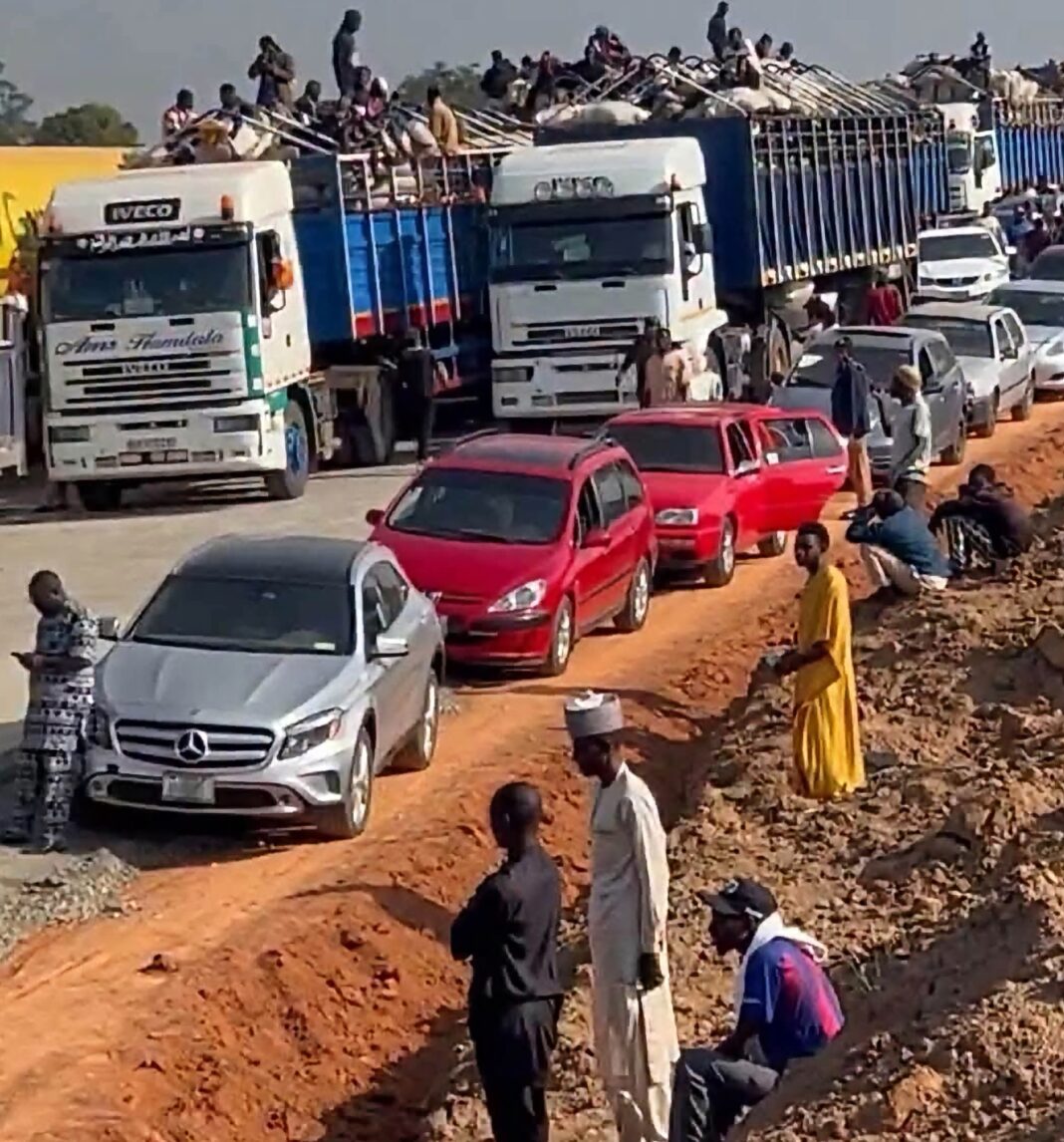

Travellers using the Abuja-Kaduna highway faced severe traffic congestion on Monday, November 9, 2026, following multiple accidents involving heavy-duty vehicles around Gidan Busa, shortly before Katari, leaving motorists and passengers stranded for several hours.
The scale of the gridlock was highlighted by a traveller who disclosed that it took eight hours to reach Abuja, despite travelling in a small private car.
In a statement describing the experience, the traveller expressed concern that many road users, particularly tanker and trailer drivers, could be forced to spend the night on the highway if the congestion persisted.
The account reflects the difficult conditions faced by motorists along the busy corridor, where long queues of private vehicles, commercial buses, fuel tankers and articulated trucks have struggled to make progress.
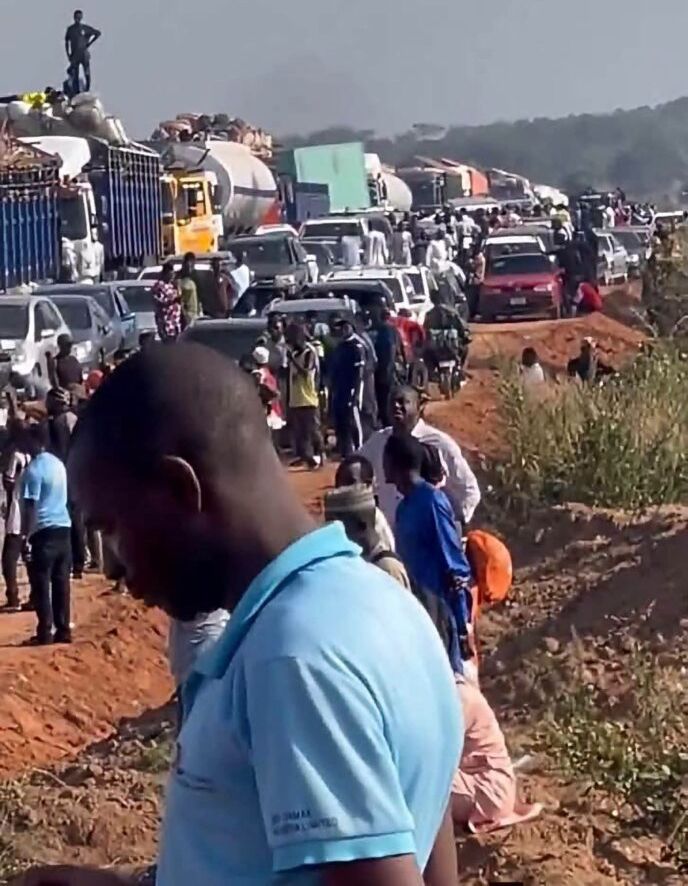
A report by the News Agency of Nigeria (NAN), published on Monday, also confirmed that several travellers were stranded around Gidan Busa following multiple accidents involving long vehicles.
Some affected passengers reportedly spent more than four hours in the gridlock, missing business appointments, scheduled meetings and other important engagements in Abuja.
A fashion designer, Sarah Monday, who was travelling to Abuja for a contract meeting, told NAN that she missed the appointment because of the traffic standstill.
Other motorists expressed frustration over the uncertainty surrounding the resumption of normal traffic movement, with some reportedly turning back towards Kaduna while others considered alternative routes through Kachia and Bwari.
The latest gridlock reportedly followed another major obstruction on Sunday, November 8, when three heavily loaded containers fell on the highway around Katari at about 3pm, disrupting traffic.
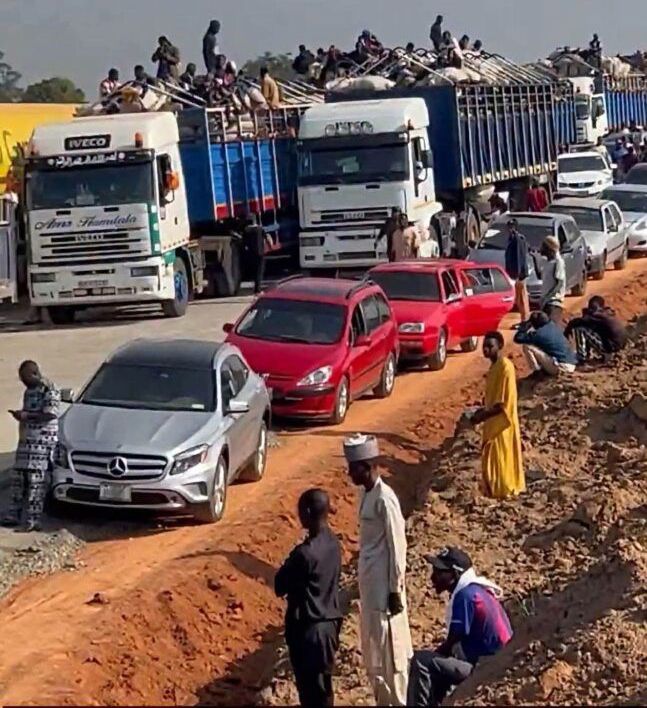
The situation worsened on Monday following additional accidents involving articulated vehicles around Gidan Busa, further restricting movement along the corridor.
In a reflection on the incident, the traveller acknowledged that motorists themselves contribute to traffic chaos through impatience and disregard for road regulations.
The traveller urged Nigerians, including motorists, to obey traffic rules even when security or traffic officials are not present, exercise patience and maintain order on the roads.
The warning comes amid concerns that dangerous overtaking, driving against traffic and indiscriminate use of road shoulders can worsen congestion, particularly on narrow diversions around construction sites.
A road safety official quoted in the NAN report attributed part of the problem to motorists’ impatience and claimed that the route records at least 20 accidents involving long vehicles monthly. The figure was attributed to the official and was not independently verified.
The recurring congestion has also renewed calls for the Federal Government to accelerate the completion of the highway, which remains a major transport connection between the Federal Capital Territory and Kaduna State.
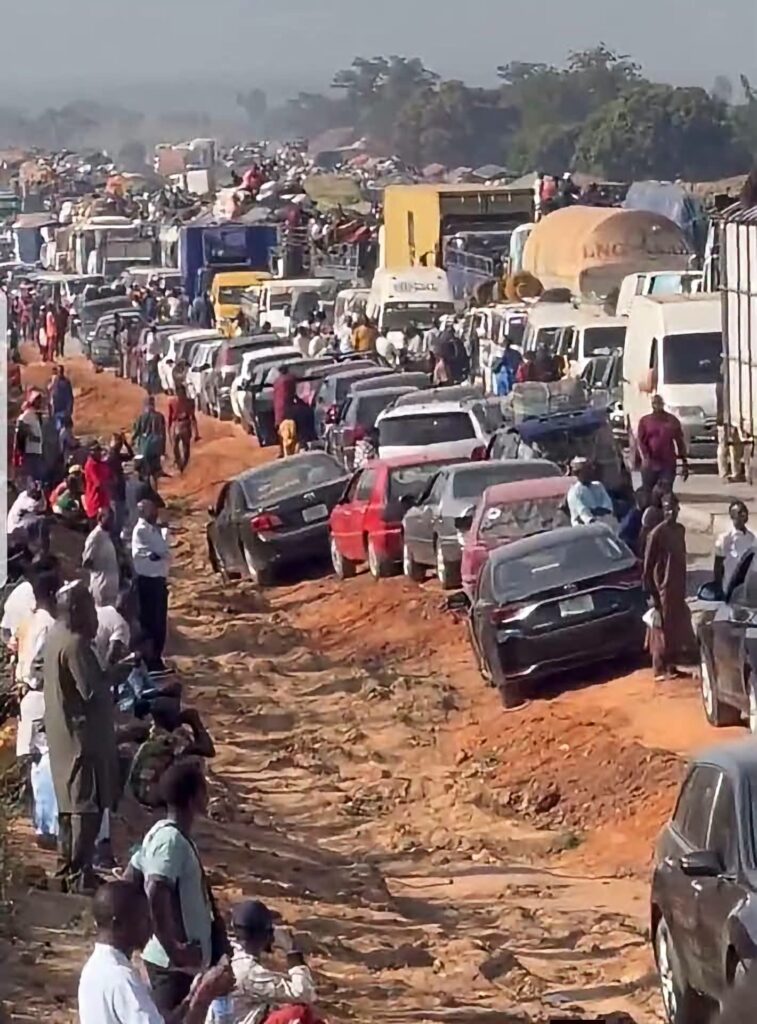
The corridor is heavily used by commuters, commercial transport operators, fuel tankers and freight vehicles moving between northern Nigeria and Abuja. Prolonged disruptions therefore affect passenger movement, business activities, transportation costs and the delivery of goods.
Some travellers have also raised concerns about the safety of people and vehicles trapped on the highway for extended periods, particularly as darkness approaches.
The latest incident has again drawn attention to the need for improved traffic management around construction zones, prompt clearance of accident scenes, safer movement of heavy-duty vehicles and greater discipline among road users.
For many motorists caught in Monday’s congestion, the journey to Abuja became an exhausting experience, with hours lost on a road that remains essential to movement between the two cities.
IBN News — Fearless, Strong & Reliable