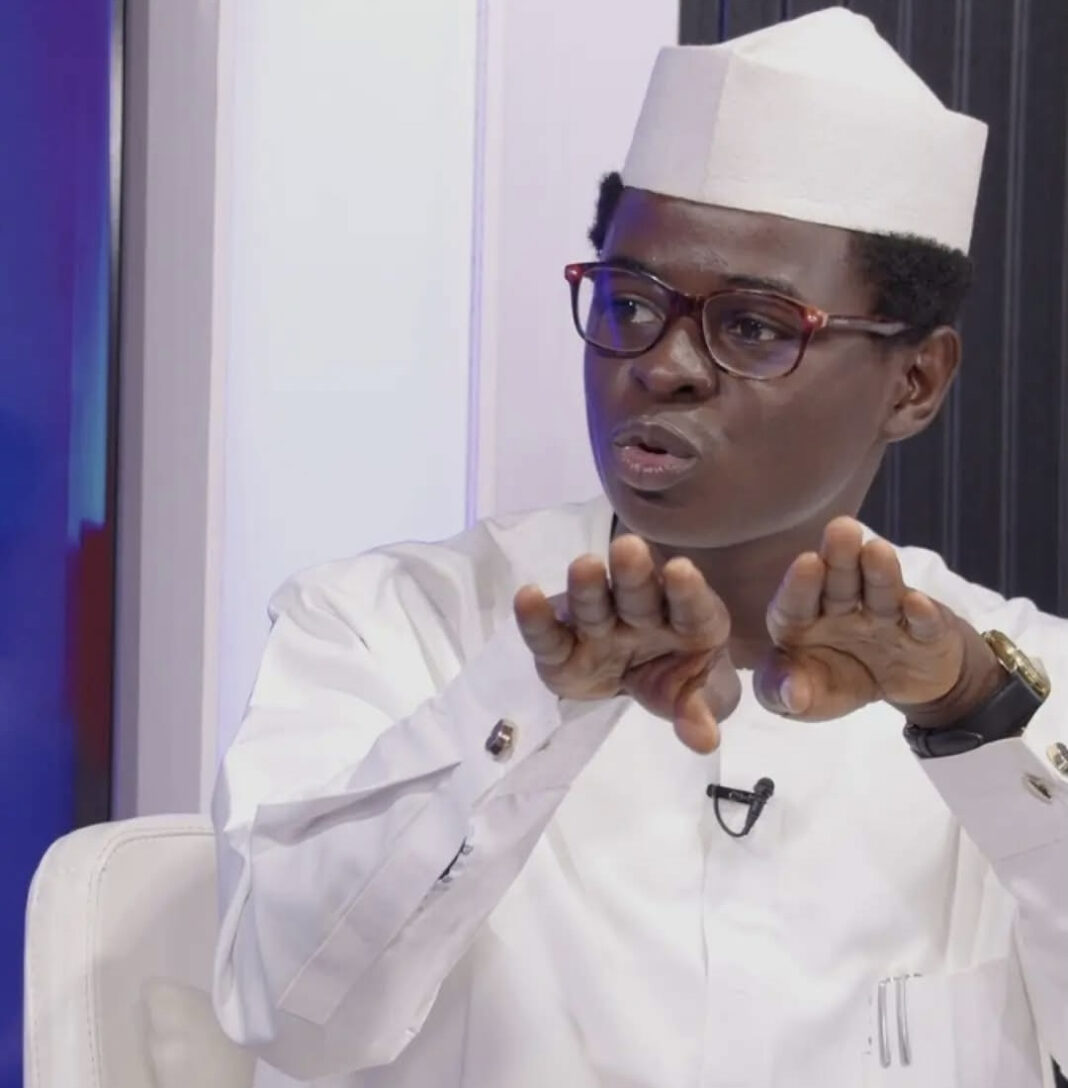

Political commentator Abba Mohammad Turaki has challenged President Bola Ahmed Tinubu over his claim that opposition politicians created the hunger and poverty confronting Nigerians, questioning why the ruling All Progressives Congress (APC) continues to blame its political opponents after nearly 11 years in control of the Federal Government.
Turaki also criticised the APC’s 2027 presidential campaign flag-off in Kaduna, arguing that the event provided an opportunity for President Tinubu and other senior party leaders to address the worsening insecurity and economic difficulties affecting northern Nigeria but appeared to focus more on political mobilisation and securing another electoral mandate.
Speaking during an appearance on S24 TV, Turaki examined the President’s remarks, Vice-President Kashim Shettima’s appeal to northern voters, the political significance of Kaduna, the country’s growing kidnapping crisis, education and the prospects of former Minister of Communications and Digital Economy, Professor Isa Ali Pantami, in the 2027 Gombe State governorship election.
He maintained that political leaders must understand that power is temporary and that their most important responsibility is to leave behind a legacy that future generations will remember.
Turaki Questions Tinubu’s Claim That Opposition Created Poverty
Turaki took issue with President Tinubu’s statement at the APC presidential campaign flag-off in Kaduna on October 24, 2026, where the President accused opposition politicians of creating the hunger and poverty they now use to criticise his administration.
Tinubu had told supporters: “I hear my opponents talking about hunger and poverty. Who created it? They did. They created the hunger; they created the poverty. We are trying to eradicate it.”
The President defended his administration’s economic reforms, including the removal of petrol subsidy, and highlighted regular salary payments, infrastructure development and other government programmes.
However, Turaki questioned the basis of blaming the opposition for the country’s present economic difficulties.
He argued that the APC has governed Nigeria since 2015 and should therefore accept responsibility for its own record instead of repeatedly directing attention towards previous administrations and opposition figures.
He specifically referenced former Vice-President Atiku Abubakar, who left office in 2007, and former Anambra State Governor Peter Obi, whose tenure ended in 2014.
He questioned how political figures who left their respective offices many years ago could be held responsible for every economic and security problem Nigerians are experiencing today.
Turaki also referred to Omoyele Sowore, arguing that he had never held public office, while acknowledging the efforts of Oyo State Governor Seyi Makinde, particularly in responding to the abduction of schoolchildren.
His broader argument was that political leaders should be assessed individually based on their records and actions rather than making sweeping accusations against the opposition.
He described the continued blame game as an example of what he called selective amnesia among political leaders.
According to him, any political party that has governed the country for nearly 11 years must be prepared to explain its achievements, failures and plans for addressing the problems confronting citizens.
He argued that if a government has been unable to make sufficient progress on major national challenges after several years in power, it should expect serious questions about whether it deserves another mandate.
Why Did APC Choose Kaduna for Its Campaign Flag-Off?
Turaki also examined the APC’s decision to launch President Tinubu’s 2027 re-election campaign in Kaduna, identifying the state’s historical, geographical and political significance as possible reasons.
He recalled that Kaduna was formerly the administrative and political centre of the defunct Northern Region and remains an important political hub in northern Nigeria.
He suggested that its geographical proximity to several northern states may have made it a strategic location for the ruling party to mobilise support from across the region.
However, he argued that the most significant consideration could be the importance of northern electoral support to President Tinubu’s ambition of securing a second term.
According to Turaki, the President and the APC leadership understand that winning sufficient support in northern Nigeria will be crucial to their chances in the 2027 presidential election.
He therefore interpreted the Kaduna campaign launch as a deliberate political move to strengthen the party’s relationship with the North and demonstrate its commitment to retaining the region’s support.
The choice of Kaduna was also publicly defended by the APC presidential campaign leadership. Campaign Director-General Abdulaziz Yari reportedly highlighted the city’s historical importance as the former capital of Northern Nigeria.
Turaki, however, argued that beyond the political symbolism of choosing Kaduna, the more important question was whether the President and his team would use the occasion to address the urgent problems facing the region.
Insecurity: Turaki Questions the Absence of Concrete Solutions
One of Turaki’s major concerns was the level of attention given to insecurity during the campaign event.
He said he expected the President’s speech to provide clear answers about the government’s strategy for tackling kidnapping, banditry, terrorism and attacks on communities.
He questioned what additional measures the administration intended to introduce and what alternative approaches it would employ to protect Nigerians.
According to him, the President’s repeated emphasis on fuel subsidy removal and economic reforms did not sufficiently address the immediate fears of citizens living under the threat of armed attacks and abductions.
He also expressed disappointment that prominent northern political leaders, including Kaduna State Governor Uba Sani, were present at the rally without what he considered sufficient attention being given to the security challenges affecting their region.
Turaki argued that the event should have provided an opportunity for northern governors and other political leaders to present the realities confronting their communities and demand stronger action from the Federal Government.
He particularly referred to insecurity in Taraba State around the period of the campaign, questioning the apparent lack of urgency in the political conversation while Nigerians continued to face attacks.
For him, the most important responsibility of political leaders should be the protection of lives and property, not merely assuring the President of electoral support.
Shettima’s Appeal to Northern Voters
Turaki also examined Vice-President Kashim Shettima’s remarks at the Kaduna rally, particularly his argument that President Tinubu had consistently supported northern political interests and deserved the region’s political loyalty.
Shettima recalled Tinubu’s political support for prominent northern figures at different points in their political careers.
He referenced Atiku Abubakar’s political relationship with Tinubu during the period surrounding the 2007 presidential election, Nuhu Ribadu’s 2011 presidential ambition and Tinubu’s support for former President Muhammadu Buhari in the 2015 and 2019 elections.
The Vice-President presented these relationships as evidence of Tinubu’s longstanding support for northern political leaders and argued that the region should recognise and reciprocate that support.
Turaki questioned whether such political calculations should take precedence over the security and economic challenges facing ordinary northern Nigerians.
He argued that the region’s political leaders should have used the occasion to discuss the problems affecting their people rather than concentrating primarily on promises of massive votes for the President.
He also questioned the emphasis on political loyalty when communities across the North continue to experience insecurity, poverty, unemployment and inadequate access to essential services.
For Turaki, the North should not be judged by the promises made by political leaders at campaign rallies but by the practical improvements delivered to its people.
Kidnapping Crisis and Call for Tougher Punishment
Turaki expressed strong concern over the growing threat of kidnapping, describing it as one of the most frightening security problems confronting Nigerians.
He referred to incidents in which armed men invade residential neighbourhoods and abduct people from their homes, including victims who are in their bedrooms with their families.
He argued that the humiliation, trauma and suffering inflicted on kidnapping victims and their relatives demonstrate the seriousness of the crime.
He questioned how citizens could be expected to feel safe when armed criminals could invade private homes and take people away.
Turaki advocated tougher punishment for convicted kidnappers, including the death penalty, arguing that the country must adopt stronger measures to discourage the crime.
His position reflects the anger of citizens who believe existing responses have failed to deter kidnapping. Any such punishment, however, would have to operate within Nigeria’s constitutional and criminal justice framework, including fair trial requirements.
He warned that continued economic hardship, insecurity and frustration could push the country towards a dangerous breaking point.
Describing Nigeria as a pressure pot and a ticking time bomb, he cautioned that the consequences of failing to address the country’s problems could become more severe.
He maintained that the future could be darker than the present if political leaders continued to ignore the concerns of ordinary Nigerians.
Turaki: APC Ruled for 11 Years, It Will Not Remain in Power Forever
Beyond the immediate political disagreement, Turaki returned to what he described as the temporary nature of political power.
He recalled that the Peoples Democratic Party (PDP) governed Nigeria for 16 years, from 1999 until 2015, before losing the presidency to the APC.
He argued that the APC should learn from that political history and recognise that no party has a permanent claim to national leadership.
According to him, political parties that once enjoyed enormous influence eventually lose power, while individuals who occupied the highest offices in the country gradually become part of history.
He warned political leaders against allowing their positions to make them arrogant or disconnected from the people they govern.
His message was that political power should be treated as an opportunity to serve rather than a permanent entitlement.
He argued that the APC must understand that it will not govern Nigeria forever and that its continued stay in power will ultimately depend on the judgement of voters.
Obasanjo Anecdote: A Young Girl Asked, ‘Who Is He?’
To illustrate how quickly political influence can fade, Turaki narrated an encounter with a young girl whom he estimated to be between 15 and 16 years old.
He said he asked her whether she knew former President Olusegun Obasanjo, but she responded that she did not know who he was.
Turaki said the experience reminded him that even people who once occupied the most powerful political positions in Nigeria could become unfamiliar to younger generations.
Obasanjo served as Nigeria’s military Head of State from 1976 to 1979 and later as an elected civilian President from 1999 to 2007.
Turaki used the encounter to emphasise that political office and public influence are temporary.
He urged current leaders to concentrate on building a legacy that would remain relevant long after they leave office.
He argued that the most important measure of leadership is not the number of years spent in government but the positive impact made on people’s lives.
Macaulay, Azikiwe, Sardauna and Tafawa Balewa: Lessons From Nigeria’s Founding Leaders
Turaki also referenced some of Nigeria’s prominent historical figures, including Herbert Macaulay, Dr Nnamdi Azikiwe, Sir Ahmadu Bello and Sir Abubakar Tafawa Balewa.
He argued that these individuals remain important in the country’s historical memory because of their contributions to the foundations of modern Nigeria.
He questioned whether successive administrations had done enough to match the contributions of those who laid the foundation for the country’s political development.
According to him, Nigeria’s present political leaders should ask themselves what future generations will remember them for.
He maintained that public office should be an opportunity to build institutions, improve education, strengthen the economy and create a safer country.
Turaki warned that leaders who concentrate only on political survival while ordinary citizens struggle to survive risk leaving behind a negative legacy.
Education: Why Are Today’s Students Facing Greater Difficulties?
Turaki also criticised the difficulties confronting Nigerian students, particularly when compared with the educational opportunities enjoyed by some previous generations.
He recalled a period when government-funded education programmes made schooling more affordable for many Nigerians and provided opportunities for students from less privileged backgrounds.
He argued that many of the country’s present political leaders benefited from educational environments that were more conducive and from public support that reduced the financial burden on students and their families.
He questioned why young Nigerians today must contend with rising education costs, inadequate facilities, insecurity and uncertainty about their future.
He also raised concerns about the growing dependence on student loans, including the Nigerian Education Loan Fund (NELFUND), established under the Tinubu administration.
NELFUND provides interest-free loans to eligible students in approved tertiary institutions to help cover education-related costs.
Although the programme is intended to expand access to higher education, Turaki’s broader argument was that Nigeria must continue to examine the quality, affordability and sustainability of its education system.
He maintained that access to education should not become an overwhelming financial burden for families already struggling with the cost of living.
He warned that economic hardship and insecurity could undermine the quality of education and limit opportunities available to the next generation.
Gombe 2027: Turaki Discusses Pantami’s Political Prospects
The S24 TV discussion also examined the emerging political contest in Gombe State ahead of the 2027 governorship election, particularly the prospects of former Minister of Communications and Digital Economy, Professor Isa Ali Pantami.
Turaki identified religious considerations, widespread poverty, the need for effective welfare programmes and grassroots mobilisation as factors that could influence the election.
He argued that political candidates who understand the challenges facing ordinary residents and can connect with communities at the grassroots level could attract significant electoral support.
He suggested that Pantami’s perceived grassroots appeal could become an important factor in the contest.
However, he acknowledged, directly or indirectly, that political calculations and the views of party elites do not automatically determine the outcome of an election.
Ultimately, registered voters decide elections through their ballots.
Gombe’s 86.2 Per Cent Multidimensional Poverty Rate
A major issue raised in the discussion was the level of poverty in Gombe State.
Turaki referred to the 86.2 per cent multidimensional poverty figure recorded for the state in the National Bureau of Statistics’ 2022 Multidimensional Poverty Index report.
The report, based on survey data collected in 2021 and 2022, estimated that approximately 3.02 million people in Gombe were multidimensionally poor at the time.
Multidimensional poverty measures deprivation beyond income, including access to education, healthcare, adequate living standards, basic services and other essential indicators.
The report also put the intensity of multidimensional poverty in Gombe at 44 per cent, indicating the average share of weighted deprivations experienced by people classified as poor.
The figure highlights the scale of the state’s development challenges, although it should not be mistaken for a newly measured 2026 poverty rate.
Turaki argued that poverty on this scale could become a major issue in the 2027 governorship election.
He maintained that candidates seeking to govern Gombe must explain how they intend to improve household welfare, create employment, expand access to education and healthcare and provide economic opportunities for vulnerable residents.
Pantami, Jamilu Gwamna and the APC’s Internal Disagreement
The political contest in Gombe became more complicated after the APC’s internal disagreement over its governorship candidate.
In May 2026, the APC leadership in Gombe settled on businessman Jamilu Isyaku Gwamna as its consensus governorship candidate.
The decision created difficulties for Pantami, who had also sought the APC ticket.
Following the disagreement, Pantami left the APC and joined the PDP, where he emerged as the party’s governorship candidate through its primary process.
However, his initial emergence was challenged in court by another PDP aspirant, Usman Aliyu Garry.
On September 24, 2026, the Federal High Court sitting in Gombe nullified the primary that produced Pantami and ordered the PDP to conduct a fresh governorship primary.
Pantami subsequently won the court-ordered rerun primary on September 29, polling 2,054 votes, according to reports.
His emergence nevertheless faced another complication when the Independent National Electoral Commission omitted his name from its final list of Gombe governorship candidates published in October.
Pantami’s legal team challenged the omission, arguing that the commission should recognise the outcome of the fresh primary.
The dispute demonstrated that the political contest in Gombe involved not only competition between parties and candidates but also legal and electoral questions that could affect who ultimately appears on the ballot.
The APC’s Jamilu Gwamna and Pantami therefore remained important figures in discussions about the state’s political future, although the legal status of Pantami’s candidacy required careful consideration.
Religious Politics, Welfare and Grassroots Support
Turaki identified religious considerations as another factor that could influence political mobilisation in northern Nigeria.
He argued that religion remains an important element of political conversations in parts of the North and could shape how some voters relate to candidates.
He also highlighted the importance of welfare programmes and the ability of political candidates to address poverty and the everyday difficulties of ordinary people.
However, religious identity alone does not determine electoral outcomes. Voters also consider party platforms, candidates’ records, economic conditions, security, local development and the credibility of campaign promises.
Turaki suggested that Pantami’s perceived grassroots connections could become relevant in the Gombe contest.
He also argued that political elites may influence party arrangements and public narratives, but the final decision rests with voters.
His position was that the electorate should have the opportunity to determine who governs the state based on the candidates’ records, proposals and capacity to deliver.
Political Leaders Must Be Judged by Their Legacy
Across the different issues discussed on S24 TV, Turaki returned to one central argument: political power is temporary, but the consequences of leadership decisions can affect generations.
From the APC’s years in power to the President’s response to economic hardship, from insecurity in northern Nigeria to the challenges facing students, he argued that political leaders must be more accountable to the people.
He maintained that Nigerians need practical solutions to poverty, kidnapping, unemployment and the declining quality of public services rather than repeated political assurances.
He also challenged the ruling party to defend its record with measurable achievements and to stop treating criticism from opposition politicians as a substitute for addressing the country’s problems.
For Turaki, the experience of previous administrations should remind those currently in power that no political position lasts forever.
He urged leaders to remember the historical contributions of Nigeria’s founding nationalists and to consider how future generations will judge their time in office.
His message was clear: the real measure of leadership is not how successfully politicians secure another election victory, but whether they leave behind a country that is safer, more prosperous and offers better opportunities than the one they inherited.
He concluded with prayers for divine guidance and protection for Nigeria’s leaders, while emphasising the need for responsible governance, public accountability and a political system that puts the welfare of citizens first.