
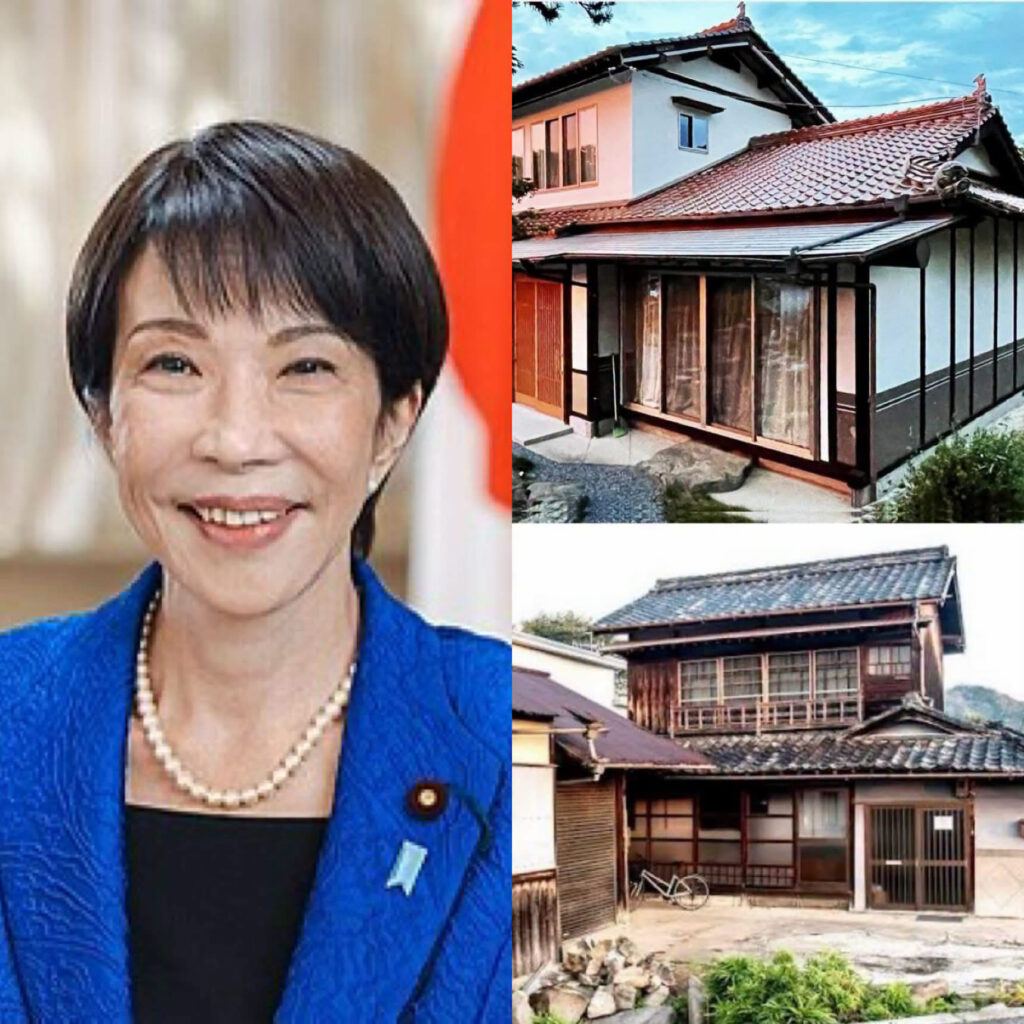
Japan is facing a growing housing challenge, with millions of homes standing empty as the country’s population continues to shrink and age, raising concerns about abandoned communities, declining property demand and the future of rural areas.
Official Japanese government statistics recorded approximately 9.002 million vacant homes in 2023, the highest number since records began, representing 13.8 per cent of the country’s total housing stock.
The figures have renewed international attention on Japan’s demographic challenges, with some communities experiencing increasing numbers of abandoned houses, commonly known as akiya, while residents move towards larger cities in search of employment, education and better access to services.
Although claims that Japan now has more than 10 million empty homes are circulating online, the latest official nationwide housing survey published by Japan’s Statistics Bureau recorded approximately nine million vacant dwellings. Separately, private research estimates have suggested that the number could be approaching 11 million, depending on the methodology used.
The growing number of vacant properties is closely connected to Japan’s declining population, ageing society, changing family structures and the concentration of economic opportunities in major urban centres.
Japan’s population continues to decline
Japan’s population decline has become one of the country’s most significant long-term economic and social challenges.
According to census results released in September 2026, Japan’s total population stood at approximately 122.9 million as of October 1, 2025, representing a decline of 3.17 million, or 2.5 per cent, compared with the 2020 census.
The country recorded its third consecutive population decline in the five-year census series.
The number of Japanese nationals fell by 3.5 per cent to approximately 119.1 million, while the number of foreign residents increased by 39.8 per cent to a record 3.84 million.
The proportion of people aged 65 and above also increased to 29.4 per cent, highlighting the country’s rapidly ageing population.
The demographic trend is putting pressure on the workforce, pension system, healthcare services and communities that are losing younger residents.
As fewer young people enter the housing market and more elderly residents die or move into care facilities, some inherited properties remain unoccupied for years.
How Japan accumulated millions of empty houses
The increase in vacant homes is not simply because Japanese people have stopped needing houses. Several demographic and economic factors have contributed to the situation.
One major factor is rural depopulation.
Younger Japanese residents increasingly move from smaller towns and villages to major cities such as Tokyo, Osaka, Yokohama and Nagoya for employment, education and other opportunities.
As younger generations leave, some rural communities are left with older populations and fewer people to occupy existing homes.
Another factor is inheritance.
When elderly homeowners die, their children may already have established lives in other cities. Rather than move into their parents’ properties, some heirs leave the buildings vacant because they are difficult to sell, expensive to renovate or located in areas with limited economic opportunities.
In some cases, several family members may inherit a property, making decisions about its future more complicated.
Older buildings can also require substantial repairs, including roof replacement, plumbing, electrical work and structural improvements. For some families, maintaining or renovating such properties is financially unattractive.
These factors have contributed to the growing number of abandoned homes across Japan.
What the official figures reveal
Japan’s Statistics Bureau reported that the country had approximately 65.05 million dwellings in 2023, of which 9.002 million were vacant.
This means that nearly one in every seven dwellings was classified as vacant.
The number increased by approximately 513,000 compared with the previous nationwide survey conducted in 2018.
The vacant properties are not all abandoned houses. Government statistics classify them into different categories, including properties available for rent, properties for sale, secondary residences and other vacant dwellings.
Approximately 4.43 million were classified as vacant rental properties, while about 327,000 were vacant homes for sale.
Another 383,000 were secondary residences, including holiday homes and properties used occasionally.
The remaining approximately 3.85 million fell outside those categories, including homes that were not being offered for rent or sale and were not being used as secondary residences.
This distinction is important because an empty apartment awaiting a tenant is different from an abandoned family house that has been neglected for years.
Are houses and rents now extremely cheap in Japan?
The growing supply of vacant properties has created opportunities for people interested in acquiring homes in some parts of Japan.
In depopulated towns and rural communities, some houses are advertised at very low prices, and local authorities operate programmes to connect prospective buyers with vacant properties.
Some municipalities maintain akiya banks, which are databases or matching services that help connect property owners with people interested in buying or renting vacant homes.
However, the claim that rent has become extremely cheap throughout Japan is misleading.
Housing costs vary significantly depending on location. Properties in rural communities with declining populations may be inexpensive, while residential accommodation in Tokyo and other major economic centres remains subject to substantial demand.
A house advertised at a very low price may also require expensive renovation, structural repairs, property registration, taxes and other costs before it can be occupied.
Some properties are located far from employment opportunities, public transport, hospitals and schools, making them less attractive to potential residents.
Consequently, Japan’s vacant-home problem has not made every part of the country’s housing market cheap.
Not every Japanese citizen owns a home
Another claim circulating alongside the vacant-home figures is that almost every Japanese person already owns a house.
However, official housing statistics do not support that conclusion.
Japan’s 2023 Housing and Land Survey showed that owner-occupied homes accounted for approximately 60.9 per cent of principal households, while rented homes accounted for approximately 35 per cent.
This means that a substantial proportion of Japanese households still live in rented accommodation.
The existence of millions of vacant homes does not mean that every household has access to affordable housing in the location where it wants to live.
A vacant house in a remote village cannot automatically solve the housing needs of a worker seeking accommodation near an office in central Tokyo.
This geographical imbalance is one of the major complications of Japan’s housing situation.
Government seeks ways to put vacant homes back into use
The Japanese government has increasingly recognised that abandoned properties can become a serious problem for neighbourhoods and local authorities.
Neglected houses can deteriorate, develop structural weaknesses, attract pests, accumulate rubbish and create safety concerns for neighbouring residents.
Japan has introduced measures to encourage owners to maintain vacant properties and make suitable buildings available for new uses.
Local authorities have also expanded initiatives involving vacant-home databases, renovation support and community redevelopment.
In September 2026, The Japan Times reported that the government was planning a financial framework to provide loans to businesses renovating vacant properties for use as affordable housing for young families and low- and middle-income households.
The proposed initiative is intended to encourage private businesses to restore properties that are still in suitable condition rather than allow them to deteriorate further.
The government is also seeking ways to reduce the number of dangerous and poorly maintained vacant buildings.
Could Japan’s vacant-home situation become an opportunity for foreigners?
The availability of inexpensive properties has attracted interest from foreign buyers, investors and people considering relocation to Japan.
Some rural communities have welcomed newcomers because they can help revive declining neighbourhoods, support local businesses and make use of buildings that might otherwise remain empty.
However, purchasing a cheap Japanese property does not automatically provide the buyer with residency rights, employment opportunities or permission to operate a business.
Foreign buyers must also consider ownership documentation, property condition, renovation expenses, local regulations, taxes and the practical challenges of living in rural areas.
Some low-cost properties may be difficult to resell, particularly where population decline is severe.
The opportunity therefore depends on the location, condition of the building and the buyer’s intended use.
A warning about population decline and housing policy
Japan’s experience illustrates how demographic changes can affect property markets and the long-term development of communities.
The country has a large housing stock, but the distribution of homes does not always match where people want or need to live.
While major cities continue to attract residents and economic activity, some rural communities are struggling with declining populations, ageing residents and abandoned properties.
The situation has raised questions about how governments should plan housing, transportation, employment opportunities and public services in societies experiencing long-term population decline.
For Japan, the challenge is no longer simply building more houses. It is finding sustainable ways to manage the housing stock that already exists, support communities losing residents and ensure that vacant properties do not become a growing burden.
With its population continuing to decline, Japan’s millions of empty homes have become one of the most visible reminders of the economic and social consequences of demographic change.